
Precise Efficiency: The Amsterdam IADL Questionnaire Short Version (A-IADL-Q-SV)
Detecting functional decline from normal ageing to dementia: development and validation of a short version of the Amsterdam IADL Questionnaire
This study develops and validates the Amsterdam IADL Questionnaire Short Version (A-IADL-Q-SV), a 30-item proxy-based tool designed to detect functional decline across the dementia spectrum. Utilizing Item Response Theory (IRT), the researchers reduced the original 70-item scale to a concise format that maintains a high SOTA-level concordance (W = .97) with the original version while significantly reducing administration time.
TL;DR
Researchers have successfully distilled the 70-item Amsterdam IADL Questionnaire into a streamlined 30-item "Short Version" (A-IADL-Q-SV). By leveraging Item Response Theory (IRT), the team reduced administration time by 10 minutes without sacrificing psychometric integrity, maintaining a .97 correlation with the original full-length assessment. Notably, the tool is sensitive enough to detect subtle functional "cracks" even in individuals who test normally on standard cognitive exams but report subjective decline.
Background & Motivation: The Problem with Traditional Scales
In the trajectory of Alzheimer’s Disease (AD), functional impairment—specifically in Instrumental Activities of Daily Living (IADL) like managing finances or using technology—often precedes the loss of basic self-care. However, traditional scales are plagued by several issues:
- Obsolescence: Many scales still ask about using physical maps or rotary phones.
- Insensitivity: They often fail to capture the "subtle" decline seen in Mild Cognitive Impairment (MCI).
- Respondent Burdern: The original 70-item A-IADL-Q, while robust, was too long for rapid clinical use.
Methodology: The IRT-Driven Pruning Process
The researchers didn't just pick their favorite items; they used a rigorous data-driven approach on a dataset of 1,355 subjects.
The Graded Response Model (GRM)
The core of the methodology lies in the Graded Response Model, a type of IRT. Unlike classical test theory, IRT models the relationship between an individual's "latent trait" (hidden ability/impairment level) and their probability of a specific response to an item.
The selection process involved:
- Missing Data Analysis: Removing items that were irrelevant to most (e.g., "programming a video recorder").
- Information Maximization: Prioritizing items with high Discrimination Parameters (), which are better at distinguishing between varying levels of impairment.
- Qualitative Refinement: Incorporating "thinking-out-loud" interviews and expert surveys to ensure the items remained clinically relevant.
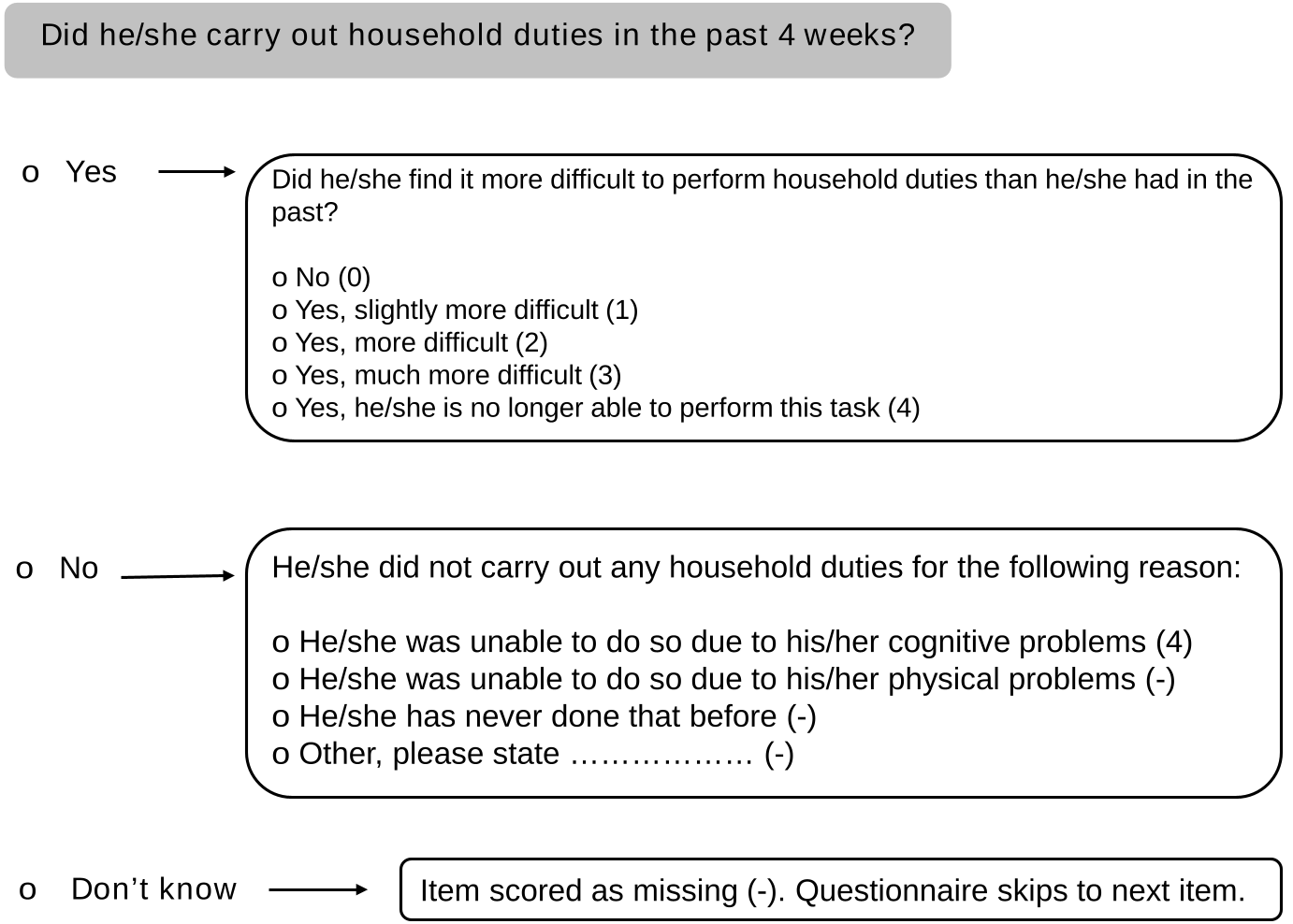 Figure 1: The adaptive logic of the Amsterdam IADL Questionnaire ensures relevance to the individual's lifestyle.
Key Results: Less is More
The resulting 30-item version proved to be a powerhouse:
- Reliability: A robust McDonald’s omega of 0.98.
- Alignment: High concordance with the Mini-Mental State Examination (MMSE) and the Disability Assessment for Dementia (DAD).
- Measurement Precision: As shown in the Item Information Curves (IIC), the items cover a broad spectrum of the latent trait, from very mild to severe impairment.
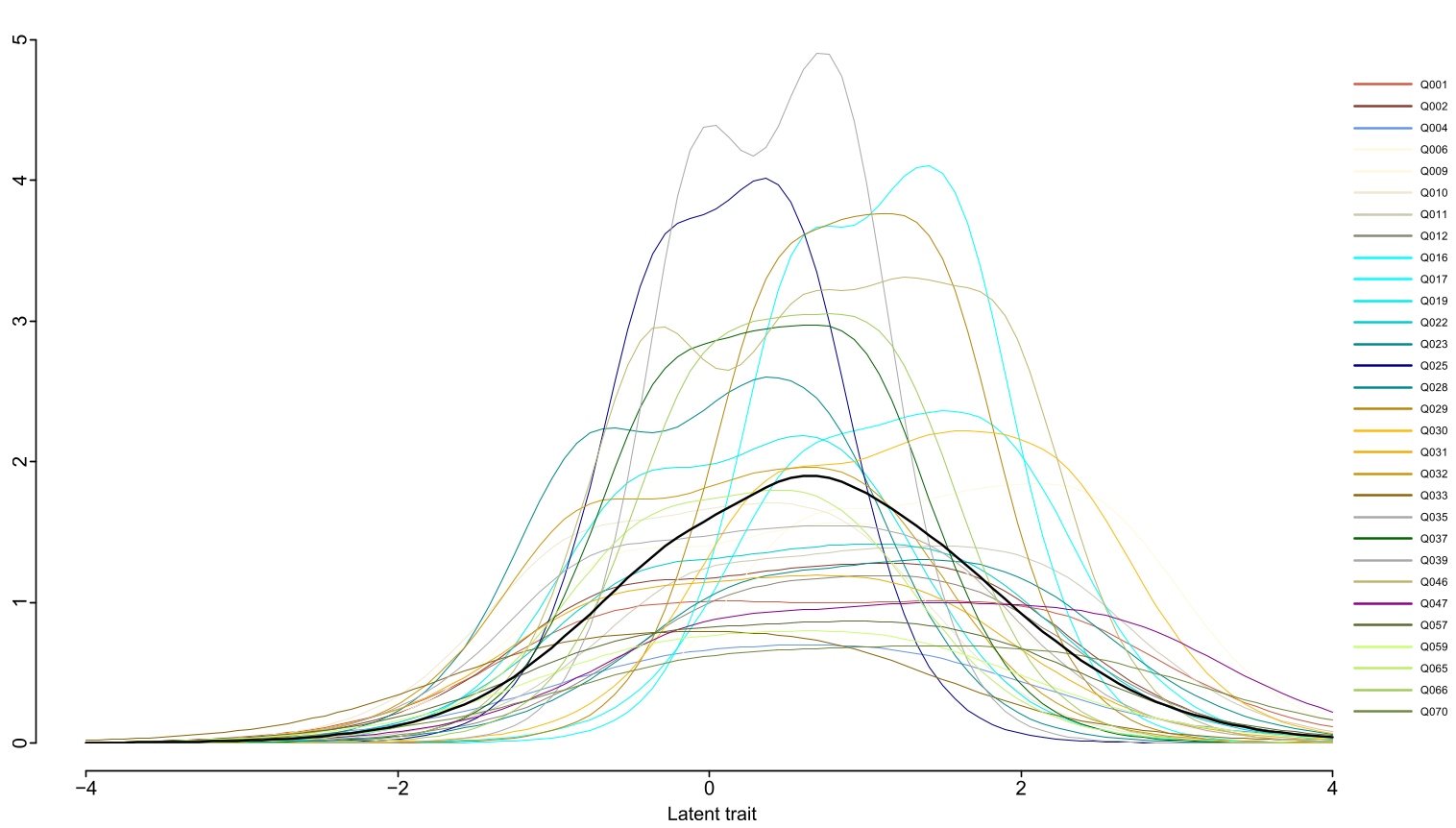 Figure 2: The total test information curve (bold black line) shows that the 30 items provide stable measurement across the spectrum of impairment (from -4 to +4).
Diagnostic Differentiation
Perhaps the most significant finding is the tool's sensitivity in the preclinical stage. The A-IADL-Q-SV showed significant score differences between "Normal Cognition" (NC) and "Subjective Cognitive Decline" (SCD). This suggests that caregivers notice functional changes even when objective cognitive tests don't yet show a deficit.
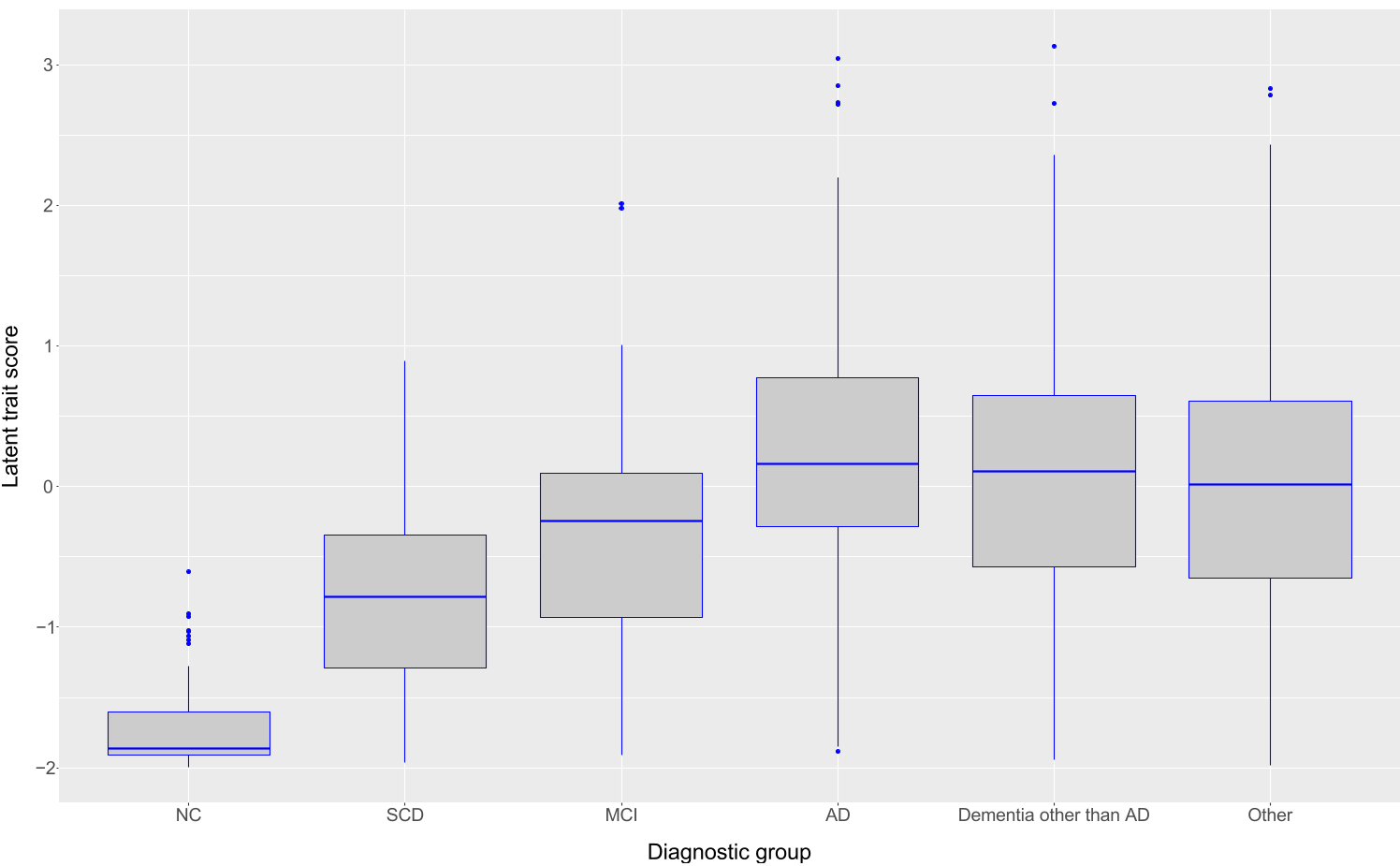 Figure 3: IADL impairment scores increase clearly across the diagnostic spectrum.
Critical Insight & Conclusion
The A-IADL-Q-SV strikes a rare balance between clinical utility and mathematical rigor. By focusing on "complex activities" (like electronic banking and using a smartphone) rather than just physical tasks, it aligns functional assessment with the digital reality of the 21st century.
Limitations: The study mainly utilized memory clinic patients, potentially skewing results toward more aware or proactive populations. Future work must validate if these scores can predict actual progression in longitudinal "real-world" settings.
Final Takeaway: For clinical trials targeting the earliest stages of Alzheimer's, the A-IADL-Q-SV offers a validated, time-efficient "functional thermometer" that captures what cognitive tests might miss.