
Deciphering Cinematic Liberty: A Graph-Theoretic Audit of Film Adaptations
15338_Analysis of Adapted Films and Stories Based on Social Network.
This paper presents a computational framework for analyzing the structural and relational deviations between original novels and their film adaptations using Social Network Analysis (SNA). By modeling characters as nodes and dialogues as weighted edges, the researchers quantify how filmmakers exercise "cinematic liberty" to transform literary narratives into visual media.
TL;DR
Why does a movie often feel "different" from the book, even when the plot stays the same? This research leverages Social Network Analysis (SNA) to quantify the "cinematic liberty" taken by directors. By analyzing Harry Potter and Satyajit Ray's Charulata, the authors prove that while the core themes remain intact, the social hierarchy of characters is aggressively reshaped to suit the visual medium.
Background: Beyond Subjective Criticism
Film adaptation is a process of translation—moving a story from the abstract imagination of a reader to the concrete visuality of the screen. Historically, evaluating this transition has been the domain of film critics using subjective language. This paper shifts the paradigm into the realm of Digital Humanities, treating characters as nodes in a complex graph and their interactions as the data points that define a story’s "DNA."
Methodology: The Math of Narratology
The authors construct character networks where:
- Nodes: Represent individual characters.
- Edges: Represent dialogues, weighted by the volume of words exchanged divided by interaction frequency.
- Time Frames: The story is sliced into chapters (book) and scenes (film) to track temporal evolution.
The Centrality Toolkit
To measure influence, the study uses four key metrics:
- Weighted Degree: Local connectivity.
- Weighted Closeness: Efficiency of information flow.
- Weighted Betweenness: Control over interactions (gatekeeping).
- Weighted Edge Contribution Factor (WECF): This is a sophisticated metric that looks at the "wealth" of a character's neighborhood, rewarding nodes connected to other influential nodes.
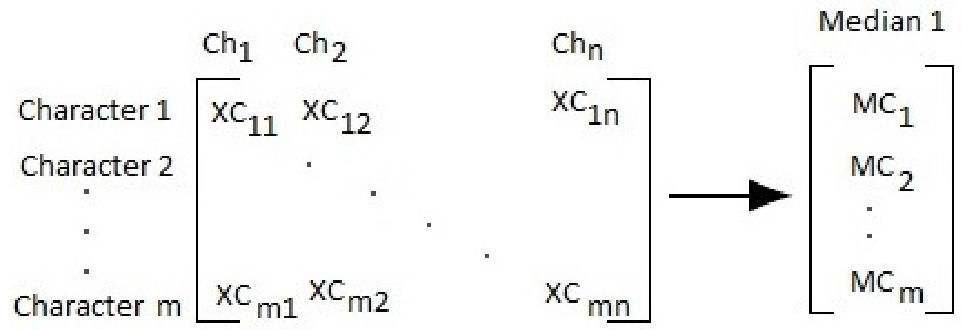 Fig 1: Calculation of dominant eigenvector to identify the protagonist's structural influence.
Case Studies: Nastanirh vs. Harry Potter
The researchers compared Rabindranath Tagore's Nastanirh (and its film version Charulata) and J.K. Rowling's Harry Potter and the Philosopher's Stone.
Key Insights:
- The "Hero" Inflation: In the film versions, the gap between the lead and supporting characters narrows. In Charulata, the film grants the character Amal almost equal dominance to the protagonist, making the relationship more "realistic" for a visual audience compared to the book.
- Supernatural Downsizing: In Harry Potter, the giant Hagrid is a massive presence in the book's network. In the film, his influence is mathematically reduced to prioritize the "human" friendship between Harry, Ron, and Hermione, likely to ground the story for a young audience.
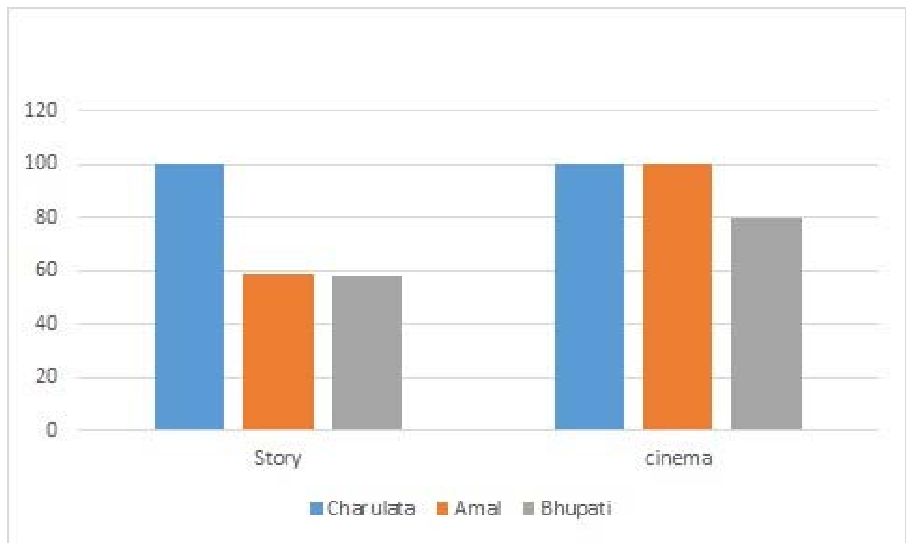 Fig 2: Comparison of character importance in the book "Nastanirh" versus the film "Charulata".
Results: Convergences and Divergences
Using the Mantel Test, the study found a correlation coefficient () above 0.90 for both cases, suggesting that the "essence" of the network survives the adaptation. However, Hierarchical Graph Partitioning (clustering characters by scene) showed that they are grouped differently in over 60% of scenes.
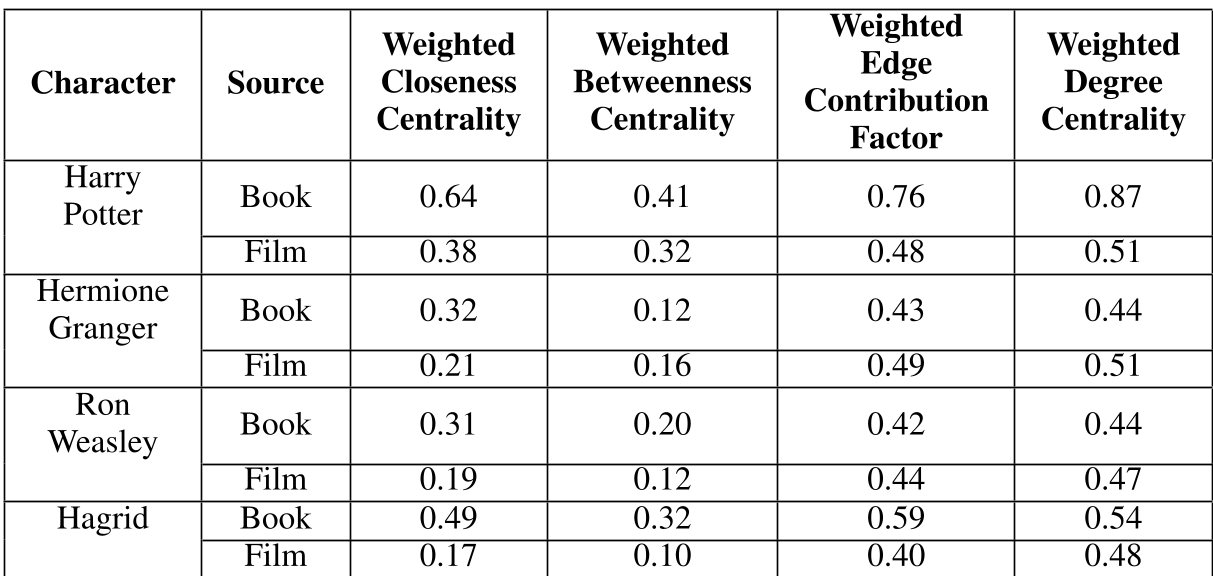 Fig 3: Quantitative shift in centrality values between the Harry Potter book and movie.
Critical Insight & Conclusion
This work highlights that a "successful" adaptation isn't a carbon copy. Instead, it’s a structural re-engineering. Directors intentionally boost the "Centrality" of protagonists to maintain visual focus and alter character clusters to create better pacing.
Limitations: The study relies on manually annotated dialogue data. Moving forward, integrating automated Speech-to-Text and NLP for automatic network extraction would allow for a larger-scale analysis across thousands of films, potentially defining a "Universal Metric of Adaptation Quality."
Future Outlook: Beyond movies, this graph-based approach is being extended to "fake news" detection by comparing the word-networks of different newspaper reports on the same event—identifying bias through topology.