
Sentiment Mapping in Social Networks: A Bayesian Approach to VKontakte Profile Analysis
Analysis of User Profiles in Social Networks
This paper presents a social network analysis framework using the Naive Bayesian Classifier to identify user interests and political sentiments on "VKontakte" (VK). The system specifically targets the classification of user "wall" posts to determine public opinion regarding the annexation of Crimea.
Executive Summary
In the digital age, social networks are not just communication hubs but massive repositories of public sentiment and identity. This paper explores the "Analysis of User Profiles in Social Networks," focusing on the largest Russian-speaking platform, VKontakte (VK).
TL;DR: The authors developed a system that leverages the Naive Bayesian Classifier and MaltParser to scrape and analyze user posts (walls). Their primary case study involves identifying user opinions on the annexation of Crimea, categorizing them into "Good," "Bad," or "Unknown" based on linguistic patterns.
This work serves as a foundational bridge between API-driven data mining and applied sociopolitical sentiment analysis in the RuNet (Russian Internet) ecosystem.
Motivation: The Gap in Public Analysis Tools
While tech giants like Google and Yandex possess sophisticated algorithms for user profiling to serve ads, the academic and administrative communities often lack accessible tools to gauge public interest or sentiment on specific issues.
The authors identified a critical need for a system that can:
- Automate Data Collection: Interface with social network APIs (VK) without manual scraping.
- Understand Context: Move beyond simple keyword matching to probabilistic classification.
- Regional Specificity: Address the unique linguistic and social landscape of users in Ukraine and Russia.
Methodology: From Raw API Data to Probabilistic Insights
The architecture of the proposed system is divided into three distinct phases: Data Collection, Preprocessing, and Classification.
1. Data Collection via VK API
The system utilizes the OAuth 2.0 protocol and the VK Standalone application interface. By calling users.search and wall.get methods, the researchers filtered users by geography (City ID) and retrieved their public wall entries in JSON format.
2. Text Preprocessing (MaltParser)
Before classification, the raw text must be decomposed. The authors use MaltParser, a data-driven dependency parser, to generate syntax trees. This step is crucial for understanding the relationships between words in complex Russian or Ukrainian sentences.
3. The Naive Bayesian Engine
The heart of the system is the Naive Bayesian Classifier. It calculates the posterior probability of a text belonging to a specific sentiment category using Bayes' Theorem:
The model is trained on a "TrainingSet" where words are assigned likelihoods. For instance, common conjunctions (like "and") have similar probabilities across all classes, while specific tokens like "against" act as strong indicators for negative sentiment.
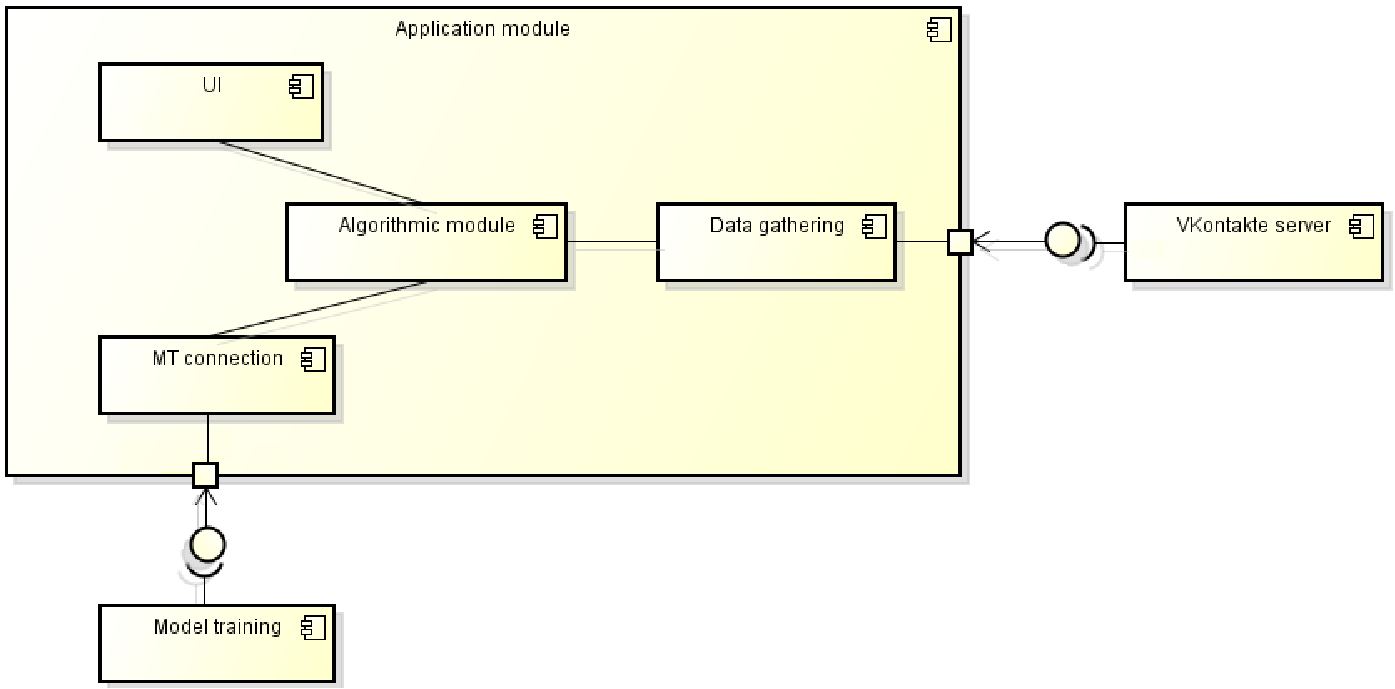 Fig 1: The modular architecture showing the flow from VK servers to the trained Bayesian model.
Experiments and Results
The authors conducted training using 100 examples for each of the three categories: Good (Supportive), Bad (Opposed), and Unknown (Neutral/Irrelevant).
Sentiment Probabilities
The effectiveness of the training is evidenced in the probability distribution table (Table 2 in the paper).
| Feature (Word) | Unknown | Good (Support) | Bad (Against) |
|---|---|---|---|
| against | 0.23 | 0.15 | 0.6 |
| sign | 0.15 | 0.44 | 0.08 |
| spring | 0.37 | 0.01 | 0.01 |
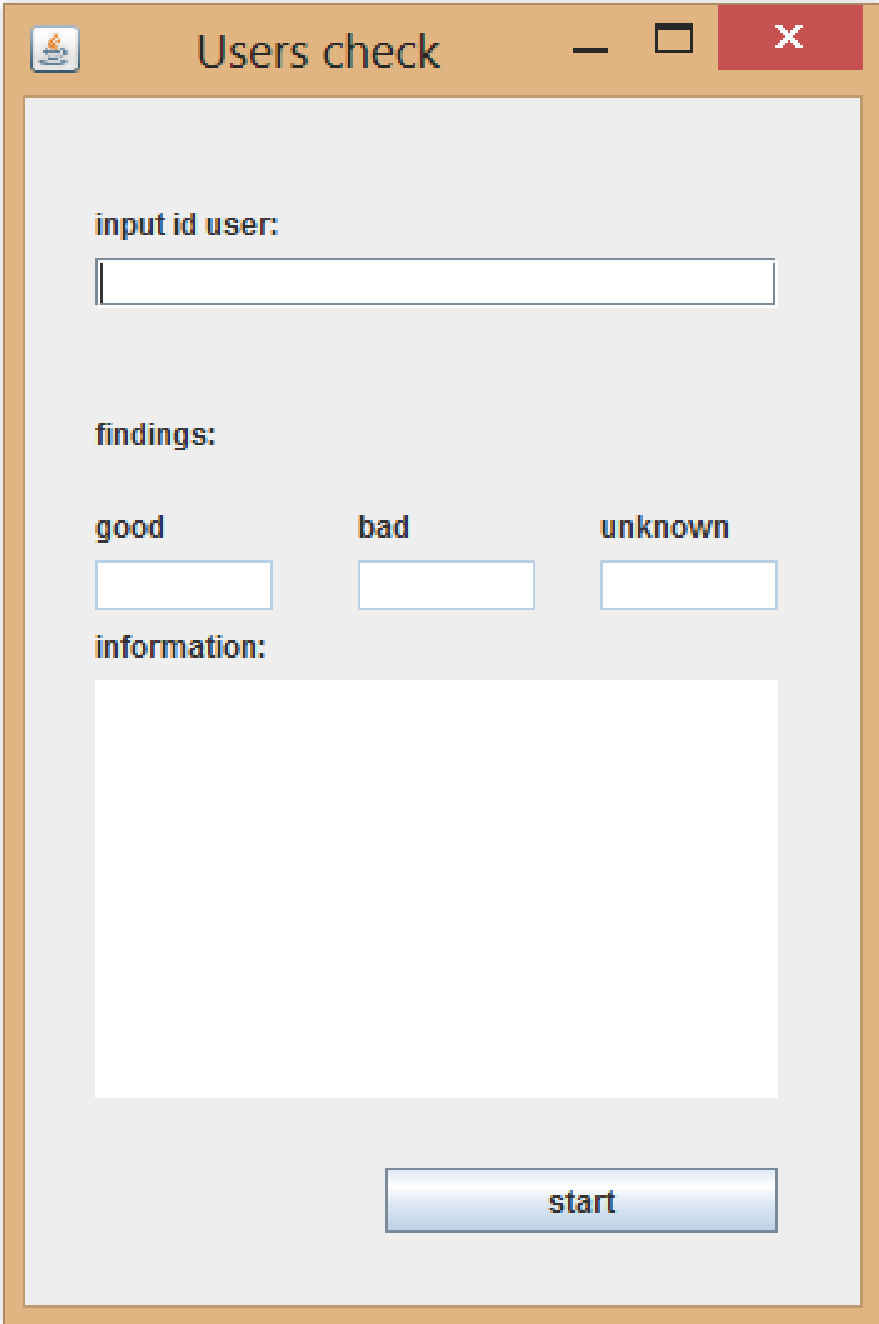 Fig 2: The developed desktop application interface used to visualize the analysis results.
Critical Insight & Conclusion
The Takeaway: This research highlights the effectiveness of "Naive" methods in complex environments. Despite the "Naive" assumption (that features are independent), the classifier provides a robust rank for categorizing sociopolitical discourse.
Limitations:
- Sample Size: Training on only 100 examples per category is a modest start; real-world accuracy would likely require thousands of samples to handle sarcasm or nuanced political rhetoric.
- Evolving Language: Social media slang and "Internet speak" change rapidly, requiring constant retraining of the symptoms list.
Future Outlook: The logic used here can be extended beyond political sentiment to commercial applications, such as identifying potential leads for niche products or managing community membership based on user interest profiles.