
Safeguarding the Digital Handshake: A Deep Dive into Social Network Security
An Analysis of Security in Social Networks
This paper presents a comprehensive security analysis of social networks, identifying key threats such as worms (Sammy, Mikeyy, Koobface) and malware. It proposes a dual-layer security framework focusing on the responsibilities of both users and social networking sites (SNS) to mitigate information theft and financial crimes.
TL;DR
Social networking sites (SNS) like Facebook and LinkedIn have transformed communication but simultaneously lowered our collective "immune system" against cyber threats. This paper analyzes the evolution of social malware—from harmless jokes to lucrative financial crimes—and proposes a collaborative security framework where users and platforms share the burden of defense.
Problem & Motivation: The Trust Paradox
The fundamental vulnerability of social networks isn't just a coding flaw; it's a psychological one. In a virtual community, users are conditioned to share and trust. This Inductive Bias of Trust allows attackers to bypass traditional firewalls using social engineering.
The authors point out that as social networks grew explosively, they became a "hotbed" for malware. Predators shifted from attacking the network layer to attacking the Application Layer and the user's curiosity. The paper highlights that by 2008, the sheer volume of malicious programs targeting social sites had reached critical mass.
Methodology: The Anatomy of an Attack
The authors provide a structured taxonomy of social threats, splitting the analysis into the "What" and the "How."
What Seek the Attackers?
- Personal Identity: Passwords, bank accounts, and SSNs.
- Corporate Secrets: Accessing company intranets via employees who share too much on platforms like LinkedIn.
- Botnet Recruitment: Turning user computers into "zombies" for DDOS attacks.
The Attack Vectors (The "How")
Modern social attacks leverage the complexity of the platform:
- XSS (Cross-Site Scripting): Injecting malicious code into seemingly harmless profile pages.
- Third-Party Flaws: Vulnerabilities in games or apps integrated into the SNS.
- Phishing & Social Engineering: Disguising as a "friend" to encourage clicks on malicious URLs.
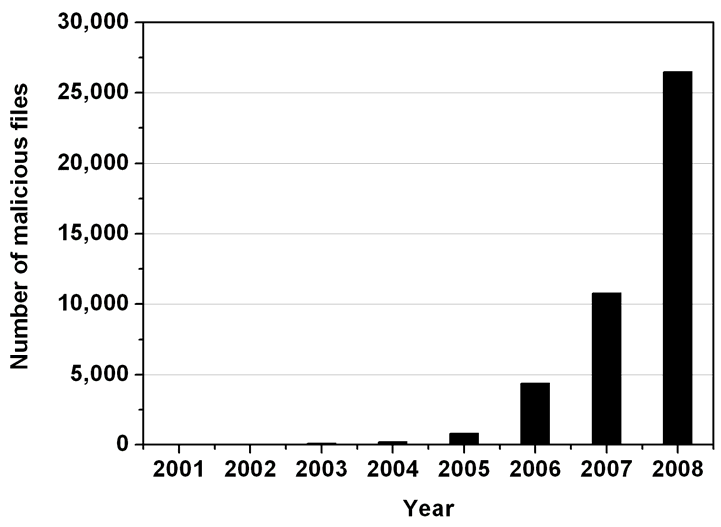 Figure 1: The exponential rise of malicious programs targeting social networking sites.
A Two-Tiered Security Framework
The authors argue that security cannot be solved by one side alone. They propose a Security Framework that delineates responsibilities between the User and the Site.
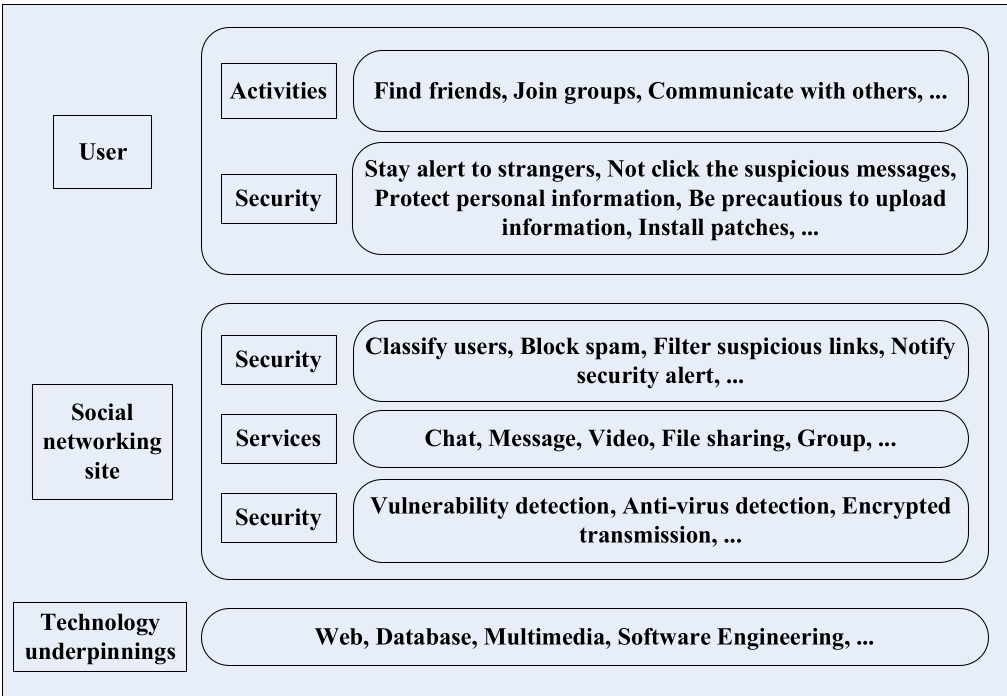 Figure 2: The proposed security framework bifurcating responsibilities.
The User's Role: Behavioral Hygiene
- Content Control: Granular permission settings (e.g., only allowing classmates to view profiles).
- The "Permanent Record" Realization: Understanding that once information is uploaded, it can never truly be deleted.
- Vigilance: Maintaining a "Zero Trust" mindset toward stranger invitations.
The Site's Role: Systemic Fortification
- Dynamic Functionality: Limiting features for unverified or "low-detail" users to prevent bot-spam.
- API Security: Rigorous auditing of external Web APIs and third-party plugins (like Flash/Silverlight, which were major vectors at the time of writing).
- Collaboration: Constant communication with security vendors to patch 0-day vulnerabilities.
Experiments & Real-World Impact
The paper cites the historical impact of worms like Sammy (MySpace) and Koobface (Facebook). While Sammy was a proof-of-concept that crashed servers, Koobface represented the pivot to professionalized crime, specifically designed to filch passwords and credit card data.
Statistical data from the Kaspersky Lab (see Figure 2 in the paper) confirms that the number of unique malicious files grew from nearly zero in 2005 to over 40,000 by 2008, proving that social networks are no longer a "niche" target but the primary frontier for cyber warfare.
Critical Analysis & Conclusion
This paper serves as a foundational blueprint for social media security. Its strength lies in its dual-responsibility model. However, from a modern lens, the paper's focus on Flash and Silverlight is dated; today's threats involve AI-driven "Deepfake" social engineering and sophisticated data-scraping for Large Language Model (LLM) training.
Takeaway: Security is a process, not a product. As platforms become more integrated into our lives, the line between "personal" and "private" blurs, requiring both smarter algorithms from developers and higher "digital literacy" from users.
Future Outlook: The shift toward decentralized social networks (Web3) may offer new solutions to data ownership, but they will likely face the same fundamental social engineering challenges identified in this 2010 analysis.