
Decoding Collaboration: Using Social Networks to Tailor Software Processes
Analyzing Collaboration in Software Development Processes through Social Networks
The paper proposes a framework to analyze collaboration in software development by integrating Social Network Analysis (SNA) with the Collaboration Maturity Model (CollabMM). It introduces EvolTrack-SocialNetwork, a tool designed to mine, visualize, and analyze developer interactions to tailor software processes effectively.
TL;DR
To build high-quality software, organizations must balance Discipline (process control) and Collaboration (people interaction). This paper presents a methodology and a tool called EvolTrack-SocialNetwork that uses Social Network Analysis (SNA) to visualize how developers actually interact. By mapping network metrics to the CollabMM maturity framework, it provides managers with a dashboard to "tailor" their development process—moving from rigid silos to reflexive, collaborative ecosystems.
The "Process Tailoring" Dilemma
In the software engineering landscape, we often see a tug-of-war between:
- Plan-driven models (e.g., CMMI): High discipline, predictable, but often bureaucratic.
- Agile/FOSS models: High collaboration and flexibility, but sometimes lacking formal control.
The problem is that most organizations try to "hybridize" these models by simply mixing practices without understanding the underlying human dynamics. The authors argue that Process Tailoring—the act of customizing a process for a specific project—fails because it is often done "blindly," without measuring the actual collaboration happening on the ground.
Methodology: Turning Interaction into Data
The core insight of this work is that collaboration is not an abstract concept; it leaves a digital footprint in code repositories, e-mail lists, and discussion forums.
1. The Collaboration Maturity Model (CollabMM)
The authors use CollabMM as a theoretical lens, which categorizes collaboration into four levels: Ad-hoc, Planned, Aware, and Reflexive. Each level requires different communication and coordination practices.
2. Social Network Metrics as Proxies
To determine which level a project is at, the authors use established SNA metrics:
- Degree Centrality: Who are the "hubs" of information?
- Betweenness Centrality: Who acts as a bridge between sub-teams?
- Network Density: How well-connected is the entire team?
3. Tool Architecture: EvolTrack-SocialNetwork
The authors developed an extension to the EvolTrack tool to automate this analysis. The architecture consists of three pillars:
- Mining: Extracting data from SVN, Eclipse, and communication logs.
- Visualization: Graphing the technical and social dependencies.
- Analysis: Calculating properties to check if the team’s "social shape" matches the project goals.
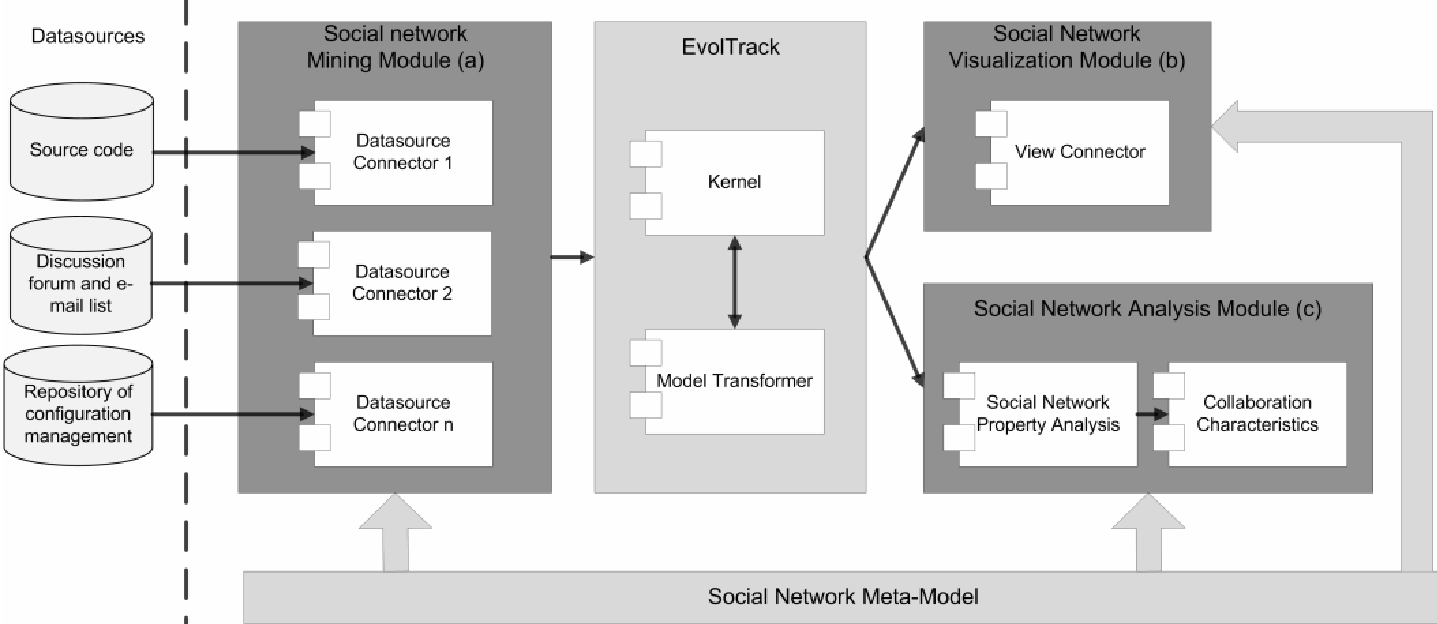 Figure 1: The three-module architecture (Mining, Visualization, Analysis) of the proposed tool.
Experimental Insights: Centralization vs. Distribution
The paper highlights a critical "Scenario of Use." Imagine a project (CDSOFT) that requires a Reflexive level of collaboration due to volatile requirements.
- Ideal State: A high-density, distributed network (Figure 2a).
- Actual State: A centralized, "star" network where one leader bottlenecks all information (Figure 2b).
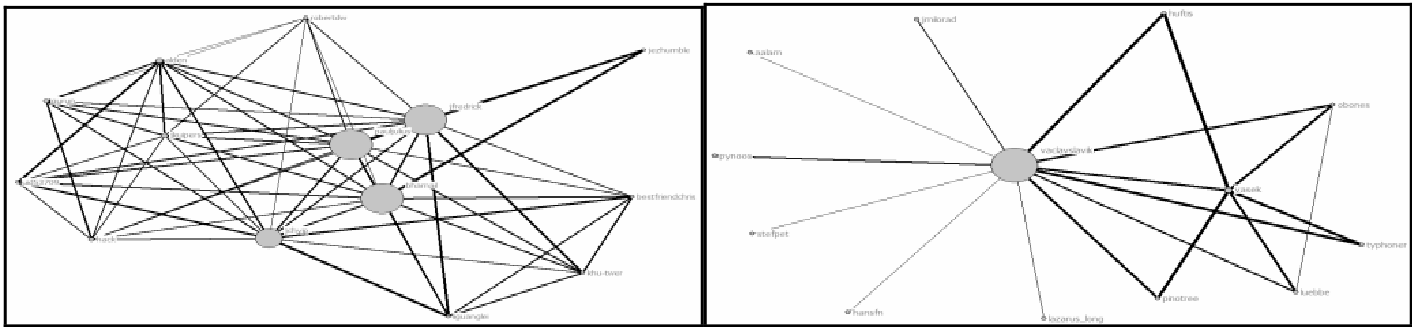 Figure 2: (a) Distributed coordination intended for high collaboration vs. (b) Centralized coordination observed in reality.
By identifying this gap, a manager can introduce specific practices (like awareness tools or communication plans) to "de-centralize" the network and reach the required maturity level.
Critical Analysis & Conclusion
This work shifts the focus from what tools developers use to how they interact through those tools.
Key Contributions:
- Defines 15 technical requirements for social software engineering tools.
- Provides a bridge between qualitative maturity models (CollabMM) and quantitative graph theory (SNA).
Limitations: The current tool is still under development regarding full integration of email and forum connectors. Furthermore, the paper focuses primarily on the existence of links, not necessarily the quality of the interactions within those links.
Future Outlook: As remote and distributed work becomes the standard, tools that provide "Social Network Awareness" will be essential. This research paves the way for AI-driven process tailoring, where the system itself suggests process changes based on real-time social bottlenecks.