
Beyond the Sensor: Why Crowdsensing Must Learn the Human Side of Crowdsourcing
Analyzing crowdsourcing to teach mobile crowdsensing a few lessons
The paper, "Analyzing crowdsourcing to teach mobile crowdsensing a few lessons," investigates human participation in Mobile Crowdsensing (MCS) by mining extensive data from StackOverflow. It applies psychological theories to propose a framework for improving user engagement and data quality in MCS systems.
TL;DR
Mobile Crowdsensing (MCS) often treats people as simple carriers of sensors, but the real bottleneck isn't the hardware—it's the human owner. By analyzing 7 years of data from StackOverflow through a psychological lens, this paper proves that factors like proximity, politeness, and habitual patterns are more effective at securing high-quality data than financial incentives alone.
Academic Context: This work bridges the gap between Sociology/Psychology and Mobile Computing, shifting the focus from "how a phone senses" to "why a human contributes."
The "Mechanical Fallacy" in Crowdsensing
In the traditional MCS literature, if a user is at Location X at Time Y, a request is sent. The assumption is that for the right "price" (incentive), they will comply. This paper challenges this "status-quo," arguing that a smartphone is private property. Relying solely on financial rewards can actually undermine intrinsic motivation—a phenomenon known in psychology as the "overjustification effect."
Methodology: Mining the "Wisdom of the Crowd"
The authors argue that because mature MCS systems are scarce, we should look at Crowdsourcing (the parent paradigm) to predict human behavior. They mined StackOverflow’s massive database (9M questions, 16M answers) to test 8 psychological dimensions.
1. The Power of "Usual" Behavior
Using unsupervised machine learning (WEKA), the authors categorized user response times into "Usual" and "Unusual" clusters.
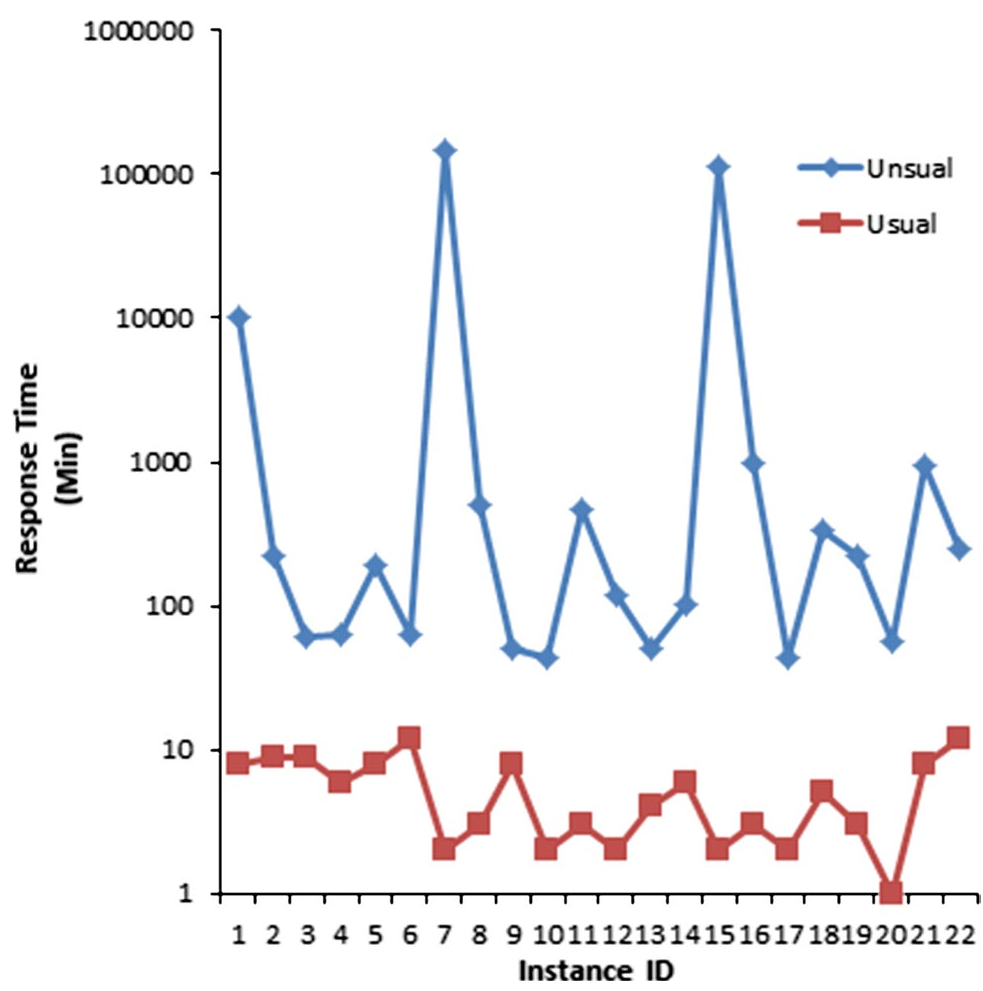
The takeaway was profound: When people respond within their "usual" habitual pattern, the quality (score) of their contribution is significantly higher.
2. The Locality Bias: Distance Still Matters
Even in a digital world, we are biased toward our neighbors. The study found that users frequently favored requests from people in the same city.
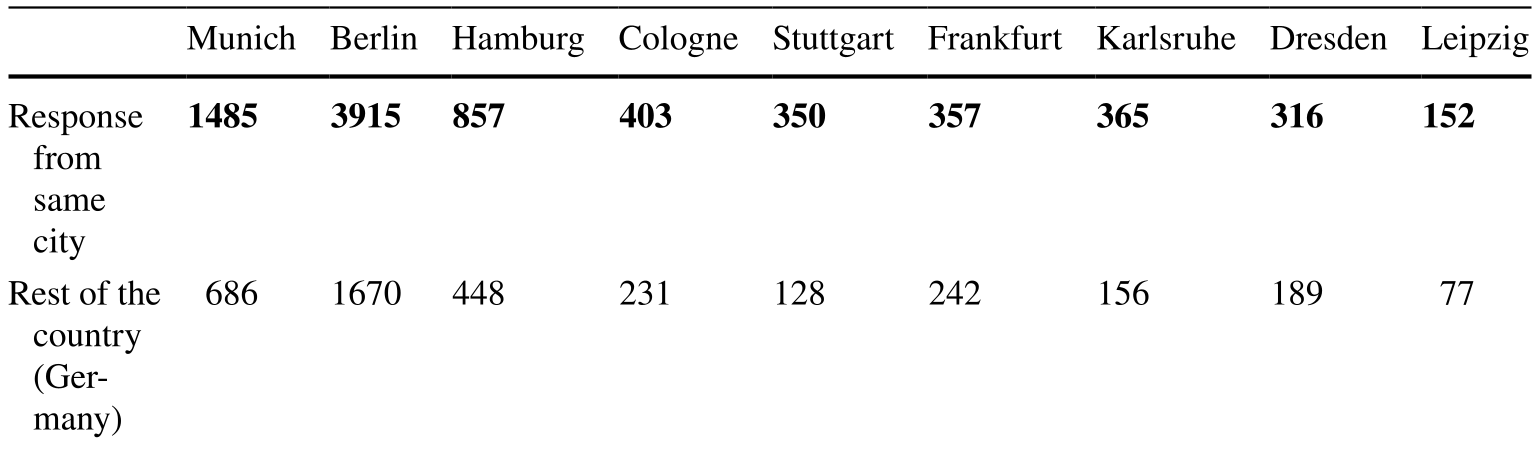
Key Insights and Experimental Results
- The Badge Trap: Users work intensely to earn a badge (extrinsic motivation), but participation often plummets immediately after the objective is achieved.
- Politeness Pays: Using Stanford’s Politeness API, the authors showed that "polite" requests receive more volume, although not necessarily higher quality.
- The Intellectual Threshold: High-end "expert" users (20k+ reputation) stop participating when the quality of incoming questions drops. If the task isn't intellectually stimulating, no incentive can keep them.

Deep Insight: A Roadmap for the Future
The authors conclude that an effective MCS platform must be Evolutionary. Challenges must adapt to the user's skill level to prevent boredom, and recruitment should prioritize:
- Spatial Proximity: Target users in the same vicinity as the requester.
- Online Presence: Users with detailed profiles and avatars are more reliable contributors.
- Habitual Matching: Route tasks to users when they are in their "usual" activity window.
Critical Analysis & Conclusion
While the study is limited by the fact that StackOverflow is a professional Q&A site (unlike a purely physical sensing task), the psycho-technological correlations are hard to ignore. The "Human Factor" is not just noise in the system—it is the system. For MCS to scale, it must stop treating humans as APIs and start treating them as motivated, social, and habitual beings.
Takeaway: Future MCS platforms should be designed by sociologists and psychologists just as much as by mobile systems engineers.