
The Pulse of Open Source: Decoding Distributed Leadership Through Network Dynamics
Analyzing Leadership Dynamics in Distributed Group Communication
This paper applies Social Network Analysis (SNA) to investigate leadership dynamics in distributed Free/Libre Open Source Software (FLOSS) projects. By analyzing communication centralization in two IM client projects (Gaim and Fire), it identifies that leadership is emergent and distributed rather than formal, showing that centralization is typically higher in developer-oriented venues than user forums.
TL;DR
How do groups of strangers, scattered across the globe, coordinate complex software projects without a boss? This paper dives into the ARCHIVES of FLOSS projects to map leadership using Social Network Analysis (SNA). The researchers found that leadership isn't a static trait but a shifting pulse—project "heartbeats" can be seen in massive spikes of activity where single developers take charge to clean up codebases.
Contextual Positioning
In the academic map of software engineering, this work bridges the gap between Organizational Behavior and Data Mining. It moves beyond the "what" of open source (the code) to the "how" of its survival (the social structure), arguing that the way we communicate reflects the invisible hand of leadership.
The "Centralization" Trap: Why Static Data Fails
Most studies treat a project's history as a single, frozen image. However, the authors argue that leadership in distributed groups is emergent and unstable.
- The Problem: Prior work often overlooked that a developer might lead "in bursts."
- The Insight: By looking at who replies to whom, we can calculate centralization. If one person is the hub of all replies, the project is highly centralized. If everyone talks to everyone, it’s decentralized.
Methodology: The 90-Day Lens
To capture the "flow" of leadership, the authors used a sliding 90-day window to analyze two projects: Gaim (very effective) and Fire (less effective). They didn't just look at code; they looked at three distinct "venues":
- Developer Lists: Where the "wizards" discuss architecture.
- User Lists: Where the "mortals" ask for help.
- Trackers: Where bugs go to die (or live forever).
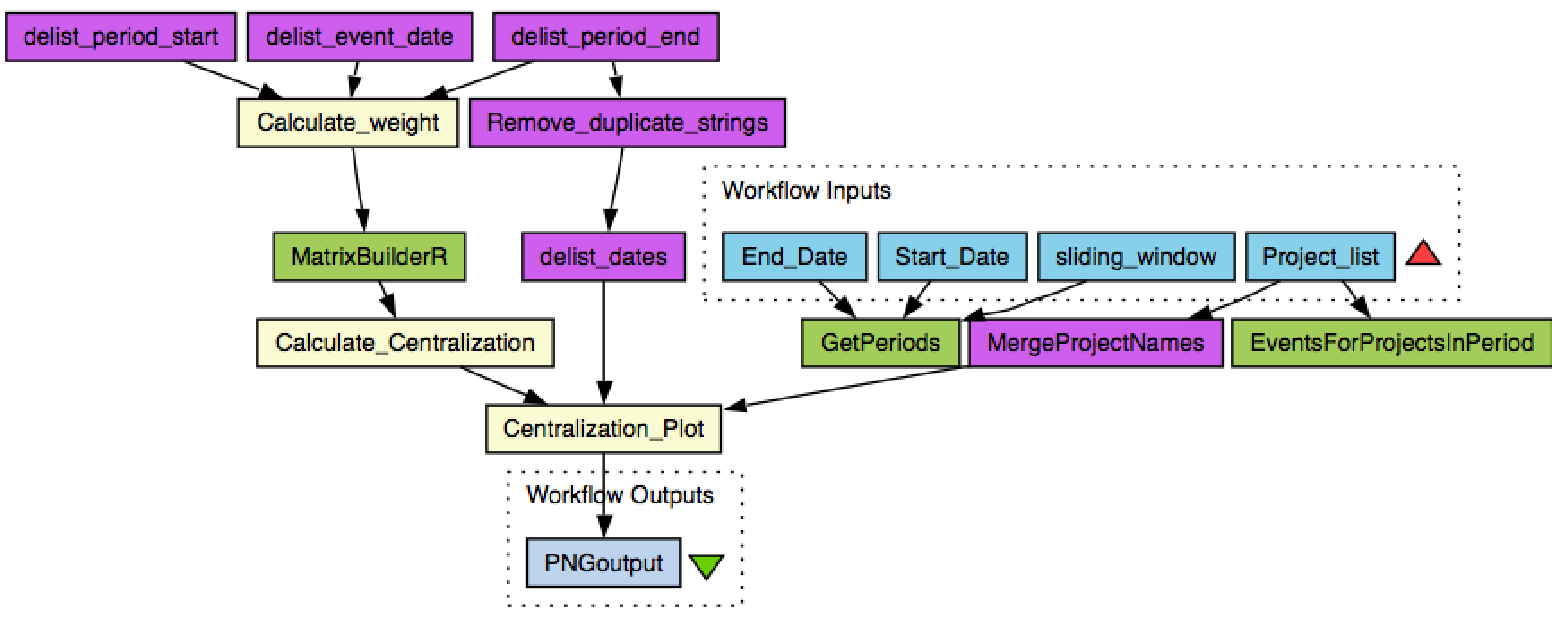 Fig 1: The Taverna Workbench workflow used to transform raw email archives into dynamic social graphs.
Key Findings: The "Housekeeping" Spike
The most striking discovery wasn't a steady state of leadership, but the spikes.
- The Mystery: In both projects, the researchers saw sudden, massive jumps in centralization within the bug trackers.
- The Explanation: These were "batch closings." A single dedicated leader would log on and close hundreds of bugs in a weekend. This is "distributed leadership" in action—different people stepping up for specific tasks (like janitorial work) at specific times.
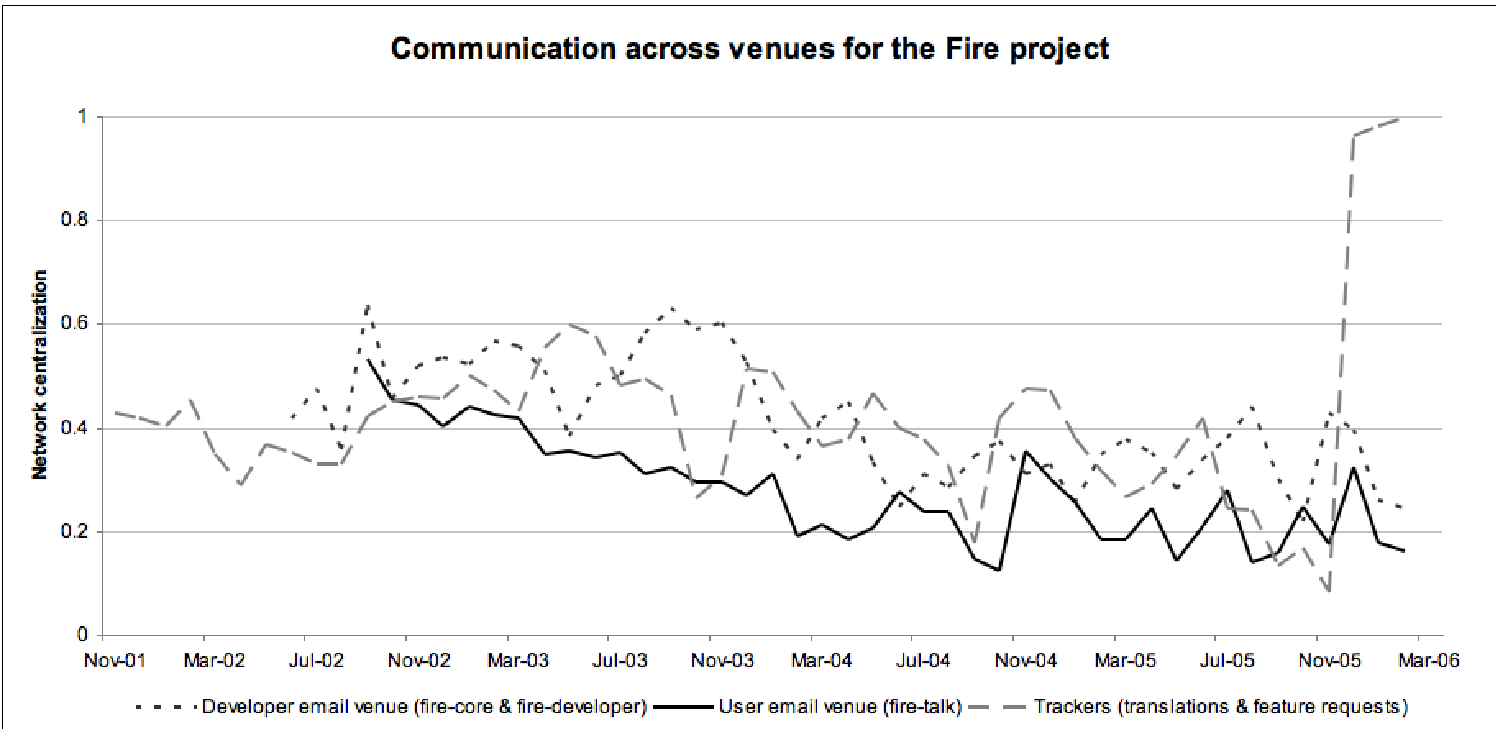 Fig 2: Dynamics of the Fire project showing the high volatility of centralization across different venues.
Effective vs. Ineffective: Does Centralization Matter?
Surprisingly, both the "successful" project (Gaim) and the "struggling" one (Fire) showed similar trends: everything decentralizes over time. As a project grows, the "core" group's relative influence shrinks because the user base explodes.
- In Gaim, decentralization meant growth and a healthy user ecosystem.
- In Fire, decentralization meant the core leaders were leaving, and no one was taking their place.
Critical Insight: SNA as a Radar, Not a Ruler
The authors conclude that you can't just look at a "centralization score" to see if a project is healthy. Instead, use SNA as a search tool. When you see a sudden dip or spike in centralization, that is when the leadership changed.
Takeaways for Technical Leaders
- Venue Matters: Leadership hides in different places. Someone might be a "leader" on the user forums but a "follower" in the code—both are vital.
- Rhythm of Work: Successful projects have "rhythms"—periodic bursts of maintenance (housekeeping) are a sign of project health, not just chaos.
- The Decentralization Mirage: Just because your project is becoming more decentralized doesn't mean it's succeeding; it might just mean your core team is burning out.
Limitations & Future Proofing
The study is limited by the "dark matter" of communication: Private Instant Messaging (IM). Since FLOSS developers of IM clients likely use their own tools to talk privately, the truly "secret" leadership decisions are invisible to archival SNA. Future research must find ways to reconcile public mailing lists with private "hallway tracks."
Conclusion
Leadership in the digital age is not a title; it is a communicative contribution. By monitoring the "centralization pulse" of a project, we can predict when a project is thriving and when it is on the verge of silence.