
Mining the Offshore Pulse: Aligning Moroccan Higher Education with Global Demand
Analyzing the needs of the offshore sector in Morocco by mining job ads
This paper presents a comprehensive data mining analysis of Morocco's offshore sector (BPO and ITO) by processing job advertisements from 10 major websites. Using machine learning classifiers and natural language processing, the authors identify critical skill gaps—specifically in programming languages and linguistic proficiency—to align university curricula with market demands.
TL;DR
Morocco's offshore sector is a massive engine for growth, yet a "skills gap" persists between what students learn and what companies hire. By mining over 128,000 job advertisements with machine learning (90% accuracy), this research uncovers the hard truths of the market: a high demand for Java, PHP, and JavaScript over academic favorites like C, and a lucrative path for non-graduates in multilingual BPO services.
Background: The Structural Mismatch
The offshore sector in Morocco is bifurcated into Information Technology Outsourcing (ITO) and Business Process Outsourcing (BPO). Despite the sector's growth, graduate unemployment remains high. The authors argue that universities are flying blind because they lack quantitative data on market needs. By crawling 10 job portals and tackling the "messy" nature of non-structured text, they aim to build a data-driven bridge between the classroom and the office.
Methodology: From Raw Text to Actionable Insight
Processing Moroccan job ads is non-trivial; many are posted as free-text descriptions on platforms like Avito without fixed schema.
The Processing Pipeline:
- Deduplication (Simhash): Since recruiters post the same ad on multiple sites, the authors used Simhash to identify near-duplicates, reducing the dataset from 128k to 55k unique openings.
- Classification: They trained SVM and Naive Bayes classifiers to distinguish "offshore" ads from general ones, and then further separated ITO from BPO.
- Semantic Mapping (LSI): To avoid counting "Software Developer" and "Dev" as different jobs, Latent Semantic Indexing was used to cluster similar job titles into a unified taxonomy.

Key Findings: Technical and Linguistic Realities
1. The ITO Tech Stack vs. Academic Curricula
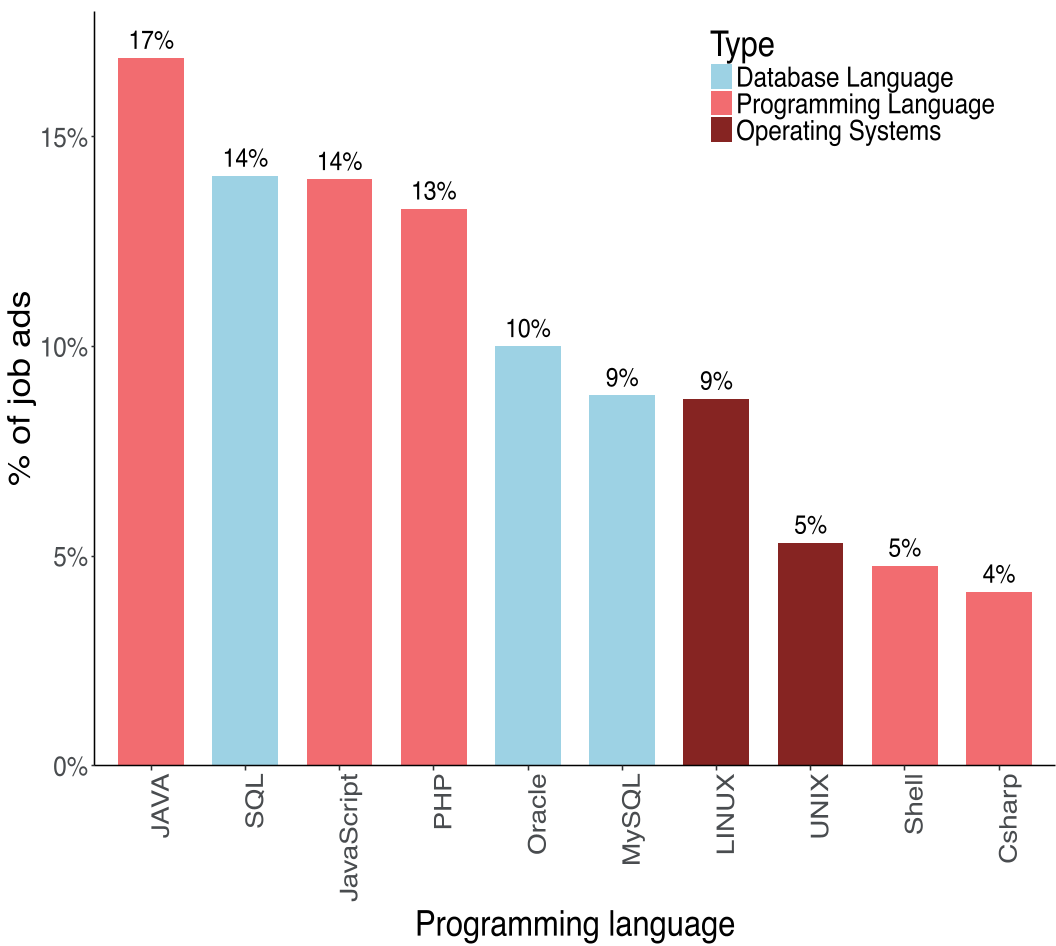
The study discovered a significant discrepancy between what is taught and what is sought. International rankings often hype Python, but in the Moroccan offshore sector, Java remains the undisputed king. Furthermore, Web Development (JavaScript, PHP) dominates the "Analyst & Developer" roles, yet these are often neglected in traditional CS curricula in favor of languages like C.
2. The BPO Opportunity
BPO (primarily Call Centers) acts as a vital safety net. These roles typically don't require higher education but demand high proficiency in French and increasingly Spanish or English. Crucially, BPO salaries (starting at ~4,000 DH) are roughly double the Moroccan minimum wage, making it a viable career path for youth who might otherwise be "NEET" (Not in Education, Employment, or Training).
3. The Salary Premium on Languages
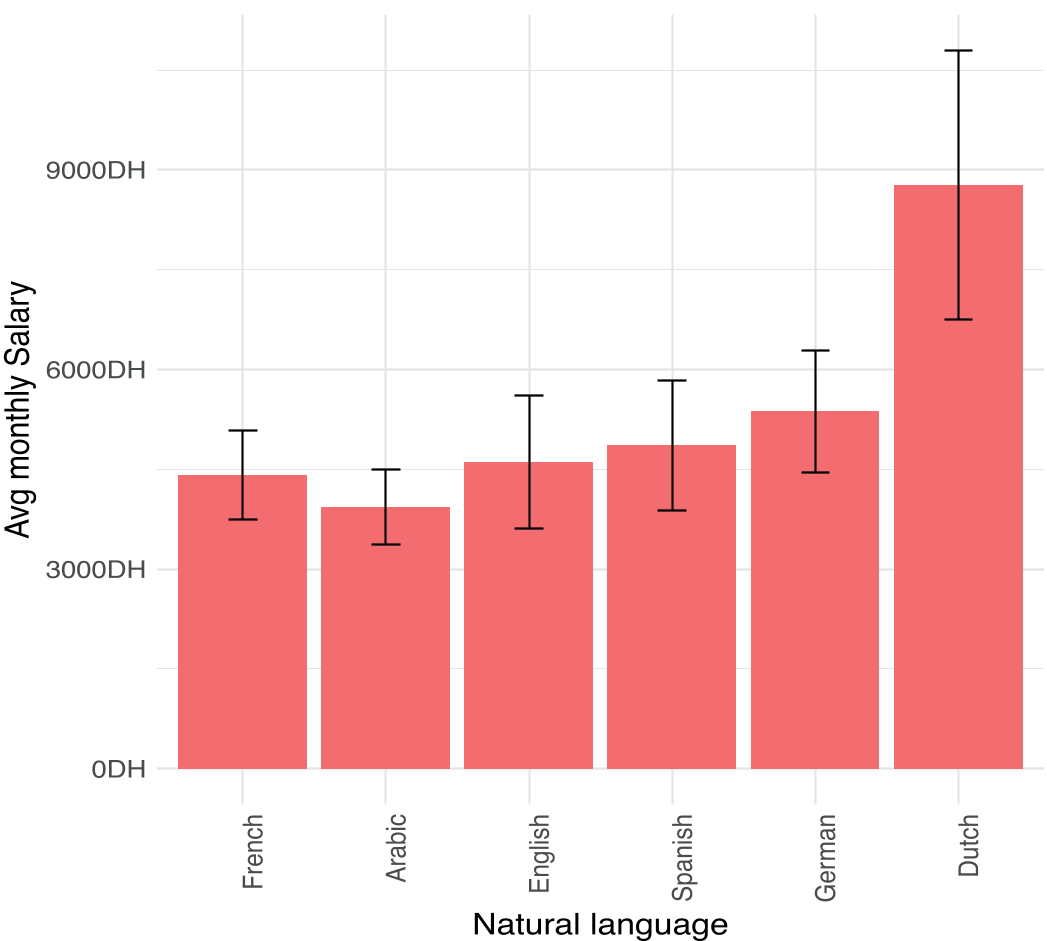
While French is the baseline, there is a clear "language premium." Salaries for BPO agents proficient in Dutch, Spanish, or German consistently outperform those for French-only roles, suggesting that linguistic diversification is a direct path to higher economic value for the workforce.
Critical Insight & Conclusion
This paper is more than a technical exercise; it's a policy instrument. By quantifying the dominance of Java and Web technologies, the authors have already begun updating their university curricula.
Takeaway: The offshore market is not a monolith. ITO requires deep specialization in specific legacy and web stacks, while BPO is essentially a linguistic service market. For Morocco to maintain its status as a premier offshore destination, the educational system must pivot from theoretical computer science to applied, market-specific technologies and polyglot training.
Future Work: The authors plan to extend this methodology to the burgeoning aerospace and automotive sectors, potentially creating a real-time "skill dashboard" for the Moroccan economy.