
Deciphering the Digital Pulse: Can Generic Sentiment Analysis Truly Inform Stock Decisions?
Analysing Tweets Sentiments for Investment Decisions in the Stock Market
This study investigates the efficacy of using a generic lexicon-based sentiment analysis (SA) tool, SentiStrength, to interpret financial Tweets for investment decision support. By analyzing 5,000 Tweets from influential accounts like Bloomberg, Reuters, and Donald Trump during the 2020 market crash, the authors compare automated scores against human "Ground Truth" to evaluate domain fitness.
TL;DR
Can a software tool designed for general social media sentiment actually help an investor navigate a stock market crash? This study puts SentiStrength to the test against the backdrop of the 2020 COVID-19 financial meltdown. While the tool excels at identifying blatant positivity in political rhetoric (e.g., Trump's tweets), it remains dangerously "blind" to the subtle, factual reporting of news giants like Reuters, where data-driven facts—not emotive words—drive investor fear.
Background Positioning
In the hierarchy of Financial NLP (Natural Language Processing), this work serves as a reality check on the limitations of lexicon-based methods. It positions itself between traditional technical analysis and modern neural-network approaches, highlighting the "Context Gap" that persists when generic tools meet specialized domains.
The "Fact-Sentiment" Paradox
The core problem identified by Hao and Chen-Burger is that financial influence often bypasses emotional adjectives. An investor doesn't need to see the word "sad" to be terrified by a headline stating: "The S&P 500 fell 7.6%."
Current SA tools have a high Inductive Bias toward emotive words. If a tweet is purely factual, the tool labels it "Neutral." However, for an investor, a neutral-toned fact about a massive stimulus package is highly "Positive." This creates a disconnect between textual sentiment and market sentiment.
Methodology: The Ground Truth Framework
The authors bypassed the messy correlation between single tweets and aggregate market prices (which are influenced by thousands of variables) and instead created a "Human Ground Truth."
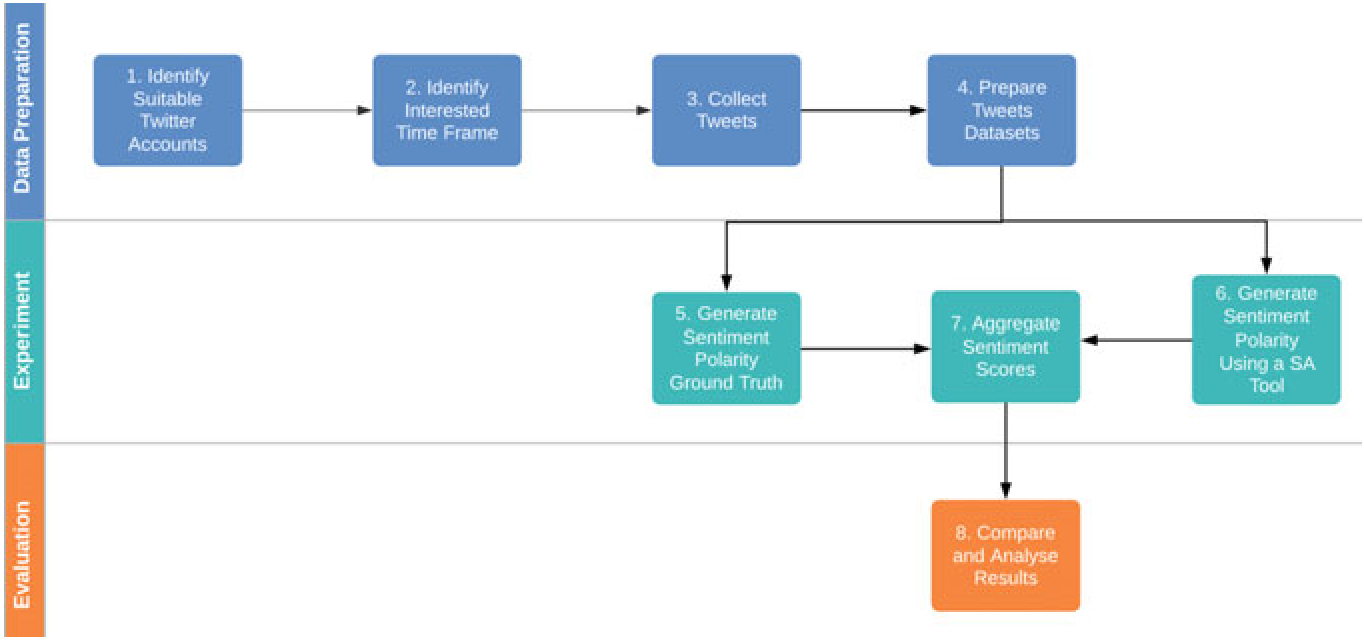
The SentiStrength Logic:
- Dual Polarity: Unlike 1D scales, it measures positive (1 to 5) and negative (-1 to -5) simultaneously.
- Lexicon Matching: It uses a dictionary of words weighted by strength.
- Composite Scoring: The scores are summed to give a single "Market Influence" value.
Results: The "Trump Effect" vs. The "Reuters Reality"
The study’s most striking finding lies in the performance disparity between account types.
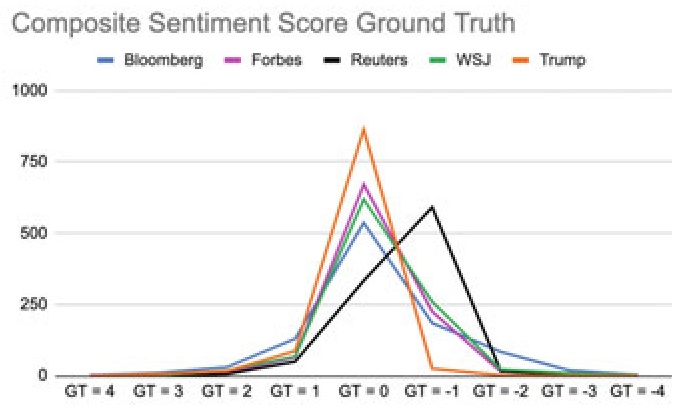
- The Trump Success: SentiStrength achieved a 91.1% F1-score on Donald Trump’s Tweets. Why? Because his language is naturally "lexicon-friendly," using high-strength words like support, lovely, and confidence.
- The Reuters Failure: Reuters had the highest neutral scores (72.3%) from the tool, yet humans saw 61% of those same Tweets as negative. The tool missed the "hidden information" within the factual reporting of the 2020 crash.
Performance Metrics Across Accounts:
| Account | Accuracy | Precision | F1 Score |
|---|---|---|---|
| Donald Trump | 0.839 | 0.980 | 0.911 |
| Bloomberg | 0.690 | 0.746 | 0.796 |
| WSJ | 0.638 | 0.737 | 0.748 |
| Reuters | 0.435 | 0.394 | 0.535 |
| Forbes | 0.412 | 0.387 | 0.535 |
Deep Insight: Beyond the Text
The authors conclude that determining the influence of a Tweet requires more than a dictionary; it requires Domain Ontology.
Key Takeaways for Future Devs:
- Fact as Sentiment: In finance, the subject matter (e.g., interest rates, grants) carries more sentiment than the adjectives used to describe them.
- Conservative Bias: Institutional news agents (WSJ, Bloomberg) tend to maintain a neutral tone to preserve authority, necessitating tools that can read "between the lines."
- Lexicon Expansion: Future work must move toward ontology-based methods where words like "stimulus" or "curb" are weighted based on their financial impact, not just their linguistic usage.
Final Verdict
This research proves that while automated tools are fast, they are currently "novice readers." To build a truly predictive investment support system, we must pivot from detecting how someone feels to understanding what a fact means for the market.