
Beyond the Screen: Anchoring Digital Design in Rural Oral Traditions
Anchoring Design in Rural Customs of Doing and Saying
This paper presents an ethnographic study of oral and performed information sharing in the village of Lwandile, South Africa. It explores how design for digital content creation can be "anchored" in local rural customs (Primary Orality) rather than Western text-based frameworks to enhance identity and community cohesion.
TL;DR
In the remote village of Lwandile, South Africa, digital tools often fail not due to a lack of utility, but because they are built on a "textual heritage" alien to local life. This paper argues for Anchored Design: a methodology that grounds technology in the "doing and saying" of rural customs. By emphasizing collective memory, physical indexicality, and repetitive performance, we can create digital spaces that truly resonate with communities living under traditional law.
The Problem: The "Market" vs. Primary Orality
Most digital platforms—from Facebook to Blogging—emerge from a "market" of symbols rooted in literacy and indirect orality. However, in rural Africa, Primary Orality prevails. Here, knowledge is not a static file; it is a living entity that must be constantly recreated, divided, and performed across a group according to social protocols.
The friction occurs when designers try to "shoehorn" these fluid oral practices into rigid, text-heavy Western interfaces. For example, a GPS system designed to track "traditional knowledge" might fail if it doesn't account for the fact that, for an Elder, knowledge only "exists" while physically walking the country.
Methodology: Ethnography as a Design Anchor
The author embedded herself within the patrilineal kinship group of a Headman in Pondoland. Over four phases, she transitioned from a passive observer to a co-generator of "sociotechnical experiments."
Key Insight: Indexicality and Place
In Lwandile, identity is etched into the land. Names are "indexical" to specific locations (e.g., Hlathinkhulu meaning "of big forest"). Communication is rarely abstract; it is tethered to the "here and now."
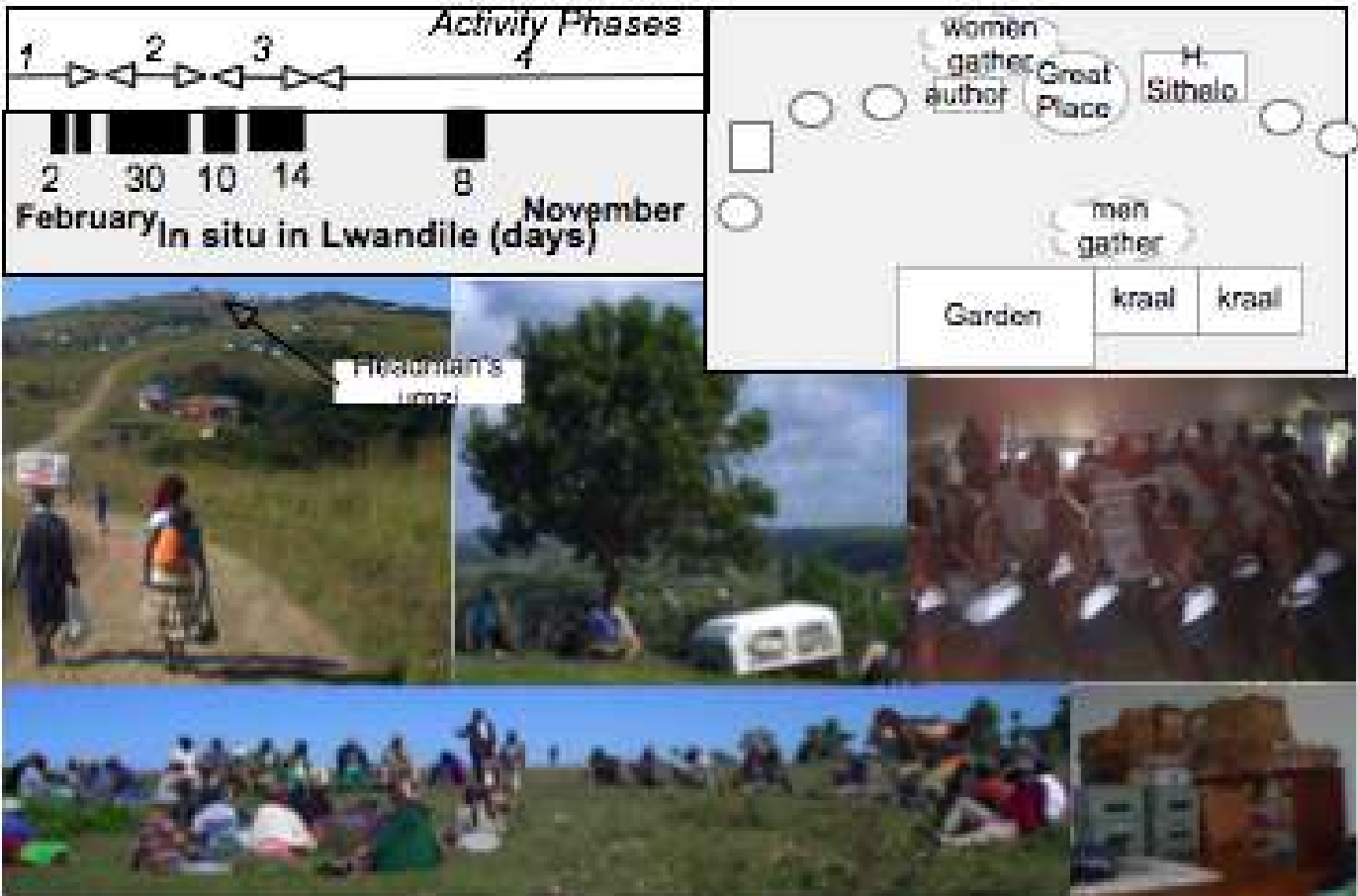 Figure 1: The village setting where domestic life and social leadership intersect with early technology experiments.
Core Findings: How Rural Communities "Share"
The study revealed several critical "hooks" for future design:
- Collective Consensus vs. Linear Narrative: Unlike the Western "single author" blog post, Lwandile's information sharing is a multi-vocal process. Decisions are made through prolonged, transparent debate. Digital tools should therefore support "orthogonal relationships"—allowing multiple voices to annotate a single piece of media simultaneously.
- Repetition as Validation: In oral traditions, repetition (diachronic and synchronous) is not "inefficiency"—it is the mechanism for building rapport and collective memory.
- Gendered Participation: Data showed that while men dominated public oratory, women utilized "synchronic repetition" (overlapping speech) as a sign of empathy and harmony. Design must account for these different linguistic structures.
Experimental Outcomes
Experiments with social media (Facebook) and blogging showed mixed results. While Thulani (a local leader) used Facebook to link with the "outside world" to raise funds, he found little use for it within the village. Conversely, digital photos became powerful "props" for oral storytelling, but only when they featured speakers and singers—reinforcing the importance of the performer over the content.
Note: The author observed that 83% of photos taken by locals at a school opening focused on speakers, highlighting the primacy of the 'actor' in oral culture.
Conclusion: A Shift in Perspective
The takeaway for the academic community is clear: ICT4D cannot just be about "translation." A system that is "localized" only by language but retains a Western linear logic will remain a foreign object.
Limitations & Future Work
The study notes that relying solely on "Human Access Points" (local leaders) can limit the scope of what technology is imagined. Future research should explore how to empower "marginalized voices" (women and youth) within these traditional structures without disrupting the social cohesion that provides the community its identity.
Final Insight: Design is not just about building a tool; it's about handling the "intangible stuff"—the songs, the gestures, and the rituals—that make a community whole.