
From Animal Instincts to Scientific Minds: Patching Human Education with AI
Animal Cognition, Epistemic Fluency, Social Networks and the Scientific Habit of Mind
This paper introduces a conceptual framework for fostering a "scientific habit of mind" in humans by bridging animal neurocognitive cycles with human symbolic language. It proposes the use of networked Intelligent Tutoring Systems (ITS) and social network analysis to scale scientific literacy and "epistemic fluency" across large populations.
TL;DR
Scientific thinking is not a natural instinct but a fragile cultural inheritance. This paper argues that by understanding the biological roots of cognition—the "Cognitive Cycle"—we can design Intelligent Tutoring Systems (ITS) that act as a "technological patch" to foster scientific habits of mind through networked, expert-level dialogue and social-semantic analysis.
Problem: The Fragility of the Scientific Habit
In 1910, John Dewey remarked that the future of civilization depends on the "widening spread and deepening hold of the scientific habit of mind." Yet, over a century later, scientific literacy remains strikingly inconsistent.
The authors argue that scientific thinking is difficult because it requires Epistemic Fluency: the ability to move across complex cognitive scripts (classification, causation, decision analysis). Unlike basic language, which children pick up naturally, scientific discourse requires "joint cognitive activity" with experts—a resource that is currently in critically short supply in modern society.
Methodology: The Biological Blueprint of Thought
The paper traces our "scientific habit" back to the Cognitive Cycle shared with animals.
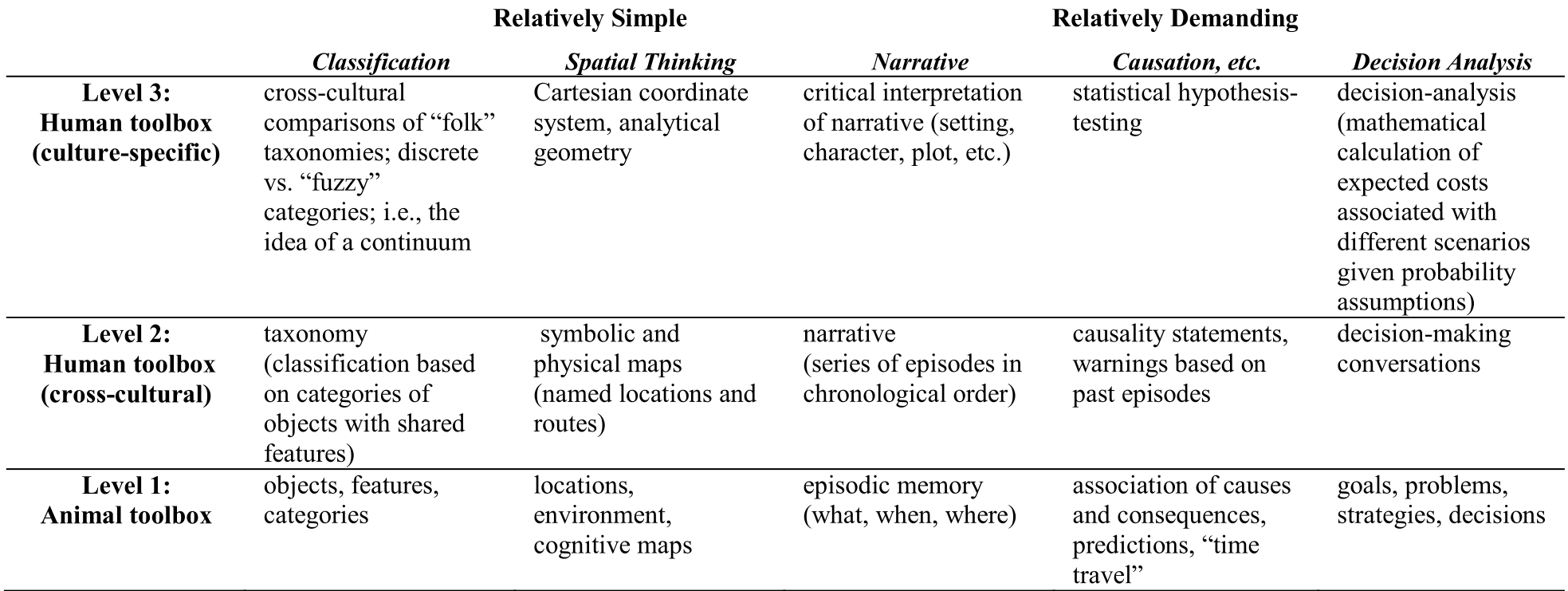
1. Epistemic Primitives
Animals utilize "Level 1" tools: feature detection, spatial mapping, and episodic memory. Humans have evolved to wrap these primitives in symbolic language, creating "Level 2" cross-cultural tools (like maps and narratives) and "Level 3" culture-specific tools (like statistical hypothesis testing).
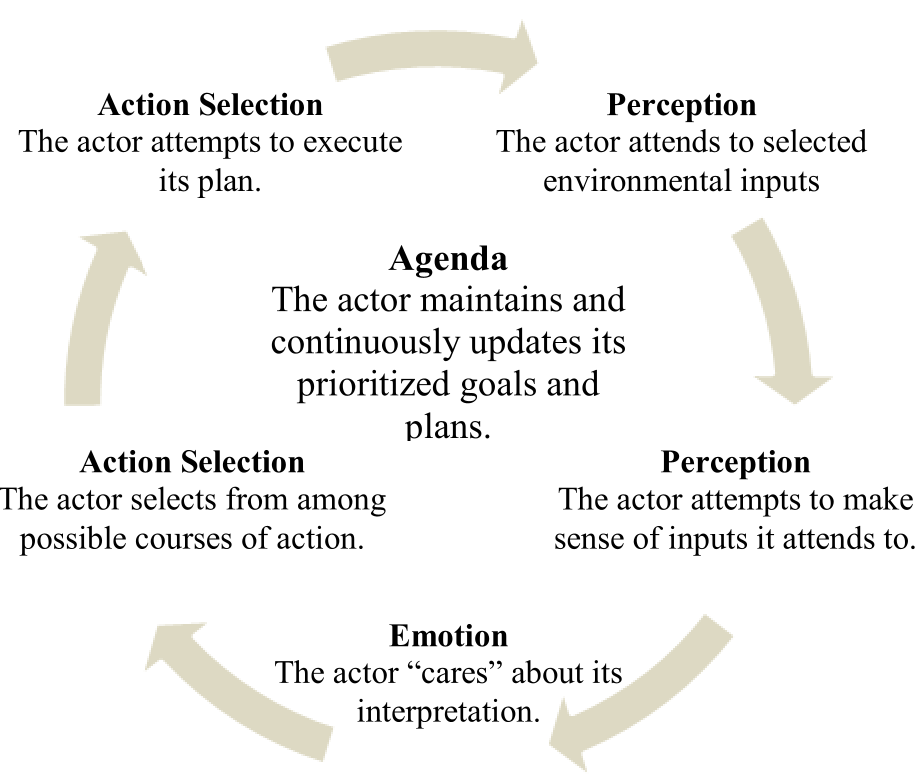
2. Epistemic Fluency & Intelligent Agents
The core proposal is to use Intelligent Coaching Agents to fill the gap left by a lack of human mentors. These agents aren't just information dispensers; they are designed to:
- Engage in Natural Language: Using "deep" questions (Why? What if?).
- Detect Emotion: Responding to frustration or "flow" during the learning process.
- Act as Social Nodes: Existing on the web as persistent coaches that bridge the gap between social interaction and formal learning.
Experiments & Evaluation: Measuring the "Mind"
How do we know if a population is becoming more "scientific"? The authors move beyond standard pre/post-tests, suggesting two sophisticated metrics:
- Social Network Analysis (SNA): Measuring Social Capital. By mapping interactions between humans and agents, we can see if a "trusting relationship" (a prerequisite for learning) is forming.
- Latent Semantic Analysis (LSA): By analyzing the "semantic space" of student dialogues, AI can automatically determine if a learner's discourse is converging toward that of a scientific expert.
Critical Insight & Conclusion
The "Scientific Habit of Mind" is a sociocognitive achievement. The authors provide a sobering yet hopeful outlook: while our biological design has a "flaw"—the inability to guarantee the transmission of high-level reasoning—our technology provides the "patch."
By transforming the Internet from a "wasteand" of social posturing into a network of epistemic nodes, we can finally realize Dewey’s vision. The shift is from AI as a tool for automation to AI as a tool for enculturation.
Limitations: The paper is a "concept paper" and lacks large-scale longitudinal data on whether digital "trust" in an AI agent translates perfectly to human-like joint attentional benefits. Future work must address the durability of these habits once the "agent" is removed.