
Detecting the Silent Stall: AdaBoost-Powered Anomaly Detection in Distributed Systems
Anomaly Detection Based on Job Monitoring Metrics in Distributed System
This paper introduces a machine learning-based anomaly detection framework for Spark on YARN, focusing on identifying stragglers, abnormal jobs, and interfered nodes. By utilizing the AdaBoost classifier on fine-grained resource metrics collected via LR-Trace, it achieves a 92.27% detection accuracy.
TL;DR
In modern distributed frameworks like Spark, "stragglers" (tasks that run significantly slower than others) are the primary bottleneck for application performance. This paper proposes a novel framework that moves beyond reactive log analysis. By utilizing LR-Trace for fine-grained resource monitoring and AdaBoost for classification, the authors can identify abnormal tasks, jobs, and nodes with over 92% accuracy, providing a path toward proactive, real-time system optimization.
Background: The Straggler Problem
In a distributed stage-based execution model (like Spark), the total time for a stage is dictated by its slowest task. Traditional solutions like Speculative Execution simply re-run slow tasks, which often wastes resources (up to 90% wastage in production clusters) and doesn't solve the underlying "why."
The Core Insight: Metrics over Logs
The authors argue that logs are often too coarse-grained or collected post-mortem (off-line). Instead, they look at the physical behavior of the container:
- Physical Introspection: Using resource metrics (CPU, Memory, Disk) as a proxy for task health.
- Adaptive Context: Since a task's metrics change over time, the authors use log timestamps to "crop" the metric stream into task-specific windows.
Methodology: Adaptive Boosting for System Health
The proposed framework follows a four-step pipeline: Data Collection, Preprocessing, Feature Extraction, and Classification.
1. Fine-Grained Monitoring
Instead of aggregate node metrics, the system uses LR-Trace to capture per-container usage. This allows the model to distinguish between a "busy node" and a "struggling task."
2. The Model Architecture
The decision to use Adaptive Boosting (AdaBoost) is driven by the need for high accuracy with low generalization error. The model focuses on features like average CPU usage, memory standard deviation, and disk I/O wait times within the adaptive sliding windows.
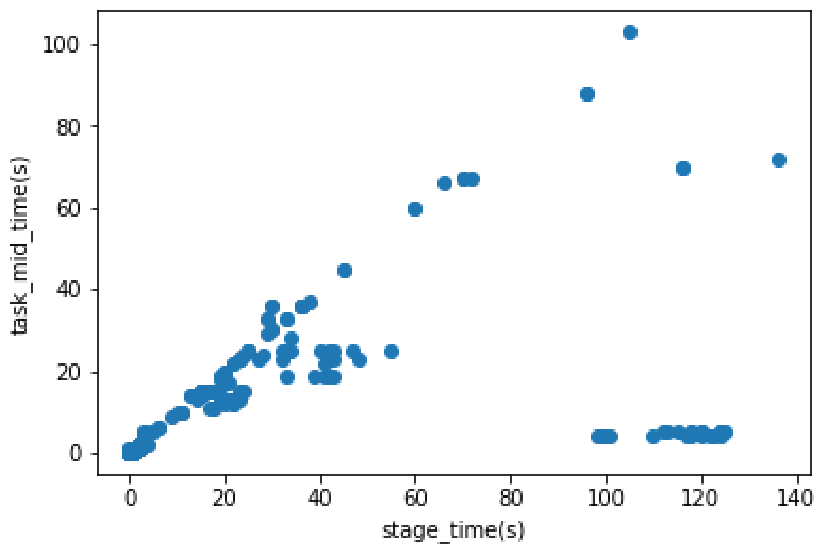 Figure 1: The proposed Anomaly Detection Framework, integrating LR-Trace and Spark logs.
3. Defining "Abnormal"
The ground truth for training is defined using a modified statistical threshold: Where is typically set to 1.5. This label is then mapped against resource usage patterns.
Experimental Validation
The authors tested the system on a Spark cluster using the HiBench suite (WordCount, Bayes, PageRank) while injecting synthetic interference (CPU stress, Memory leaks, and Disk I/O contention).
Performance Metrics
The results demonstrate that the resource-only feature set is highly predictive of task status:
| Metric | Result |
|---|---|
| Precision | 94.08% |
| Recall | 96.93% |
| Accuracy | 92.27% |
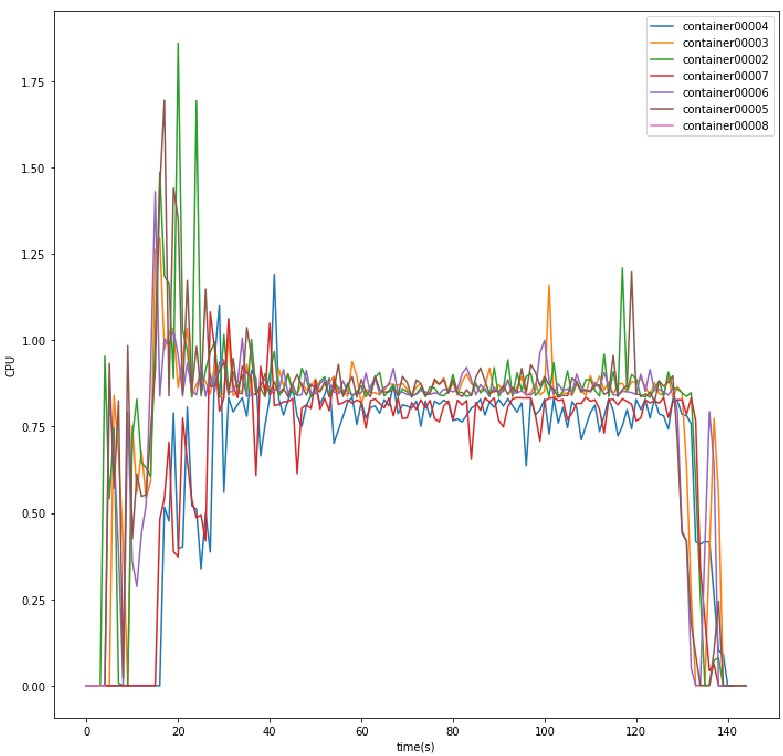 Figure 2: Impact of CPU contention on container execution. Note the delayed start and irregular metric trends for containers 0004 and 0007.
Critical Insight & Conclusion
While the current implementation is primarily offline, the paper provides a clear blueprint for Real-Time AIOps. By identifying which nodes are "interfered," system schedulers can make smarter decisions—such as blacklisting a failing node for upcoming stages rather than blindly re-running tasks.
Takeaway: The marriage of fine-grained container monitoring and ensemble machine learning can preemptively solve the straggler problem, reducing the overhead of speculative execution and improving overall cluster throughput.
Future Work
The authors aim to fully automate the relationship between logs and metrics to enable on-line detection and branch out into root cause analysis to pinpoint exactly why a node is underperforming.