
Precise to Vague: Balancing Utility and Anonymity in Temporal Data
15422_A System for Anonymizing Temporal Phrases of Message Posted in Online Social Networks and for Detecting Disclosure.
This paper introduces a novel temporal generalization framework designed to enhance privacy in time-sensitive data sharing. The core method utilizes a Normalized Certainty Penalty for temporal data () to quantify information loss during the generalization of specific time points into broader intervals, achieving a controllable balance between data utility and temporal anonymity.
TL;DR
In the era of big data, "when" something happened is often as sensitive as "what" happened. This paper presents a framework for Temporal Generalization, enabling data scientists to blur specific timestamps into broader, safer intervals (like "this morning" or "daytime") using a rigoruous metric called Normalized Certainty Penalty ().
Background: The Danger of "10:00 AM"
Prior work in data privacy often treats timestamps as mere strings or integers. However, temporal data is hierarchical (Seconds -> Minutes -> Hours -> Days). A precise timestamp is a "quasi-identifier" that can be used to cross-reference datasets and deanonymize users. The challenge is: how do we hide the exact moment while keeping the data useful for analysis?
Methodology: The Framework
The authors propose a multi-step pipeline to transform precise temporal phrases into generalized versions.
1. Temporal Detection and Normalization
The system identifies temporal phrases using a specialized corpus () and maps them to normalized intervals. For example, "Morning" is defined as the interval [05:00:00, 11:59:59].
2. Information Loss Quantification ()
The core innovation is the formula, which measures how much "certainty" we lose when we generalize:
If the original time () is a single second and the anonymous interval () is a whole morning, the penalty is very low, indicating high data abstraction.
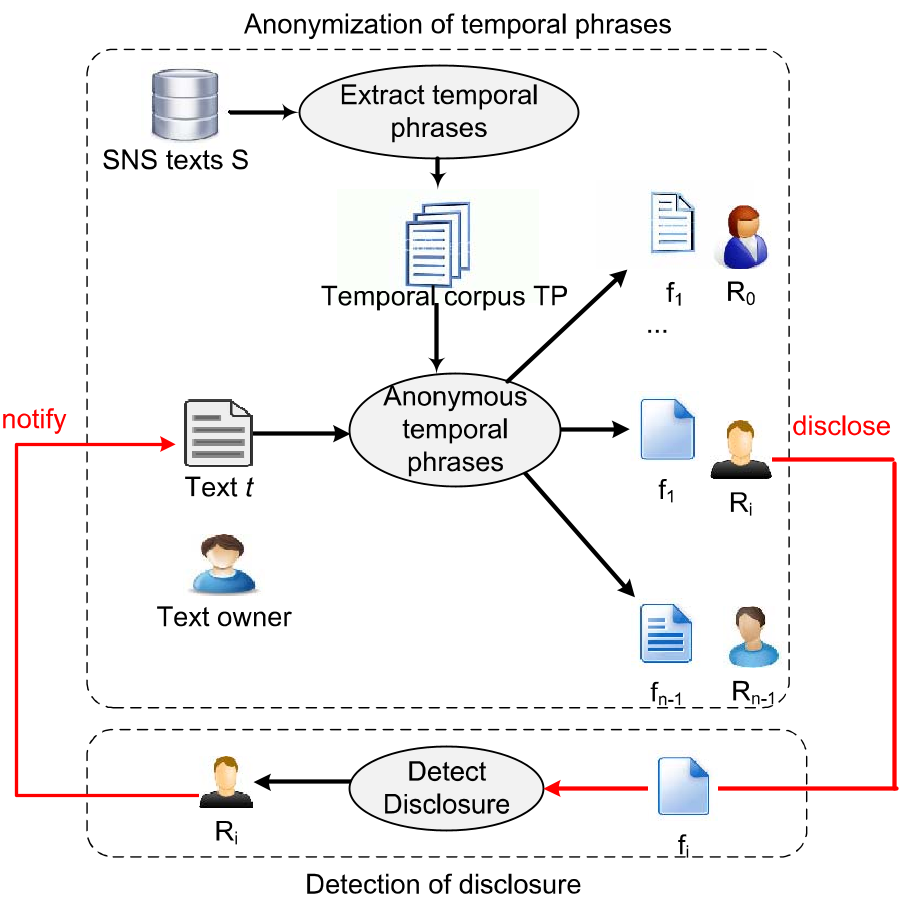 Figure 1: Illustration of the temporal granularity levels.
Experiments: Utility vs. Generalization
The paper provides a detailed breakdown of how different generalizations affect the and the resulting dataset.
| Generalization | semantic Meaning | |
|---|---|---|
| "at 10 PM" -> "this morning" | 3.97E-5 | Very Generalized |
| "at 10 PM" -> "today" | 1.16E-5 | Highly Generalized |
| "at 10 PM" -> "this year" | 3.17E-8 | Extremely Blurred |
By using these metrics, the system can automatically select the "sweet spot" where the data remains useful for the intended task (e.g., knowing a meeting happened "today") without revealing the exact minute.
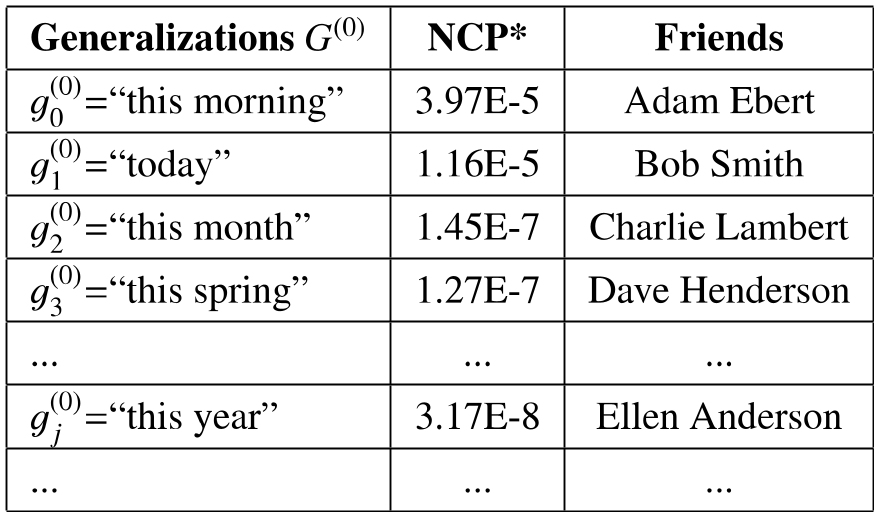 Table 1: Comparison of generalization levels and their corresponding penalty scores.
Critical Insight: Why This Matters
Most privacy algorithms (like k-anonymity) treat all attributes equally. This paper recognizes that time has its own logic. The shift from "Duration-based loss" to "Hierarchical semantic generalization" allows for data sharing that feels more natural—outputting "User A visited the hospital in the afternoon" rather than "User A visited the hospital at 14:32:01."
Limitations & Future Work
While the is effective for individual timestamps, the paper does not deeply explore Sequential Leakage—where a series of generalized timestamps might still reveal a pattern (e.g., a commute). Future research should integrate this with Differential Privacy to provide formal guarantees against such side-channel attacks.
Conclusion
This work formalizes the "art of being vague." By bridging the gap between Natural Language Processing (identifying time) and Information Theory (measuring loss), it provides a robust toolkit for protecting temporal privacy in modern datasets.