
Hybrid Intelligence: Boosting Information Diffusion Prediction with Ant Colony Optimization and Node Centrality
Integrating ant colony algorithm and node centrality to improve prediction of information diffusion in social networks
The paper introduces a hybrid framework combining the Ant Colony Optimization (ACO) algorithm with Node Centrality metrics to predict information diffusion paths in social networks. By leveraging Laplacian centrality and the Louvain community detection algorithm, the method effectively identifies optimal propagation routes across complex network topologies.
TL;DR
Predicting how a viral tweet or a piece of news spreads through a social network is a notoriously complex task. This paper proposes a hybrid approach that combines the Ant Colony Optimization (ACO) algorithm with Laplacian Node Centrality. By identifying social "communities" and using virtual "ants" to find the most efficient paths between influential nodes, the authors achieve superior accuracy and lower error rates compared to traditional Bayesian and Genetic Algorithm approaches.
Problem & Motivation: The Complexity of Social Influence
Information diffusion modeling typically attempts to predict which nodes in a network will be influenced by a story over time. However, social networks are massive, high-dimensional, and non-random.
The authors identify two major gaps in prior work:
- Computational Bottlenecks: Many models cannot scale to large networks without losing precision.
- Structural Blindness: Passive models often ignore the "importance" of a node (Centrality) and the "groups" (Communities) people naturally form, leading to sub-optimal path predictions.
Methodology: Ants in the Social Jungle
The core innovation lies in a multi-stage pipeline designed to mimic natural optimization.
1. The Laplacian Centrality Filter
Instead of treating all users equally, the system calculates Laplacian Centrality. This metric captures both the local connectivity and the global importance of a node within the network. These values are used to initialize the Pheromone levels for the ACO algorithm.
2. Community-Guided Search
To prevent the "ants" from wandering aimlessly, the authors use the Louvain Algorithm to detect communities. Ants are then tasked with finding paths within these dense clusters where information is most likely to flow rapidly.
3. The Objective Function: Centrality vs. Redundancy
A key mathematical nuance is the heuristic function . It doesn't just look for high-centrality nodes; it subtracts a redundancy penalty based on cosine similarity.
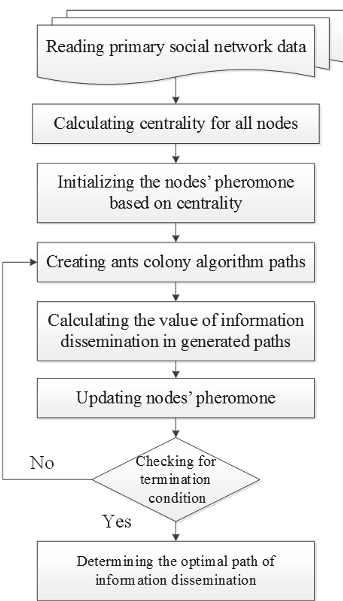
The figure above illustrates the systematic integration of community detection and ACO-based pathfinding.
Experiments & Results: SOTA Performance
The researchers tested their approach on four iconic social network datasets: Zachary’s Karate Club, Dolphin social network, Political books, and American Football College.
Key Findings:
- Community Accuracy: Using the Louvain method within this framework yielded higher NMI and Modularity scores than Bayesian or Genetic variants. For instance, in the "Football" dataset, Modularity reached 0.89 compared to the Genetic Algorithm's 0.75.
- Error Reduction: The model demonstrated significantly lower Mean Absolute Error (MAE) across all datasets, proving that the paths selected by the ants closely match real-world information trajectories.
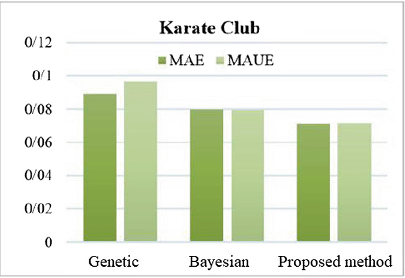
Fig. 2: The comparison clearly shows the proposed method (lower bars in MAE/MAUE) consistently outperforming baseline models.
Critical Analysis & Conclusion
This work highlights a significant takeaway: Context matters. By constraining the search for diffusion paths within detected communities and weighting those paths with physical properties of the nodes (Centrality), the algorithm moves beyond "black-box" prediction toward a structurally-aware simulation.
Limitations: While effective, the current model assumes a relatively static network topology. Real-world social networks are highly dynamic, with edges forming and breaking in seconds. Future iterations would benefit from incorporating Temporal Graphs to account for the time-evolving nature of social links.
Future Outlook: This hybrid approach of Swarm Intelligence and Graph Theory opens doors for more efficient viral marketing strategies, epidemic contact tracing, and even the targeted containment of harmful computer viruses.