
Decoding Popularity: How Social Networks Shape the Success of Open Source Projects
Antecedents of Different Social Network Structures on Open Source Projects Popularity
This research investigates how the social structure of Open Source Software (OSS) projects on GitHub impacts their popularity. Using Longitudinal Panel Data Analysis on 272 projects over three years, it distinguishes between "Affiliation Networks" (inter-project co-membership) and "Following Networks" (intra-project developer interests) to predict popularity via forks and pull requests.
TL;DR
In the hyper-competitive world of GitHub, why do some projects explode in popularity while millions of others languish? This research moves beyond code quality to look at the social fabric of developers. By analyzing how developers follow each other (internal) versus how they share membership in other projects (external), the study reveals that internal social cohesion drives popularity, while excessive external "affiliation" can actually signal a lack of focus that drives contributors away.
Problem & Motivation: The Social Coding Signal
Success in Open Source Software (OSS) is traditionally measured by "hard" metrics: lines of code, bug resolution, or number of commits. However, the rise of "Social Coding" platforms like GitHub has introduced a new layer of metadata: Social Ties.
The authors argue that previous studies relied too heavily on Affiliation Networks (developers working on the same project). The flaw? Working on the same project doesn't guarantee actual interaction—developers might work on different modules at different times. Instead, this paper introduces the Following Network as a more "realistic" measure of developer interest and social reputation.
Methodology: A Tale of Two Networks
The researchers constructed two separate longitudinal networks for each of the 272 projects studied over 12 quarters (3 years):
- The Affiliation Network (Undirected): Represents "External Cohesion." Ties are formed when two developers from a focal project also work together on an external project.
- The Following Network (Directed): Represents "Internal Cohesion." A tie is formed when developer A follows developer B within the project.
The study utilized Random-Effect econometrics models to analyze how the density and centrality of these networks influenced two key popularity proxies: Forks and Pull Requests.
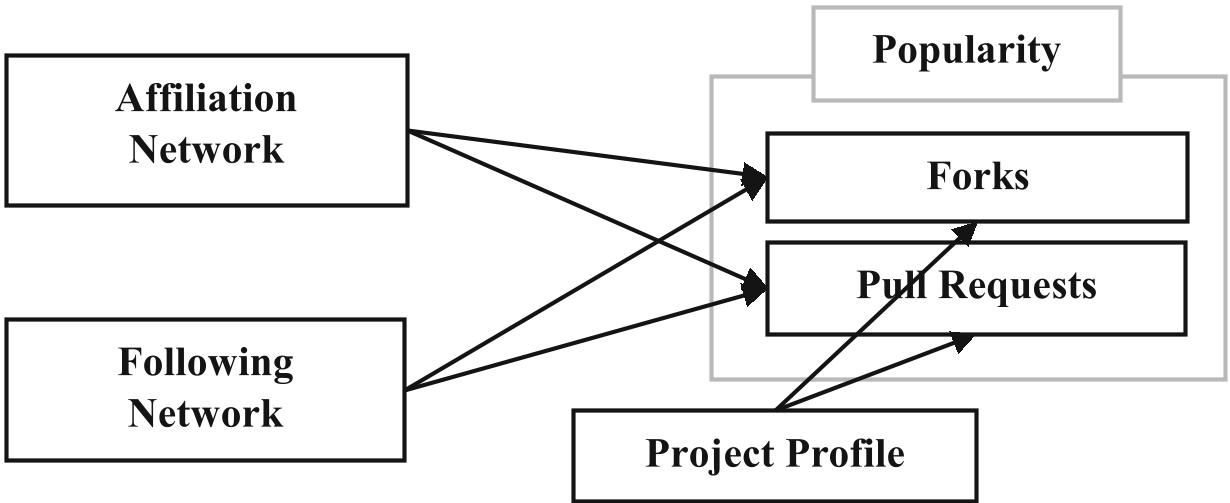 Figure 1: The Research Model illustrating the relationship between network dynamics, project profile, and popularity.
Key Findings: The "Focus" vs. "Friendship" Trade-off
The results provide a striking contrast between internal and external social structures:
1. The Density Paradox
- External Ties Hurt: High density in the Affiliation Network correlates negatively with popularity. Why? To an outsider, a project where everyone is already connected via other projects looks like a "closed club" or a group of developers whose attention is divided.
- Internal Ties Help: High density in the Following Network (more internal follows) correlates positively with forks. This signals a "friendly," respectful, and social environment that attracts newcomers.
2. The Danger of "Core" Power (Centrality)
The growth of Degree Centrality was found to be negatively correlated with popularity. When a project becomes overly reliant on a few "superstar" nodes, it signals high power inequality and a lack of democratic participation, which discourages outsiders from submitting Pull Requests.
3. Licenses Matter
The data confirms that Permissive Licenses (like MIT or Apache) are massive drivers of popularity. They essentially lower the "barrier to entry" for technical contributions, boosting both forks and pull requests significantly.
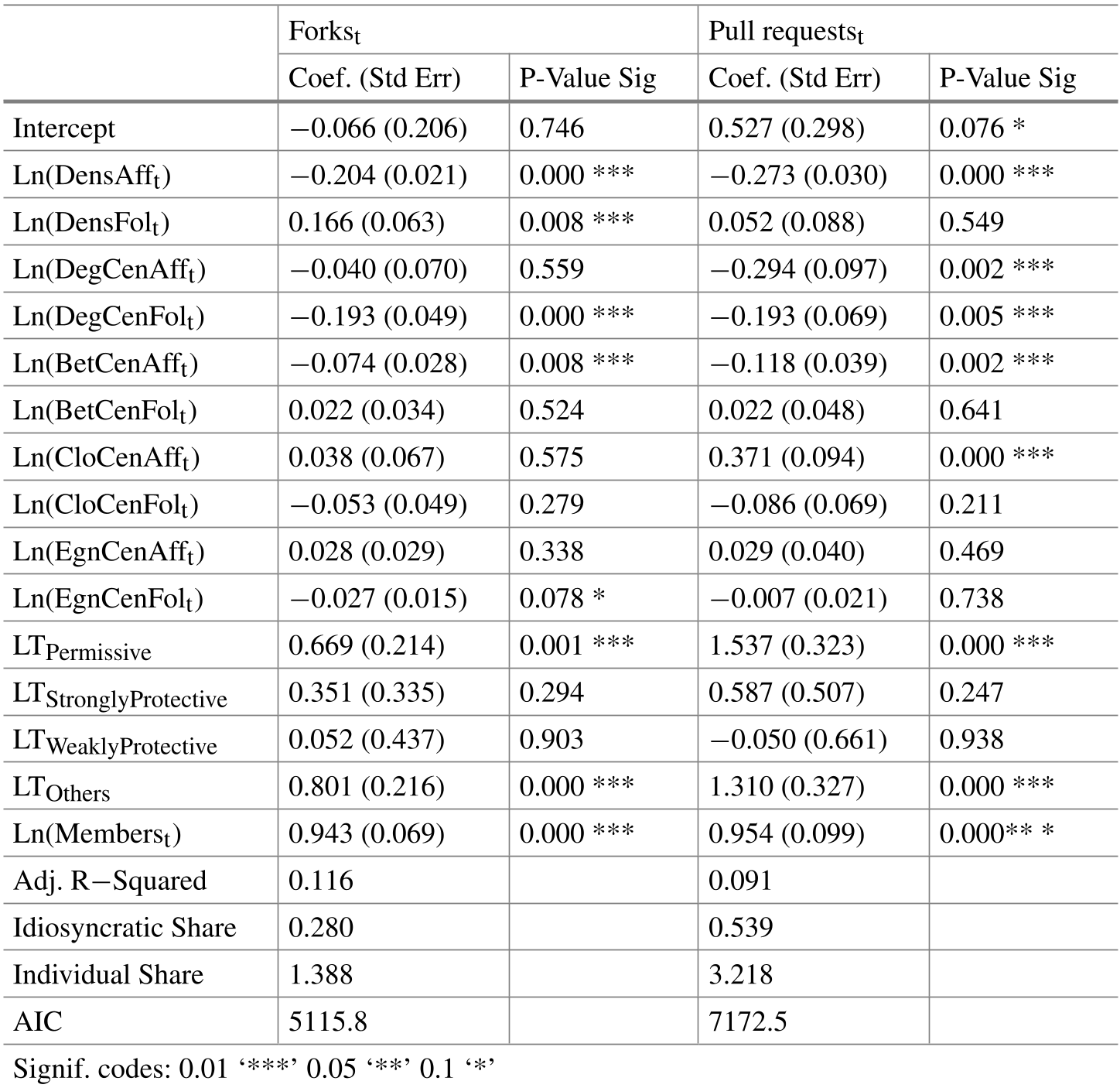 Table 1: Coefficient estimates showing the divergent effects of Affiliation vs. Following network metrics.
Critical Insight & Conclusion
The core takeaway is that Social Structure is a Signal. Potential contributors use the visible social interactions on GitHub to judge whether a project is worth their time.
- For Project Owners: The advice is clear—encourage internal socialization and following within the team to build a welcoming "brand," but be wary of your team spreading themselves too thin across too many other projects, as it may signal a lack of commitment to the focal project.
- Limitations: The study primarily uses GitHub data (GhTorrent) and focuses on projects from a specific timeframe (2013-2016). Future work should bridge these findings with modern AI-driven collaboration patterns and platforms like GitLab or BitBucket.
Final takeaway: In the ecosystem of OSS, code is the product, but the social network is the marketing. Popularity is not just earned through commits, but through the architecture of participation.