
Empowering Therapy: A Modular App-Based Authoring System for Sensory Stimulation
An App-Based Authoring System for Personalized Sensory Stimulation of Children With Developmental Disabilities
This paper introduces a novel app-based authoring system designed to create personalized sensory stimulation content for children with developmental disabilities. The system allows educators to dynamically combine and reconfigure functionalities across different mobile applications—such as video players, haptic controls, and quizzes—into a cohesive therapeutic workflow.
TL;DR
Traditional sensory therapy is often limited by expensive hardware or rigid, non-customizable software. This research introduces a modular ecosystem where special education teachers can "drag-and-drop" functionalities from various apps—like YouTube, haptic vibrations, and thermal controls—to create highly personalized therapeutic experiences for children with developmental disabilities.
Background: The Challenge of Sensory Diversity
Developmental disabilities are frequently accompanied by sensory processing disorders. One child might be hypersensitive to certain sounds, while another may seek intense tactile input. The "one-size-fits-all" approach of standard educational apps fails here. Prior work has focused on dedicated Multi-Sensory Environments (MSEs), but these are tied to specific physical rooms and high costs. The authors identified a crucial gap: the need for a mobile, reconfigurable, and expert-driven content creation tool.
Methodology: Logic Through Flowcharts
The core innovation lies in the Authoring System Architecture. Instead of building one giant app, the researchers used a modular approach:
- Activity-Based Units: Programs are broken down into "Activities" (e.g., a Peltier module control for heat, a YouTube player for visual stimuli).
- The Intent Mechanism: The execution app acts as an orchestrator, using Android's Intent mechanism to call specific activities from different app packages at runtime.
- Flowchart Authoring: Teachers use a visual interface to define the sequence of events and set parameters—such as the specific temperature (18°C - 37°C) or vibration direction.
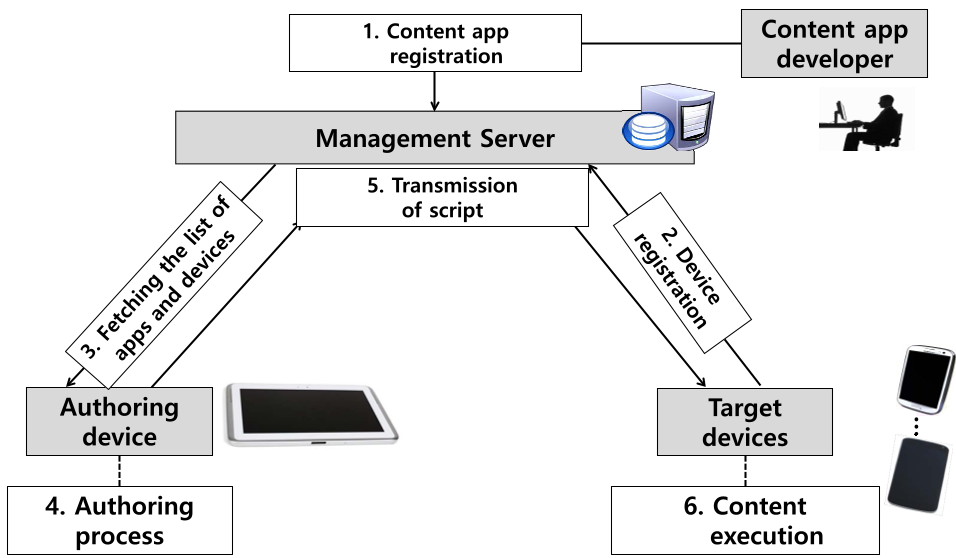 Figure 1: The architecture connects authoring devices, a management server, and target devices via a unified protocol.
Bridging the Digital and Physical: The Haptic Device
To move beyond the screen, the system integrates a custom haptic device. By configuring parameters in the authoring app, a teacher can trigger:
- Thermoception: Using Peltier modules to simulate snow (cold) or fire (warm).
- Vibration: Controlling four motors to indicate direction and intensity.
- Firmness: Using magnetorheological fluid to create various tactile resistances.
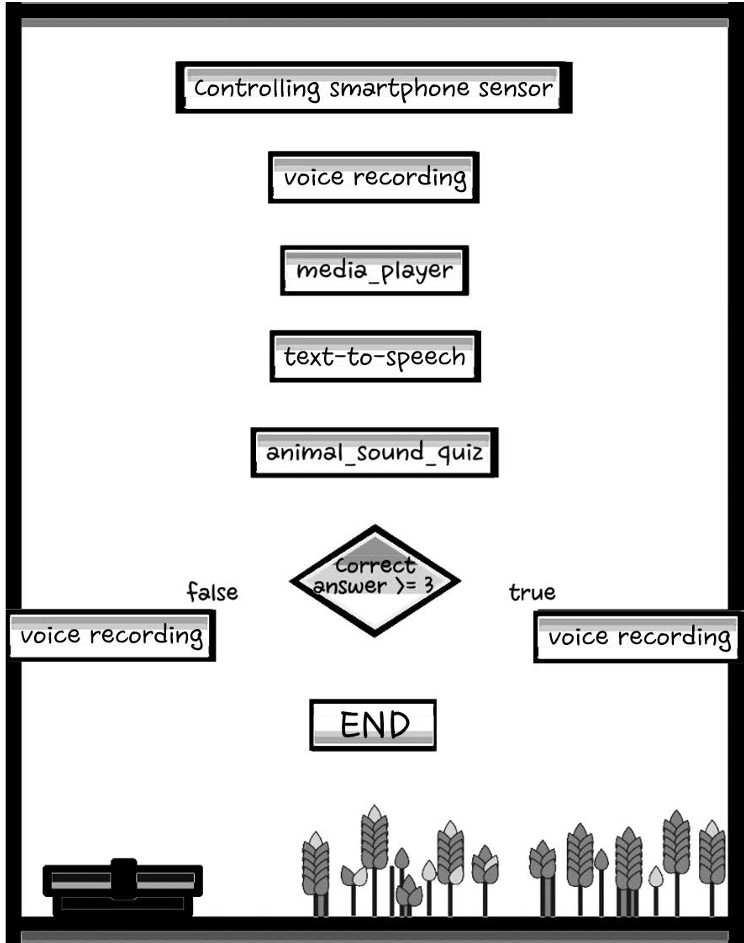 Figure 2: The flowchart interface allows authors to define logic, such as branching paths based on whether a child answers a quiz correctly.
Experimental Results & Insight
The study conducted with 52 Special Educational Needs (SEN) teachers revealed a stark reality: 94.23% of teachers found current market apps unsatisfactory.
When testing the new system, the "Multi-app" approach outperformed "Single-app" solutions across all categories (Coldness, Hotness, Vibration, and Animal Recognition). Teachers highly valued the Branching Functionality—the ability to reward a child with a specific video clip only after they successfully completed an interaction.
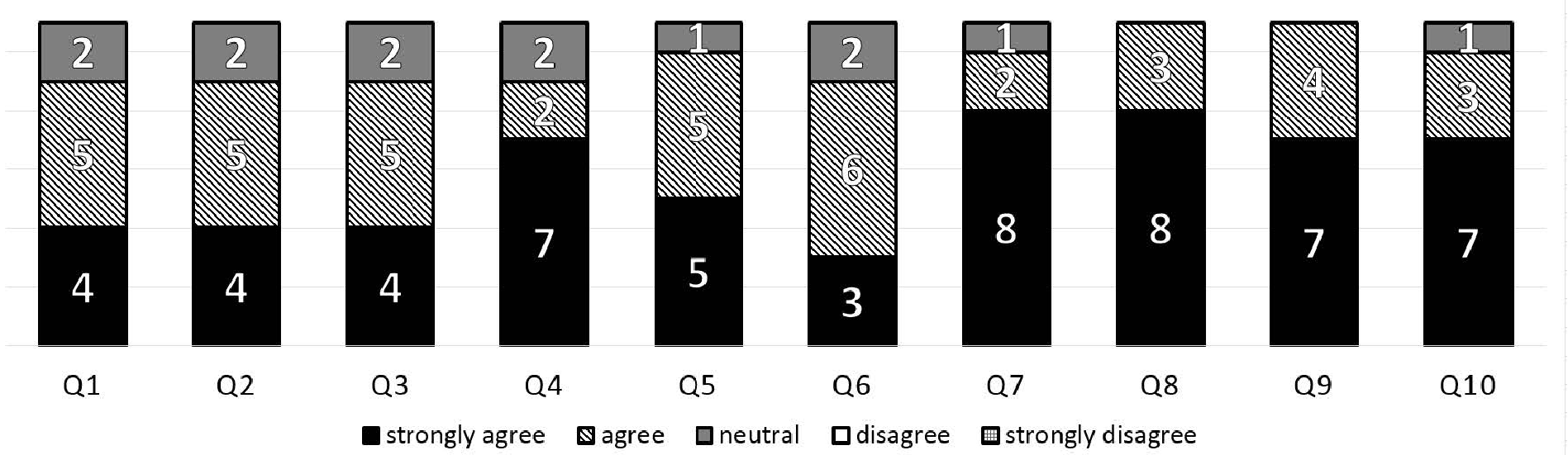 Figure 3: Survey results indicating high usability across activity organization, parameter configuration, and file transfer.
Critical Analysis & Conclusion
This work demonstrates that the future of assistive technology isn't just about better content, but about better tools for content creators. By treating app functionalities as "building blocks," the system introduces an Inductive Bias toward modularity and personalization.
Limitations: While the system is powerful, it currently relies on a specific library for apps to be "authorable." Integrating third-party "black-box" apps from the Play Store remains a technical challenge due to the lack of exposed parameter APIs.
Future Outlook: The scalability of this architecture suggests applications in elderly care (dementia therapy) and general early childhood education. As mobile devices gain more sophisticated sensors (LiDAR, advanced haptics), this "Authoring Platform" model could become the standard for clinician-led digital intervention.