
Beyond Polarity: Mapping the Emotional Landscape of Arabic Social Media
The Creation of an Arabic Emotion Ontology Based on E-Motive
This paper introduces a specialized social sentiment-parsing algorithm designed to extract a comprehensive range of emotions from Arabic social media text. By extending the Loughborough University EMOTIVE framework, the authors develop a linguistic ontology capable of handling multiple Arabic dialects (e.g., Gulf, Levantine, Egyptian) to move beyond simple binary (positive/negative) classification into fine-grained emotional analysis.
TL;DR
While most sentiment analysis tools focus on a simple "thumbs up" or "thumbs down," a new research effort by Anoud Bani-Hani and colleagues targets the rich, complex spectrum of Arabic emotions. By adapting the EMOTIVE framework, the researchers have developed a parsing algorithm that navigates the treacherous waters of Arabic dialects and informal "Arabizi" to provide real-time emotional insights for governments and corporations.
Background: The Noise in the Stream
Social media is the "world’s digital nervous system." Whether it’s a political crisis or a new product launch, news now breaks on Twitter long before it hits mainstream media. However, for Arabic-speaking regions, analyzing this data is notoriously difficult. Ancient roots meet modern slang, and a user in Dubai expresses frustration very differently than a user in Cairo.
The Problem: The Complexity of the Arabic "Zeitgeist"
Standard Sentiment Analysis (SSA) has two major flaws:
- Binary Limitation: It categorizes tweets only as "positive" or "negative," ignoring the crucial difference between Anger and Sadness or Surprise and Shame.
- Linguistic Fragmentation: Arabic is not a monolith. It includes Classical, Modern Standard (MSA), and various dialects. Furthermore, users often use Arabizi—English characters and numbers (like '3' for 'ع')—which stymies traditional NLP tools.
Methodology: The EMOTIVE Adaptation
The core of this research is the adaptation of the EMOTIVE technique (originally from Loughborough University). The system tracks eight key categories: Anger, Disgust, Fear, Happiness, Sadness, Surprise, Confusion, and Shame.
The Dialectal Bridge
To solve the dialect problem, the researchers mapped common phrases across different regions. A key component of the methodology was defining the "translation" of emotions into localized contexts.
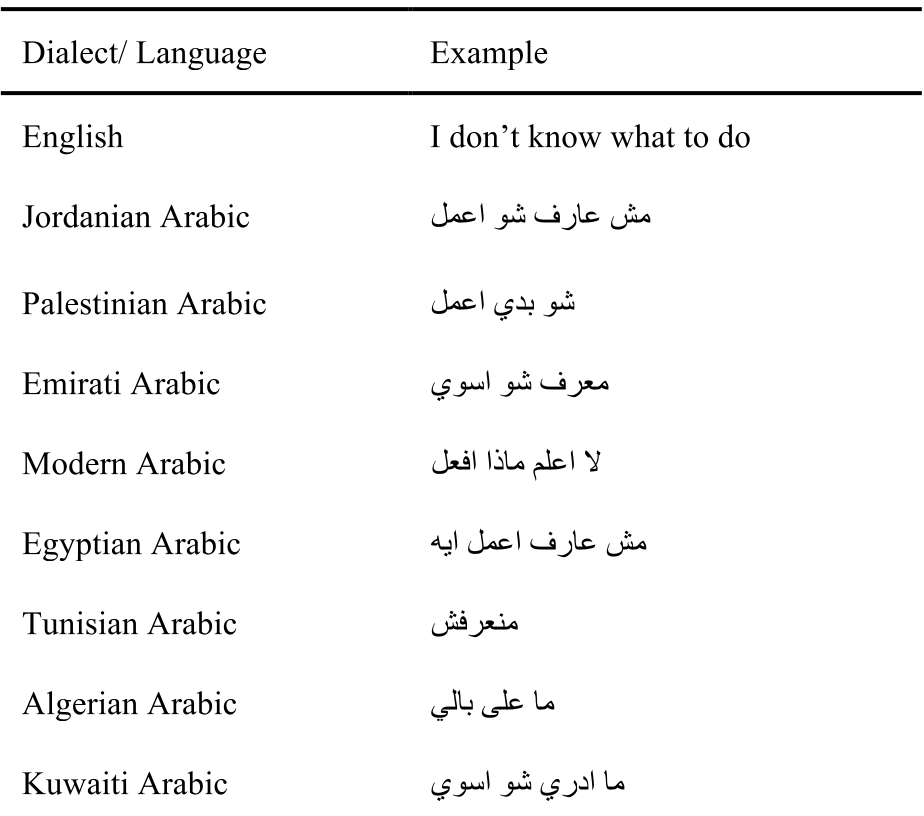 Figure 1: Comparison of the phrase "I don't know what to do" across multiple Arabic dialects.
The Parsing Algorithm
The algorithm doesn't just look for keywords; it examines the relationship between words:
- Negations: Reversing the sentiment of a phrase.
- Intensifiers: Measuring the strength of the emotion.
- Conjunctions: Determining how different parts of a tweet interact.
Experiments and Results
The study utilized a dataset of Arabic tweets to verify the algorithm's accuracy. By calculating the sentiment score—the ratio of positive words to the total count of emotional words—the system could determine the "Positivity" of a specific topic in real-time.
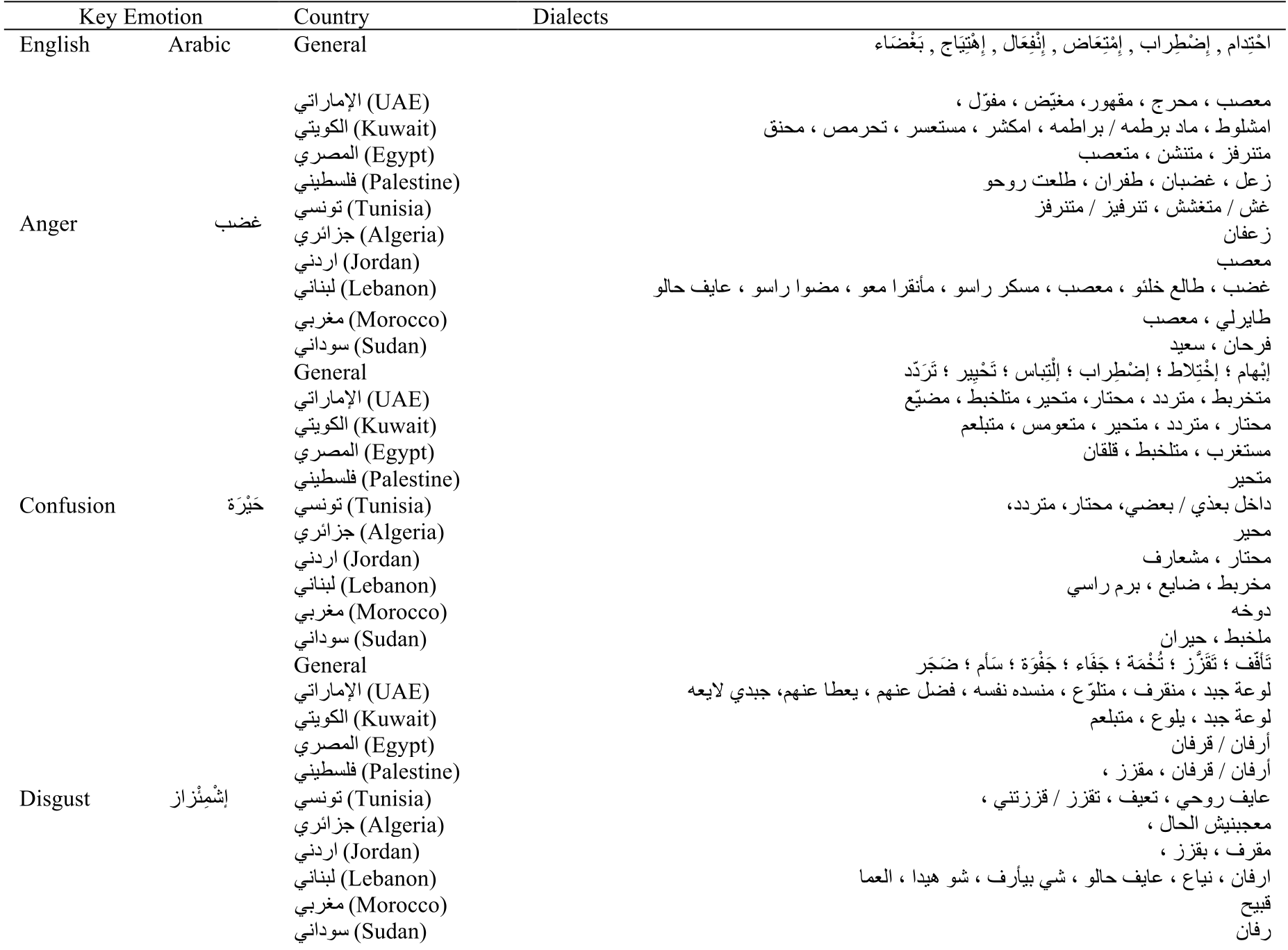 Figure 2: Sample of the Arabic Emotion Ontology mapping keywords to specific emotional categories.
One sample analysis yielded a Positive Sentiment score of 83.33%, showing that once the linguistic "noise" is filtered, clear emotional trends emerge.
Critical Insight: Why This Matters
This work shifts the focus from "What are they talking about?" to "How do they feel about it?"
- For Governments: It allows for real-time monitoring of national security threats and public reactions to policy changes.
- For Brands: It helps product vendors move beyond counting mentions to understanding true customer satisfaction during product launches.
Limitations and The Road Ahead
While the ontology-based approach is robust, the authors acknowledge that Spam and misused hashtags remain a challenge. Looking forward, the integration of Emoji-detecting algorithms is the next frontier. Since younger audiences often communicate emotions entirely through icons, future sentiment analysis must treat a "smiley" or a "frown" with the same linguistic weight as a written word.
Conclusion
By bridging the gap between high-level psychological emotion taxonomies and the gritty reality of dialectal social media, this Arabic sentiment-parsing algorithm provides a vital tool for making sense of the Middle East's massive, real-time data streams.