
CIS-AF: Engineering Collective Intelligence through Stigmergic Architecture
An Architecture Framework for Collective Intelligence Systems
The paper introduces CIS-AF, an ISO/IEC/IEEE 42010-aligned architecture framework for Collective Intelligence Systems (CIS). It provides three specialized viewpoints—Context, Technical Realization, and Operation—to guide software architects in designing platforms that leverage stigmergy for organizational knowledge sharing.
TL;DR
Collective Intelligence Systems (CIS)—like Wikis and Social Networks—are fundamental to modern knowledge creation. However, bringing these systems into the corporate world often results in failure due to a lack of architectural rigor. This paper presents CIS-AF, the first formal architecture framework for CIS, providing a blueprint to design, implement, and operate systems where human collaboration is driven by stigmergy.
The "Stigmergy" Gap in Software Architecture
Most traditional software systems are designed for direct interaction: a user performs a task, and the system stores the result. In contrast, Collective Intelligence relies on stigmergy—a biological phenomenon (observed in ants) where individuals communicate indirectly by modifying their environment.
The authors argue that software architects currently lack the "mental models" to design for this. They often view "intelligence" as a standalone component rather than an emergent property of a feedback loop. This leads to systems that fail to "kickstart" or provide meaningful dissemination of knowledge, eventually becoming digital graveyards.
Methodology: The Three Pillars of CIS-AF
Aligned with the ISO/IEC/IEEE 42010 standard, the framework decomposes a CIS into three critical technical viewpoints:
1. CI Context Viewpoint (The "Why")
This focuses on the Stigmergic Coordination Model. It identifies the "Domain Items" (e.g., a wiki page) and the "Management Rules" that provide stimuli to users. It answers: How does the system motivate a perpetual feedback loop?
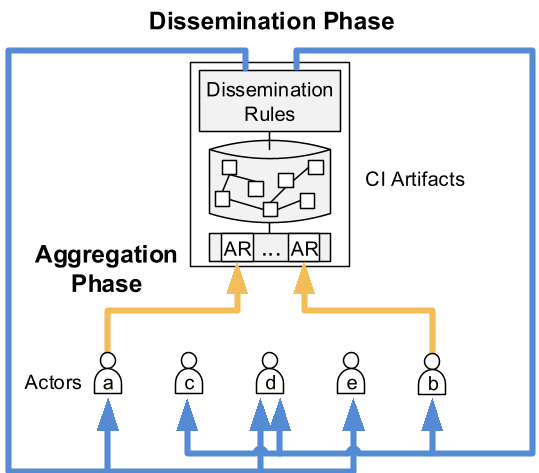 Figure 1: The perpetual feedback loop between human actors and reactive coordination infrastructure.
2. CI Technical Realization (The "How")
This introduces the CI Artifact—the central element of the system. Unlike a standard database entry, a CI Artifact is specified by its manipulation operations and dissemination rules.
- Aggregation: How data is collected from roles.
- Dissemination: How the "Analyzer" filters content and "Trigger Generators" push updates back to users.
3. CI Operation (The "Lifecycle")
The hardest part of a CIS is the start. This viewpoint addresses Initial Content Acquisition and CI Analytics, ensuring architects plan for the "critical mass" of data needed to make the system useful from Day 1.
Industrial Validation: Reuse and Review
The authors validated CIS-AF through two major industrial implementations:
- Reuse Center (RUC): A system integrated into an IDE for industrial automation, allowing developers to share and review code snippets.
- Feature Deliberatorium (FD): A platform for large-scale industrial software ecosystems to propagate features from application tiers to core platforms.
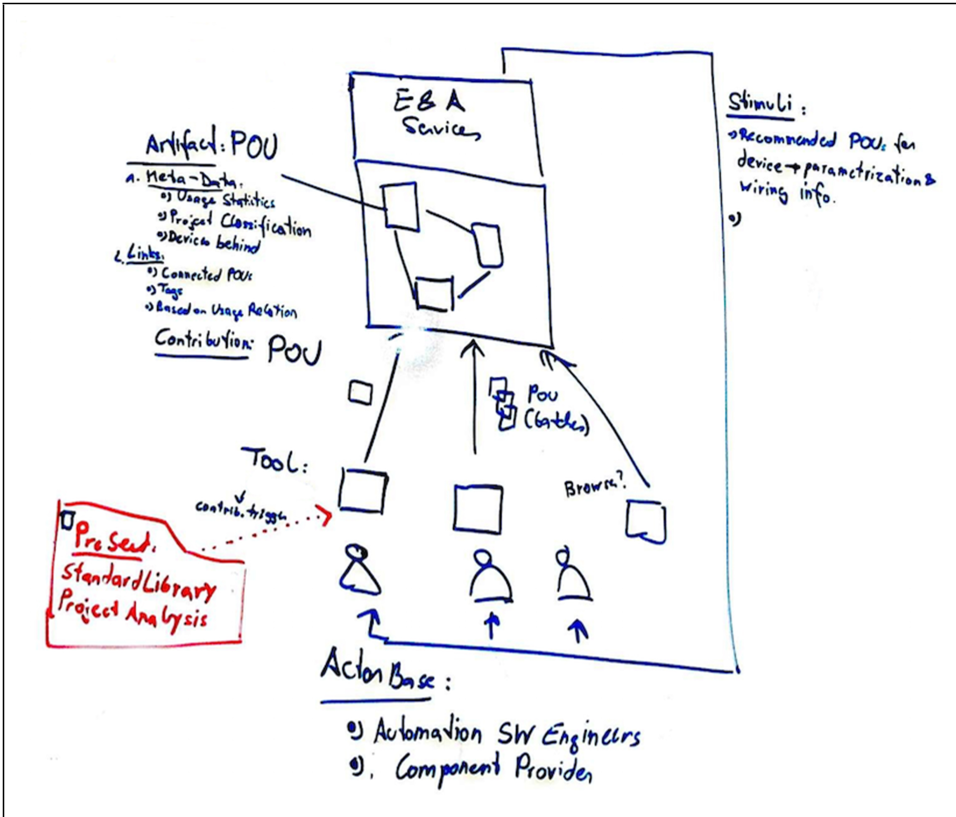 Figure 2: A sketched instantiation of the Stigmergic Coordination Model Kind used during the design of the RUC.
Key Findings from Industry Cases:
- Shared Vocabulary: The framework helped non-technical stakeholders (business owners) and architects speak the same language regarding "stimuli" and "aggregation."
- Effort Reduction: In the FD case, using CIS-AF models reduced the effort required for traditional use-case documentation by 50%.
- Mindset Shift: Architects stopped viewing the system as a static repository and started viewing it as a dynamic coordination environment.
Critical Insight & Conclusion
The true value of this work lies in its transition from Agent-oriented thinking to Environment-oriented thinking. By focusing on the "Artifacts" left in the environment, the CIS-AF ensures that the "intelligence" of the system is not locked in an algorithm, but distributed throughout the network of users and items.
Limitations: While the framework is excellent for the "Inception" phase, more work is needed on CIS Evolution—how does a system adapt when the user base grows from 10 to 10,000, or when the data quality begins to degrade?
For practitioners, the takeaway is clear: If you are building a collaborative platform, stop designing features; start designing the stigmergic feedback loop.