
A is for Artificial Intelligence: Empowering the Next Generation of AI Natives
A is for Artificial Intelligence: The Impact of Artificial Intelligence Activities on Young Children's Perceptions of Robots
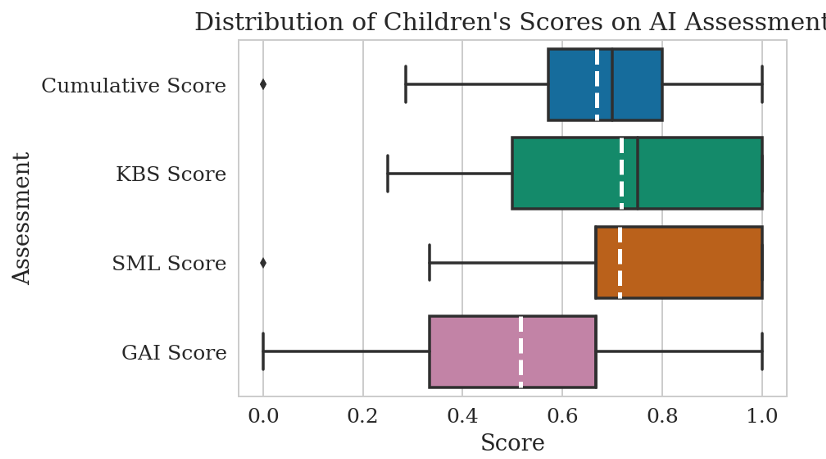
The paper introduces PopBots, a social robot toolkit and curriculum designed to teach preschool children (ages 4-6) about Knowledge-Based Systems, Supervised Machine Learning, and Generative AI. By engaging in hands-on training of robots, children achieved a median assessment score of 70%, proving that AI literacy is accessible even at a pre-literate developmental stage.
TL;DR
Researchers from the MIT Media Lab have demonstrated that children as young as four can understand complex AI concepts like machine learning and generative algorithms. By using PopBots—social robots that children "train"—the study found that early childhood education can demystify "thinking machines," turning them from magical toys into understandable, programmable tools.
Background: Living in a World of Smart Toys
Today's children are not just digital natives; they are AI natives. They grow up talking to Alexa, playing with reactive toys, and watching personalized YouTube Kids feeds. However, without education, children often form "broken" mental models, assuming these devices are either magical or alive. The authors of this paper argue that the best time to intervene is during the preschool years (ages 4-6), a critical window for cognitive development and the formation of "Theory of Mind" (ToM).
Methodology: The PopBots Platform
The researchers developed the PopBots toolkit, which consists of a smartphone-based social robot, LEGO components, and a custom tablet interface. The brilliance of this method lies in its social framing: instead of teaching math, it teaches social training.
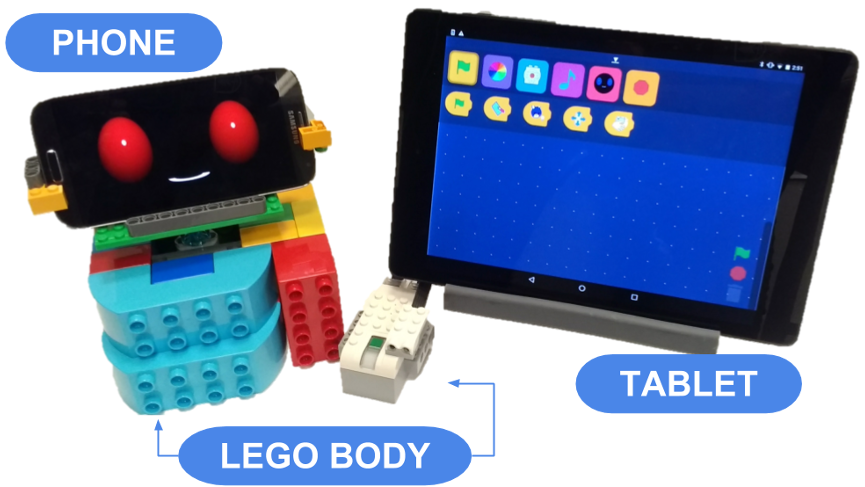
The curriculum covered three pillars:
- Knowledge-Based Systems (KBS): Using Rock-Paper-Scissors to show how robots follow rules.
- Supervised Machine Learning (SML): Having children label food as "healthy" or "unhealthy" to show robots how to generalize from data.
- Generative AI (GAI): Using emotion filters to transform music, showing that robots can be creative within parameters.
Key Insight: AI as a Catalyst for Theory of Mind
The most striking discovery was the bidirectional relationship between AI learning and psychological development. Theory of Mind is the ability to understand that someone else might have different beliefs or knowledge than you do.
While many children failed the standard psychology tests for "False Belief" (e.g., "Where will the boy look for his mittens?"), they passed identical logic tests when framed through the robot's data state (e.g., "What will the robot think Sally plays next?"). This suggests that thinking about how a robot thinks may actually help children develop their own perspective-taking skills.
Experiments and Results: Shifting Perceptions
The study involved 80 children and results showed a distinct shift in how they perceived robots:
- Pre-K (Ages 4-5): Began to see robots as "smarter than them" but essentially "toys."
- Kindergarteners (Ages 5-6): Saw robots more as "people" but "less smart than them."
- The Literacy Effect: Children who performed best on the AI assessments were the most likely to view robots as "people-like" intellectual entities rather than just mechanical objects.
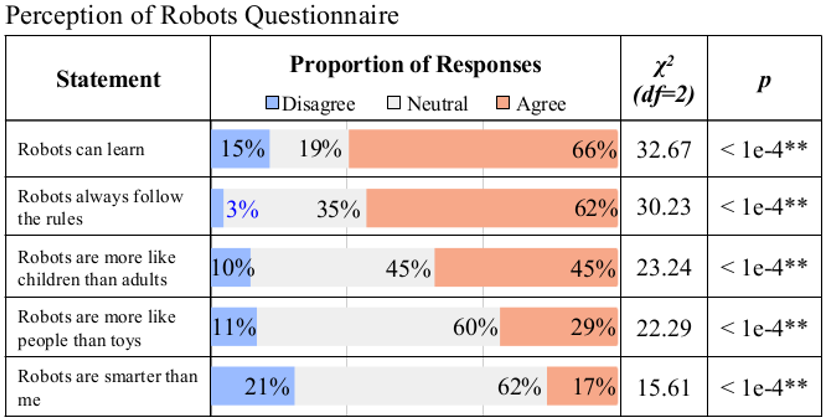
The data suggests that once a child understands that a robot "learns" from what they teach it, the "mask of magic" is removed. They no longer see a robot that follows arbitrary rules, but a system that processes input to create output.
Conclusion: Design for Transparency
The authors conclude with a powerful message for the tech industry: Demystify the Black Box.
- Early Intervention: AI literacy should start in preschool to prevent biased or scary misconceptions.
- Transparent Design: Future smart toys should be built so children can see how they are trained and can modify their "brains."
- Agency: Knowledge equals power. When a child learns they can train a robot, they stop being passive consumers of technology and start being creators.
The path to an AI-literate society doesn't start with coding in high school; it starts with play in the sandbox.