
AI in Behavioral Finance: Engineering the Rational Investor
Application of artificial intelligence on behavioral finance
This research investigates the integration of Artificial Intelligence (AI) within the domain of Behavioral Finance, specifically examining how machine learning can mitigate psychological biases in investment. Using descriptive research and quantitative analysis (ANOVA, Regression), the paper explores the intersection of technological advancement and investor psychology.
TL;DR
As we enter the 4th Industrial Revolution, the traditional financial advisor is being replaced by algorithms. This paper analyzes how Artificial Intelligence can be leveraged to solve the "human problem" in finance—namely, psychological biases like herd behavior and anchoring. By utilizing data-driven insights, AI promises to transform behavioral finance from a descriptive study of human error into a prescriptive tool for market accuracy.
Problem & Motivation: The Flaw in the Human Engine
Behavioral finance teaches us that investors are far from the Homo Economicus (rational man) described in classical theory. We suffer from:
- Herd Behavior: Blindly following the majority.
- Anchoring: Over-reliance on the first piece of information offered.
- High Self-Rating: Overestimating our own analytical abilities.
The authors argue that the current financial landscape is limited by these human cognitive constraints. The motivation for this study is to move beyond the "AI will kill jobs" myth and explore how AI can act as a psychological stabilizer, providing personalized, low-cost, and emotionless financial services.
Methodology: Bridging the Gap
The research utilized a mix of primary and secondary data, focusing on a sample of 200 respondents in India's National Capital Region. The core contribution is a Proposed Model that maps the interaction between AI technologies (like text mining and pattern recognition) and the specific needs of behavioral finance.
Proposed Architecture
The following model illustrates how technological innovation loops into human behavior and customer investing patterns to create a more robust B2B financial environment.
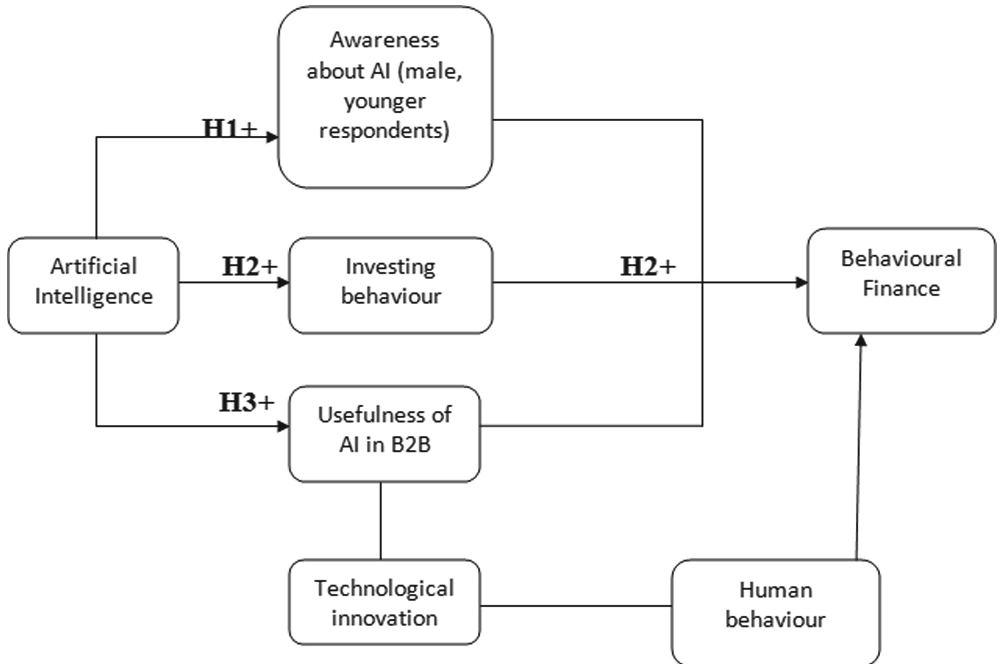
The study utilized ANOVA and Regression Analysis to test hypotheses regarding whether demographic factors like age and qualification impact the acceptance and awareness of AI in investment tasks.
Experiments & Results: Who Trusts the Machine?
The results provide a fascinating look at the "Generation Gap" in FinTech. Key findings include:
- The Age Factor: There was a clear negative correlation between age and AI awareness/acceptance. Younger investors are significantly more likely to trust AI-driven investment strategies.
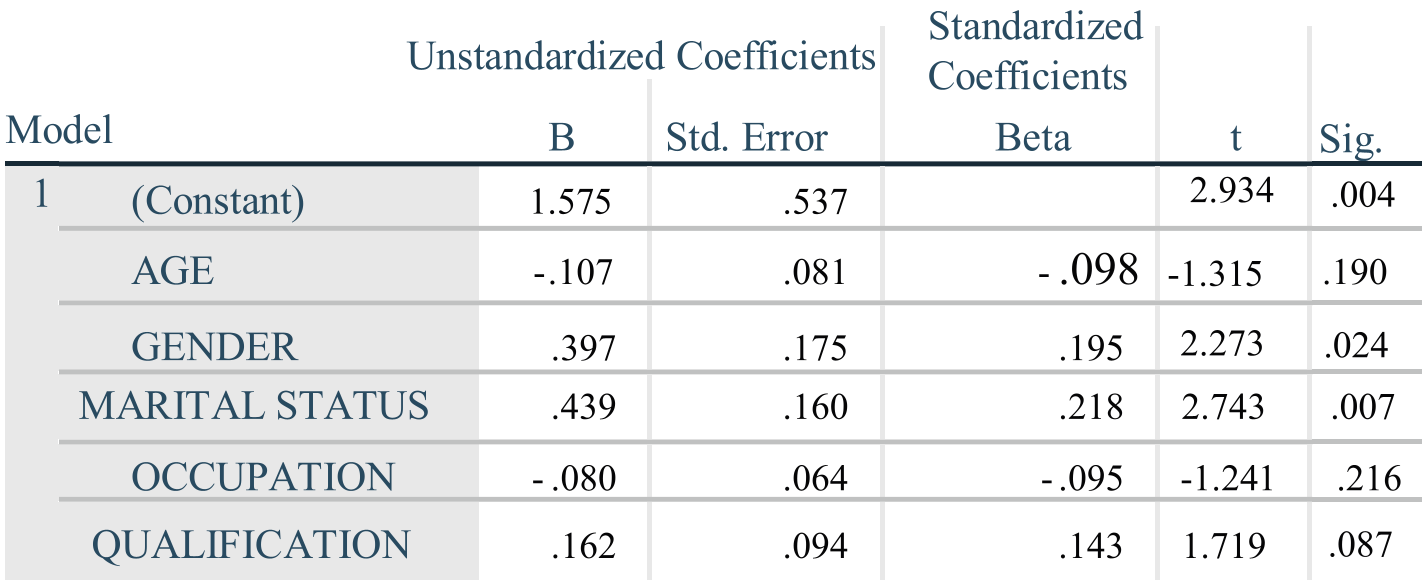
- Demographic Significance: Demographics such as gender and marital status showed significant differences (p < 0.05) in how individuals perceived the need for AI in investing behavior.
- B2B Efficiency: The study found that AI contributes heavily to "Business Acceleration" by automating knowledge-based activities, allowing firms to focus on customer experience rather than manual data processing.
Quantitative Evidence
The following regression table highlights the impact of demographic predictors on the perceived need for AI in investment behavior:
Deep Insights & Conclusion
This paper shifts the AI narrative from "automation" to "augmentation." By treating psychological bias as "data noise," AI allows for a cleaner, more objective investment signal.
Key Takeaways:
- AI is the Trade: Over time, AI will not just serve the financial industry; it will define the industry's structure.
- Bias Reduction: The removal of human "psychological biasness" is the most valuable ROI of AI in finance.
- Strategic Upskilling: To survive the 4th Industrial Revolution, financial professionals must pivot toward managing the "highly technological environment" rather than competing with it.
Future Outlook: While the sample size was limited to 200, the foundational findings open the door for larger-scale studies on the impact of Deep Learning on market volatility. As AI becomes more accessible, we may finally see the end of the "Irrational Exuberance" that has historically plagued our markets.