
Artificial Swarms: Finding Social Optima Through the "Brain of Brains"
Artificial Swarms find Social Optima
This paper introduces Artificial Swarm Intelligence (ASI) as a real-time, closed-loop system for human group decision-making. By modeling human interaction after honeybee "hive minds," the study achieves a significant breakthrough in finding "Social Optima" (solutions that maximize collective benefit) compared to traditional static voting.
TL;DR
Researchers at Unanimous AI have demonstrated that when humans are connected via real-time "closed-loop" systems—similar to schools of fish or honeybee swarms—they become significantly better at resolving conflicts. Their Artificial Swarm Intelligence (ASI) reached socially optimal solutions 82% of the time, far outperforming traditional methods like Borda Count or Condorcet voting (~60%).
Background: The Limits of the "Crowd"
We often hear about the "Wisdom of the Crowds," but traditional crowdsourcing is actually a statistical metaphor. When you vote or take a survey, you are an isolated data point. Your input is collected, sequestered, and then averaged. This serial process ignores the dynamic way biological systems—like our own brains or a colony of bees—actually make decisions.
The authors argue that because traditional voting doesn't allow for real-time negotiation or "titration" of conviction, it often misses the Social Optima: the specific choice that yields the highest aggregate benefit for a group with conflicting interests.
Methodology: From Neurons to Swarms
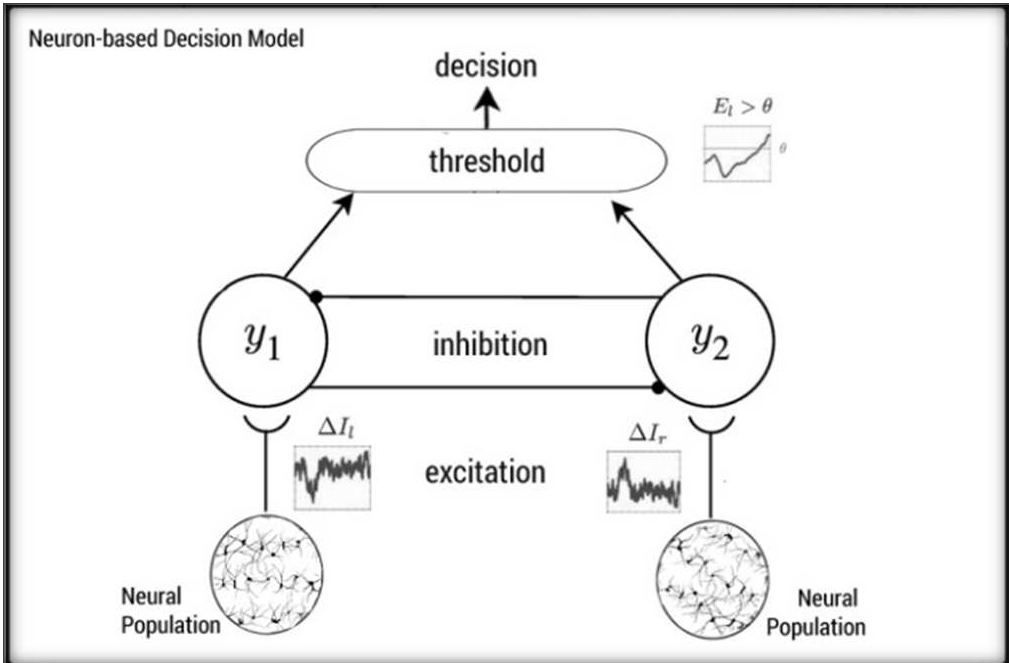
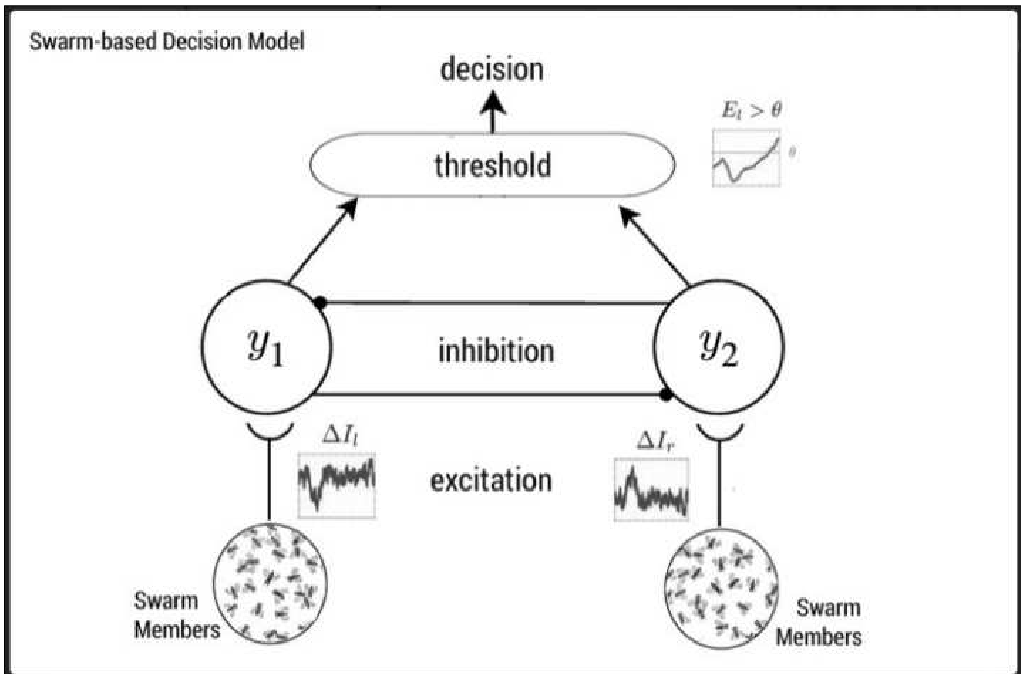
The core insight of this paper is the architectural similarity between the human brain and a swarm. Both are systems of "excitable units" (neurons or bees) that work in parallel to integrate noisy evidence and inhibit competing alternatives.
The "Brain of Brains" Model
The study utilizes the Usher-McClelland model (a leaky-integrator framework) to describe how decisions emerge. In the ASI system, humans use a platform called swarm.ai, where they control "graphical magnets" to move a puck toward an answer.
Unlike a vote, this is a continuous stream of intent. If a participant feels strongly, they move their magnet closer to the puck (higher magnitude); if they are unsure or see the group moving toward a viable compromise, they adjust their position in real-time. This creates a synchronic feedback loop that allows the population to "think" as a singular emergent intelligence.
The Experiment: Financial Conflict
To test this, the researchers gave 170 subjects conflicting cash incentives. For example, in a choice between an Apple, Orange, or Grape:
- Sub-group A earned $0.20 for an Apple.
- Sub-group B earned $0.15 for an Orange.
- The "Social Optima" was the fruit that maximized the total payout for everyone.
Participants only knew their own payouts, forcing them to negotiate through the swarm interface without knowing the "global" best answer.
Results: Efficiency Through Synchrony
The results were striking. The swarm didn't just "split the difference"; it actively navigated the decision-space to find the mathematically optimal social choice.
| Method | Success Rate | Avg. Loss from Optima |
|---|---|---|
| ASI (Swarm) | 82% | 4.72% |
| Borda Count | 58.3% | 10.63% |
| Condorcet | 60.3% | 10.31% |
| Plurality | 62.5% | 11.54% |
The swarm system was 52% more effective at avoiding sub-optimal decisions than traditional voting. In financial terms, the swarm lost 54% less "potential wealth" than the best voting method tested.
Critical Insight: Why Does It Work?
In a vote, you express a preference but cannot react to the strength of others' preferences in real-time. In a swarm, the leaky-integrator dynamics allow users to sense the "momentum" of the group. If your top choice has no traction, you naturally shift to your second choice to ensure a collective win, rather than a deadlock. This real-time weighting of conviction allows the ASI to bypass the "irrational outcomes" often found in Social Choice Theory.
Conclusion & Future Outlook
This research moves collective intelligence from "counting heads" to "linking brains." By replicating the cross-inhibition and mutual excitation found in biological swarms, we can solve complex social conflicts that traditional democracy and voting struggles to address.
Limitations: The current study used relatively small groups and simple 3-option choices. Whether this scales to thousands of participants or thousands of options remains an open engineering challenge for the next generation of ASI.