
Mining the Flow: Association Rule Based Situation Awareness in Hydrological Sensor Webs
Association Rule Based Situation Awareness in Web-Based Environmental Monitoring Systems
This paper introduces a data mining approach using Association Rule Mining (specifically the Apriori algorithm) to analyze hydrological events within the South Esk Hydrological Sensor Web (SEHSW). The method identifies spatio-temporal patterns between rainfall and other environmental variables like humidity, providing a flexible alternative to traditional hydrological models.
TL;DR
Researchers have developed a data-driven framework to replace rigid, expert-dependent hydrological models with Association Rule Mining. By analyzing the "time-gap" between rainfall peaks and other environmental factors (like humidity), the system achieves ~80% prediction accuracy using the Apriori algorithm, making environmental situational awareness more accessible and less reliant on high-fidelity historical datasets.
The "Data-Rich, Knowledge-Poor" Paradox in Hydrology
The deployment of the South Esk Hydrological Sensor Web (SEHSW) in Tasmania created a sensor-rich environment, but interpreting this deluge of data remains a challenge. Traditional hydrological models, while powerful, suffer from three major "Inflexible Constraints":
- High Domain Barrier: Requires PhD-level expertise to configure model structures.
- Data Perfectionism: They fail if data is even slightly inconsistent or lacks decade-long records.
- Spatial Rigidity: Models tuned for one catchment rarely work for another without massive recalibration.
The authors argue that we should treat the Sensor Web not just as a data pipe, but as a Pattern Discovery Engine.
Methodology: From Sensor Streams to Logical Rules
The core innovation lies in transforming raw, continuous sensor readings into discrete "events" that can be mined for logic.
1. The Normalization Pipeline
Since Association Rule Mining (ARM) requires nominal data, the authors introduced a clustering technique to discretize continuous time. For instance, the time difference between peak rainfall at "Location A" and peak humidity at "Location B" is categorized into clusters like Max_Gap(0-4h).
2. The Mining Engine (Apriori)
Using the WEKA workbench, the system searches for correlations using two metrics:
- Support: How often the event combination occurs.
- Confidence: The reliability of the "If-Then" relationship.
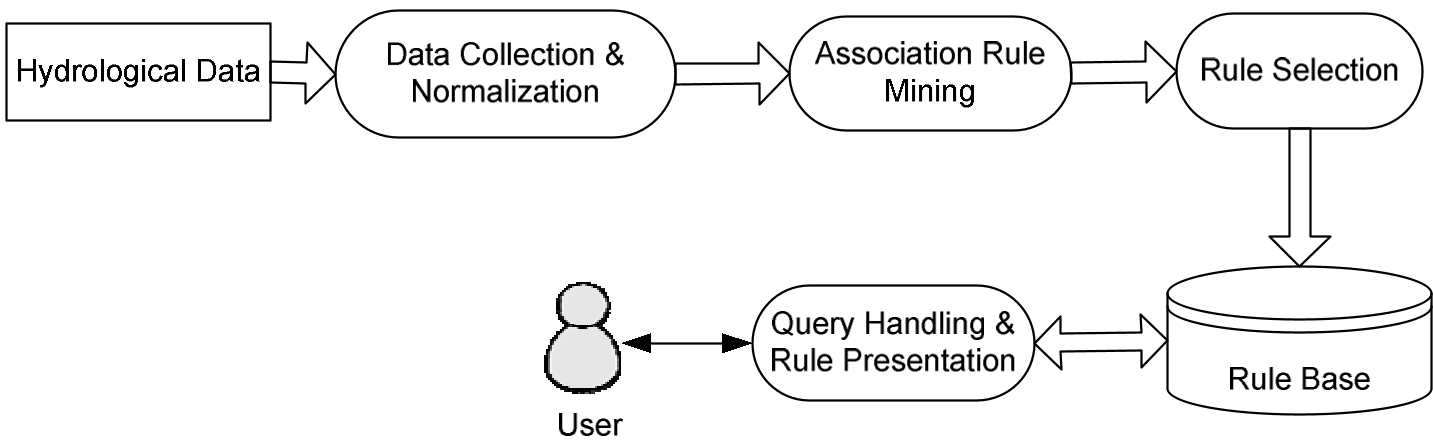 Fig 1: The proposed process flow from data collection to rule presentation.
Key Insights & Results
The experiment utilized 443 instances from the SEHSW. The results proved that even "noisy" sensor data could yield high-value insights.
- The "Humidity Lag" Rule: One prominent rule discovered was:
(max_gap: [3-7]) => (item: humidity). - Interpretation: In this catchment, if heavy rain peaks at 9:00 AM, there is a very high probability that humidity will peak between 12:00 PM and 4:00 PM.
- Performance: The model achieved an average accuracy of 80%, which is highly competitive considering it requires zero prior knowledge of fluid dynamics or soil moisture physics.
 Table 1: Accuracy comparison based on rule confidence levels.
Human-Centric Rule Presentation
To make these rules useful for non-experts, the authors developed a "Situation Awareness" interface. Instead of viewing raw graphs, users can use selection boxes to query the system: "If it rains at Ben Lomond now, when will the wind-run peak?" The system then invokes the stored Association Rule Base to provide an answer.
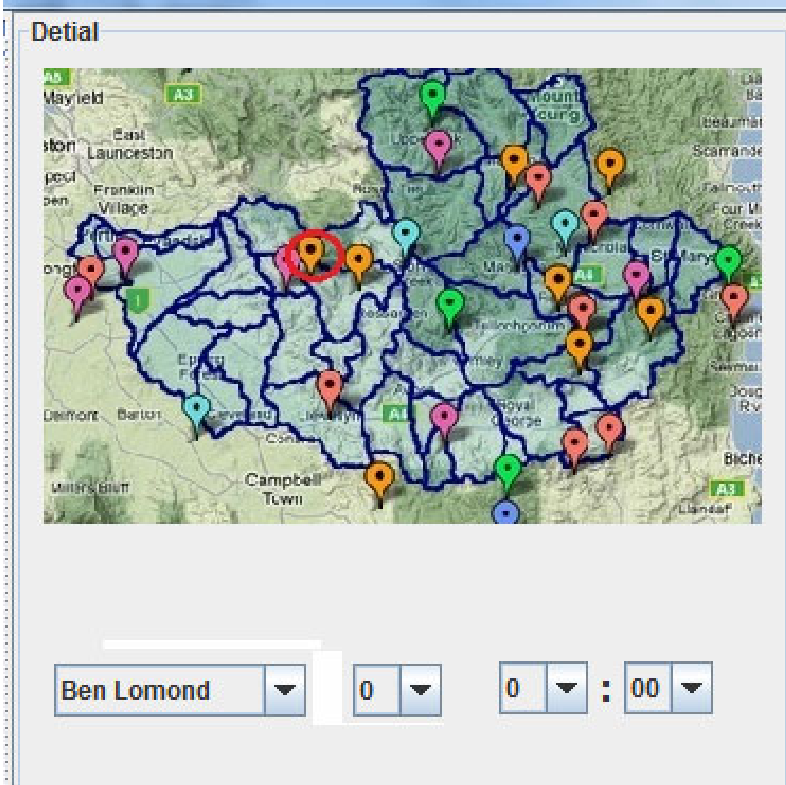 Fig 2: The interactive interface for rule-based prediction.
Critical Perspective: Is Logic Enough?
Strengths: This approach is a masterclass in Inductive Bias simplification. By focusing on temporal gaps rather than complex differential equations, the authors make the Sensor Web "self-explaining."
Limitations: While the association rules are excellent for correlation, they do not inherently capture causation or extreme "black swan" events (like unprecedented floods) that haven't appeared in the training data. Future work involving Causal Discovery or Graph Neural Networks (GNNs) could likely take this sensor-node relationship to the next level.
Conclusion
This paper shifts the focus of environmental monitoring from "Physical Simulation" to "Pattern Recognition." For smart city and water management stakeholders, it offers a pragmatic blueprint: use data mining to find the "pulse" of your environment before investing in expensive, cumbersome physical models.