
Rough Sets & Association Rules: Streamlining Marketing Intelligence
Application of Association Rules Mining in Marketing Decision-Making Based on Rough Set
This paper presents a hybrid data mining approach for marketing decision-making by integrating Rough Set Theory with Association Rule Mining. It specifically targets auto market behavior to extract strong decision rules from complex consumer data, optimizing sales strategies for different vehicle tiers.
TL;DR
In the era of Big Data, marketing departments are drowning in information but starving for knowledge. This paper proposes a robust framework that combines Rough Set Theory for noise reduction with Association Rule Mining to discover the "hidden logic" behind consumer choices. By testing this on auto sales data, the authors demonstrate how to turn thousands of messy data points into crystal-clear marketing strategies.
The Motivation: Cutting Through the Noise
Marketing decision-making is often hampered by "detail complexity." Analysts struggle to distinguish between factors that actually drive a sale (like price or income) and those that are merely background noise (like certain legal standards).
The author's core insight is that data mining efficiency is a function of data purity. By using Rough Set theory as a filter, we can discard irrelevant attributes without losing the essential information needed for a decision.
Methodology: The Core Engine
The workflow follows a two-stage process:
- Rough Set Attribute Reduction: This stage treats the dataset as a decision table. It identifies the "Core"—the minimum set of attributes necessary to maintain the original classification power. If an attribute can be removed without changing the "Positive Region" (POS) of the decision, it is considered redundant.
- Optimized Association Mining: Once the table is simplified, the system looks for rules () where is a set of consumer behaviors and is a purchasing decision. It uses thresholds for Support (how common the pattern is) and Confidence (how reliable the pattern is).
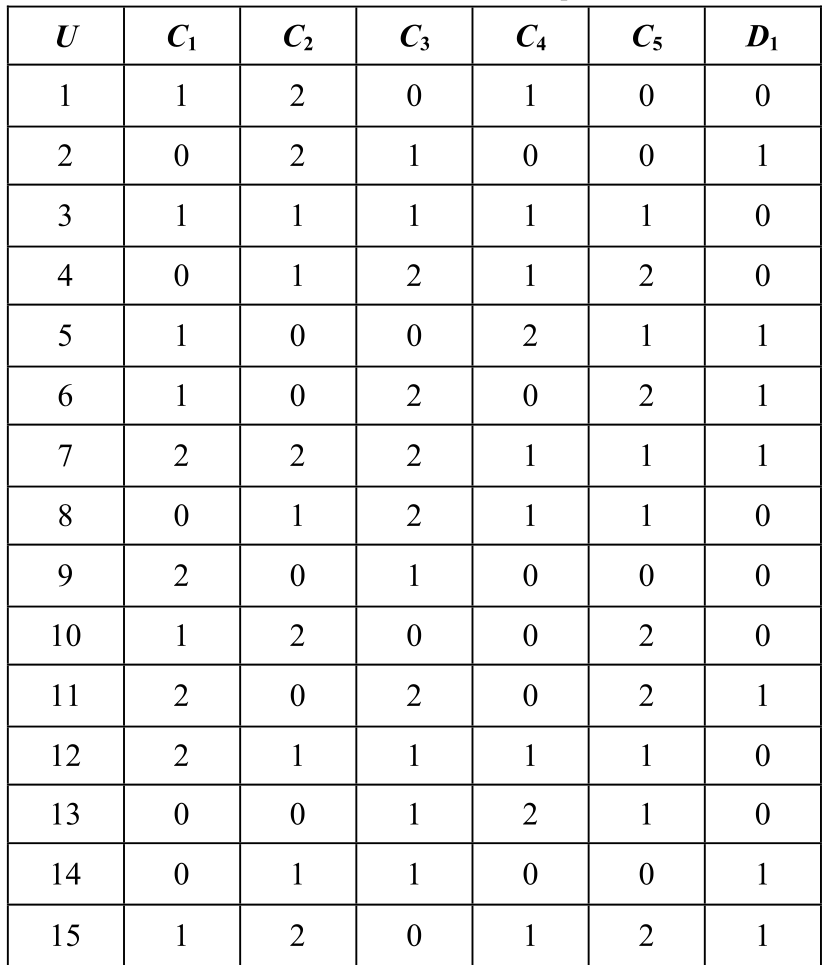 Figure 1: The initial decision table before attribute reduction.
Experimental Results: Auto Market Case Study
The paper validates the method using auto sales data, categorizing cars into Low-end (), Mid-range (), and High-end ().
Key Findings:
- Attribute Reduction: The analysis proved that "Relevant Legal Standards" () had zero impact on the final purchasing decision in this dataset and was successfully pruned.
- Rule Extraction: The mining process yielded distinct "Strong Rules" for different segments:
- Low-end Cars: Correlation found between moderate education and high promotion sensitivity.
- High-end Cars: Driven heavily by superior performance () and price parity with competitors, rather than just raw income.
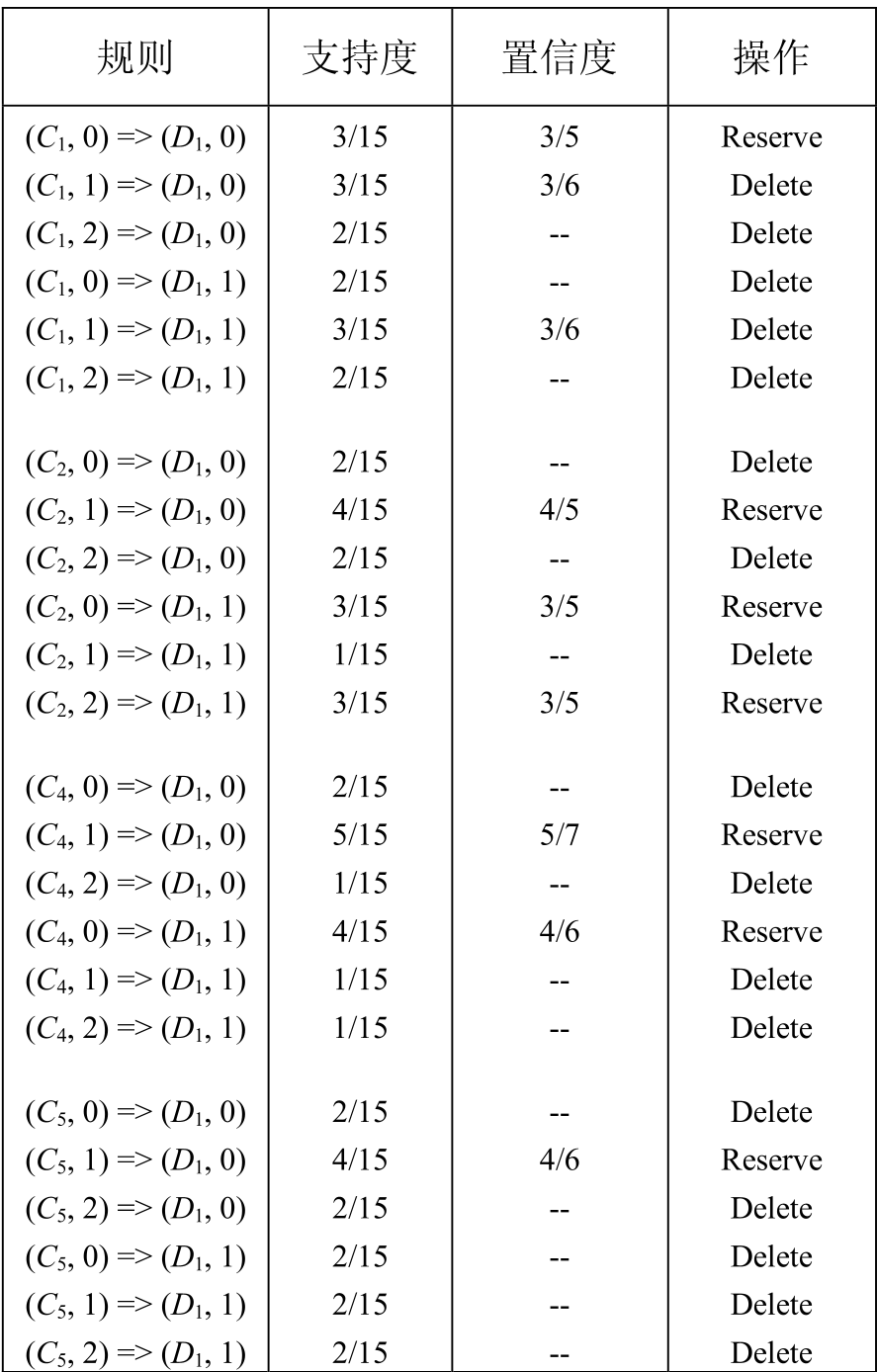 Figure 2: The iterative process of pruning association rules based on Support and Confidence.
Critical Analysis & Conclusion
The real value of this work lies in its computational economy. By reducing the dimensions of the problem before applying the Apriori-like algorithm, the authors avoid the "combinatorial explosion" that typically plagues association rule mining on large datasets.
Takeaway for Practitioners:
Don't mine raw data. Pre-process your datasets using Rough Set Theory to find the Core attributes. This not only makes your algorithms faster but also makes the resulting rules much easier for human managers to interpret and act upon.
Limitations: While effective for discrete data, the paper does not deeply address how to handle continuous numerical values without manual discretization, which could be a focus for future research using Fuzzy-Rough sets.