
GTS-FR: Bridging the Gap Between Location and Information Needs in Social Networks
Followee recommendation in asymmetrical location-based social networks
This paper introduces GTS-FR (Geographic-Textual-Social Based Followee Recommendation), a mining-based approach for asymmetric Location-Based Social Networks (LBSNs). By integrating user movement trajectories, textual information (travelogues/comments), and social link transitivity into a SVM-based classification framework, the method achieves state-of-the-art performance in recommending followees.
Executive Summary
In the landscape of Location-Based Social Networks (LBSNs), there is a fundamental difference between finding a "friend" (symmetrical) and finding a "followee" (asymmetrical). Most recommendation engines erroneously treat them the same. GTS-FR (Geographic-Textual-Social Based Followee Recommendation) is a pioneering framework that treats followee recommendation as an asymmetric "information-need" problem. By fusing trajectory data, social transitivity, and textual mining, it breaks the "experience-limitation" of traditional spatial-only recommenders.
Problem & Motivation: Beyond "Friends of Friends"
Why do we follow people on platforms like Twitter or EveryTrail? It’s rarely just because we share a mutual friend. Often, it’s because that person provides information (trips, photos, insights) that we crave.
Existing SOTA methods have two fatal flaws:
- Social Myopia: They rely on "Followee-of-Followee" (FOF) links, assuming transitivity is universal.
- Spatial Blindness: Trajectory-based methods only recommend people who have physically been to the same places, ignoring users who talk about those places but haven't visited them yet.
Methodology: The Triple-Threat Feature Set
The core innovation of GTS-FR lies in its holistic feature extraction phase, which feeds into a binary SVM classifier for each user.
1. Social Property (SP) - Measuring Transitivity
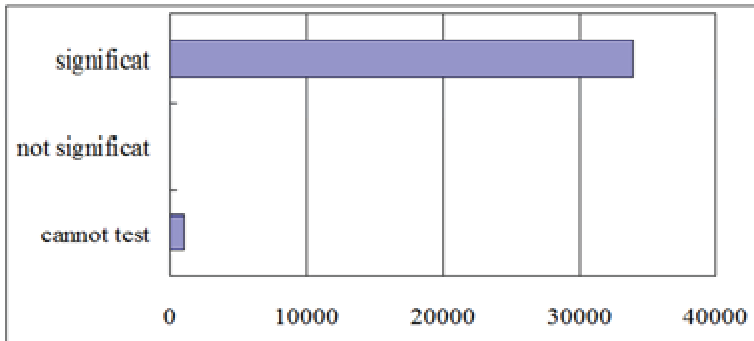
Instead of just counting mutual links, the authors introduce Transition-Setters. They measure how likely a user is to follow someone based on the "LinkTran" (link density) and "CTran" (communication/comment frequency) between followers and followees.
2. Geographical Property (GP) - Trajectory Semantics
Trajectories are converted into sequences of Stay Locations. The similarity between two users' movements is then calculated using the Longest Common Sequence (LCS), weighted by the length of the patterns. This ensures that longer, more descriptive journeys carry more weight in the recommendation.
3. Textual Property (TP) - The HITS Random Walk
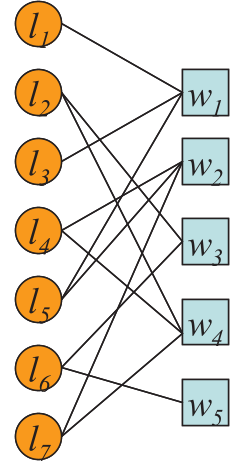
This is the "secret sauce." The authors build a User-Keyword (UK) Graph and a Location-Keyword (LK) Graph. By running a HITS-based random walk across these bipartite graphs, the model can discover that a user interested in "hiking" might want to follow a user who posts about "mountaineering," even if they haven't shared a physical path.
Experiments & Results
The authors crawled 4 months of data from EveryTrail, encompassing over 35,000 users and 1 million social links.
SOTA Comparison
GTS-FR was compared against the HGSM (Hierarchical Graph-based Similarity Measurement) and FOF strategies.
- Precision and Recall: GTS-FR consistently outperformed both baselines across all snapshots.
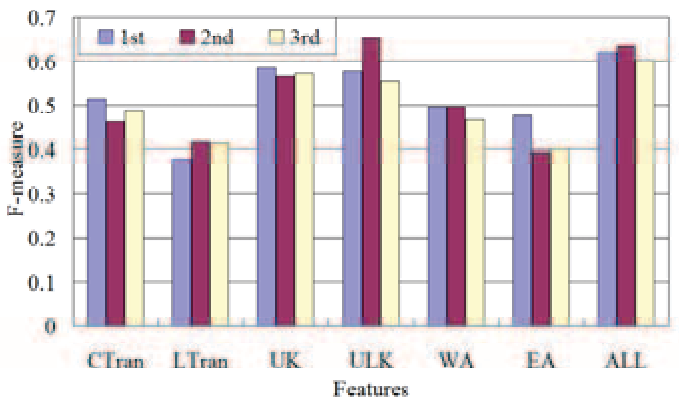
- Key Insight: The Textual Property features (UK and ULK) showed the highest impact on performance, proving that what users say is often a better predictor of who they will follow than where they go.
Predictive Power
Interestingly, the "incorrect" recommendations made by the model often became "correct" in subsequent snapshots. This suggests the model doesn't just replicate current behavior—it anticipates future social connections.
Critical Analysis & Conclusion
GTS-FR effectively demonstrates that asymmetric social networks require a more nuanced approach than undirected graphs.
- Value: It provides a blueprint for multi-modal feature fusion (Geo + Text + Social).
- Limitations: The model relies on traditional SVMs and manual feature engineering, which may not scale as elegantly as modern Deep Graph Learning or Transformers. Additionally, its reliance on "Stay Locations" means it might miss intermittent but highly relevant spatial data.
- Future Outlook: Integrating this multi-modal approach with Latent Factor Models or Graph Neural Networks could further refine the precision of "Information-Need" matching in the age of massive LBSN data.
Takeaway: If you want to know who a user will follow, don't just look at their map—read their comments.