
AR in Cultural Heritage: Comparing Project Tango vs. ARCore in Modern Digitization
Exploring Cultural Heritage Using Augmented Reality Through Google’s Project Tango and ARCore
The paper investigates the application of Mobile Augmented Reality (AR) for Cultural Heritage (CH) preservation, specifically comparing Google’s Project Tango and ARCore. The authors digitized a UNESCO monument, the Prejmer fortified church, using photogrammetry and developed AR applications to assess user experience and learning engagement.
TL;DR
This research explores the transition from niche, sensor-heavy Augmented Reality (Google Project Tango) to mass-market mobile AR (ARCore) in the context of Cultural Heritage. By digitizing a UNESCO fortified church via photogrammetry, the authors demonstrate that while specialized sensors provide better stability and occlusion, standard mobile AR is now "good enough" to significantly boost user enjoyment and educational engagement in heritage exploration.
The Motivation: Bringing History to the Smartphone
Preserving Cultural Heritage (CH) is a race against time and deterioration. While digital twins exist, the "How" of making them accessible to the public remains a challenge. The authors identify a shift in the AR landscape: moving from hardware-dependent solutions requiring depth cameras (Tango) to software-driven solutions available to millions (ARCore). The core question is: Does the loss of specialized depth hardware diminish the educational and experiential value for the user?
Methodology: From Photogrammetry to AR Interaction
The team utilized Photogrammetry—a technique involving the analysis of overlapping photos (60%-80% overlap) to reconstruct 3D geometry via trigonometry. This produced a high-fidelity model of the Prejmer fortified church in Romania.
Framework Comparison
A critical highlight of this paper is the comprehensive comparison of AR SDKs. They analyzed factors like SLAM (Simultaneous Localization and Mapping), 3D tracking, and hardware requirements.
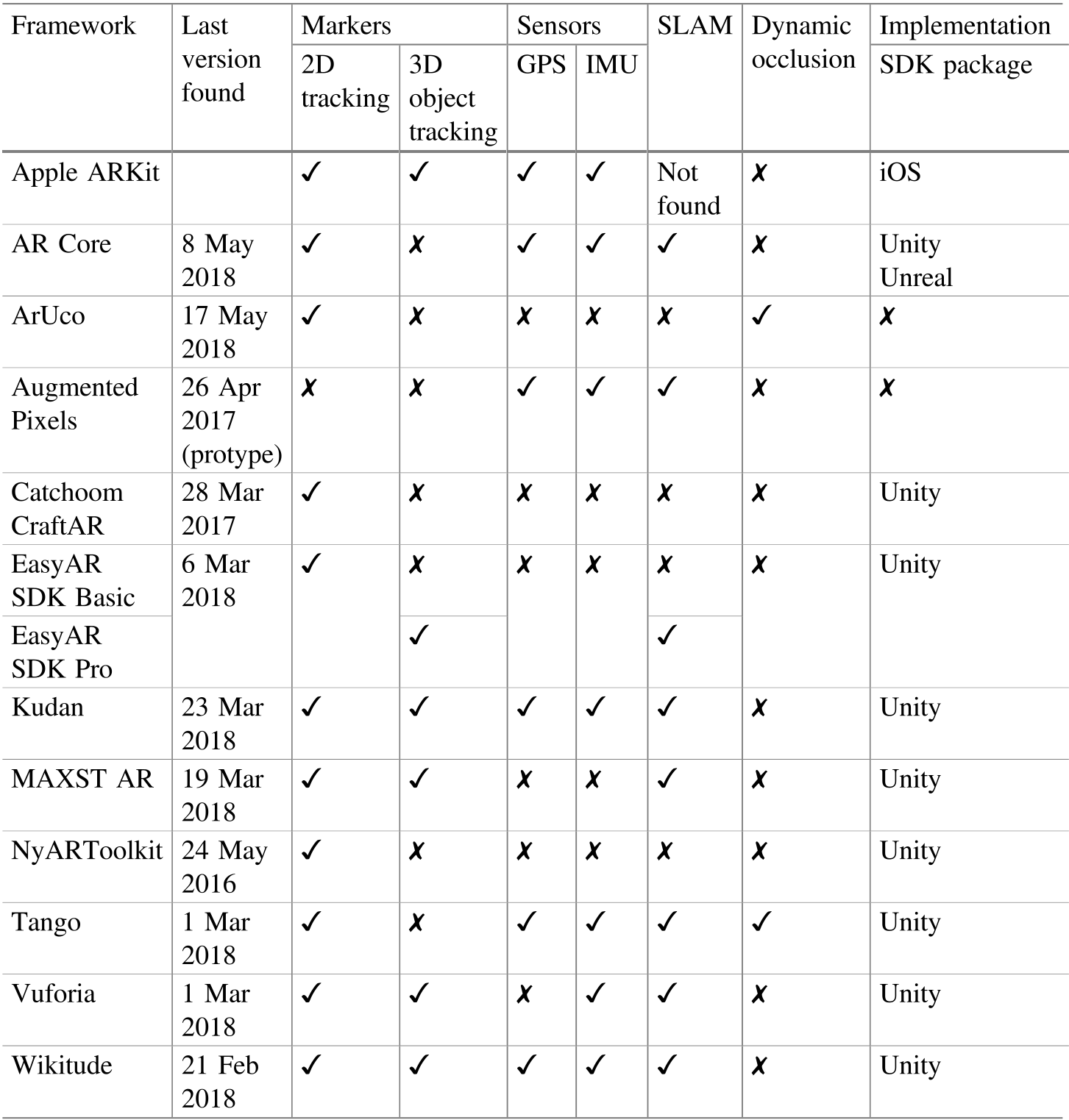 Table 1: Competitive landscape of AR SDKs, highlighting Tango's unique support for dynamic occlusion vs. ARCore's broader accessibility.
User Study & Experimental Results
The researchers used the HARUS (Handheld Augmented Reality Usability Scale) to measure two factors:
- Comprehensibility: How easy was it to understand the information?
- Manipulability: How physically taxing was the interaction?
The study found a fascinating trade-off:
- Project Tango (Lenovo Phab 2 Pro): Higher stability and "Area Learning." Its larger screen improved visual comprehension but made it heavier to hold.
- ARCore (Huawei P20 Pro): Better manipulability due to the lightweight nature of modern flagship phones, though it required an initial surface scan that Tango could bypass.
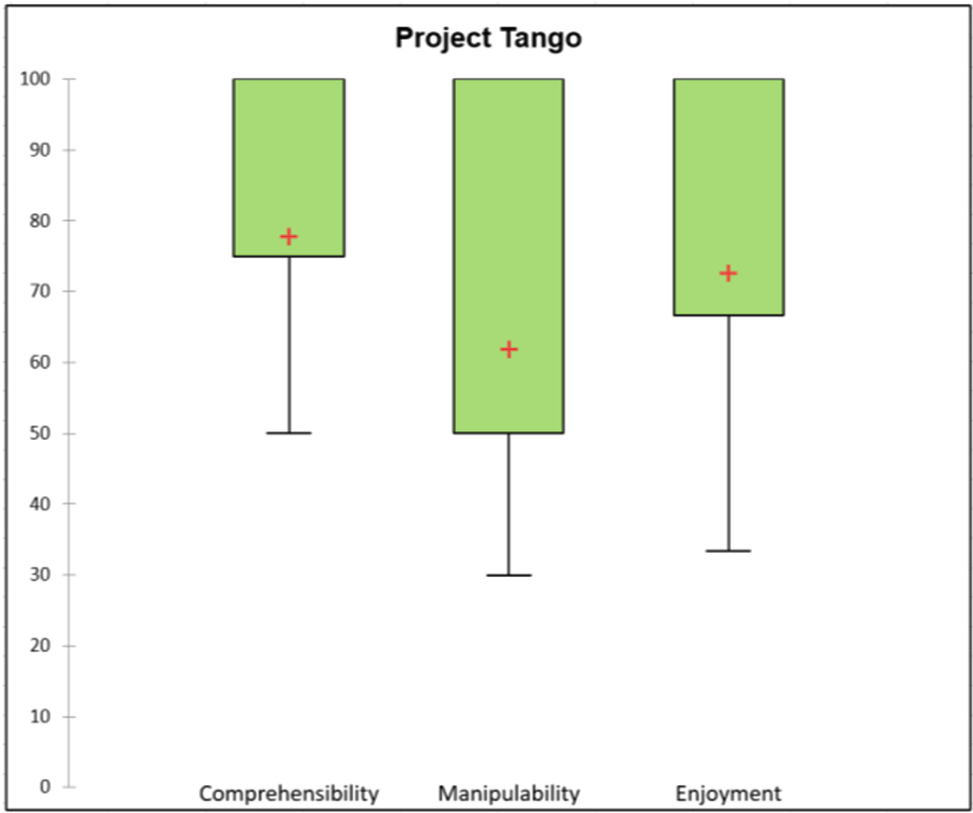 Fig 3 & 4: Comparison of Project Tango (Left) and ARCore (Right) satisfaction scores across comprehensibility and enjoyment.
Deep Insights: The Future of Virtual Heritage
The paper concludes that while Project Tango was "shut down" in favor of ARCore, its legacy of environmental awareness is the gold standard. However, for the purpose of Cultural Heritage communication, the specific hardware matters less than the quality of the 3D asset and the intuitive nature of the UI.
Key Takeaways for Developers:
- Stability is King: Non-expert users value the "locked-in" feel of a virtual object.
- Accessibility over Specs: ARCore's ability to run on standard Android devices makes it a superior choice for museum installments intended for the general public, despite its lack of specialized depth sensors.
- Educational Impact: 100% of users felt AR helped them learn more about the landmark, proving AR is no longer a gimmick but a vital tool for pedagogy.
Conclusion & Limitations
While this study successfully validates mobile AR for UNESCO sites, it notes that Tango’s specialized hardware still holds the edge for occlusion (virtual objects hiding behind real ones), which is crucial for immersion. As ARCore continues to evolve with software-based depth estimation, the gap is closing, making the democratization of virtual history more viable than ever.