
Authentic Learning: Bridging the Gap Between University and the Startup Ecosystem
Authentic Learning in Entrepreneurship Education
The paper introduces "Newis.Cool," an innovative entrepreneurship education (EE) platform that integrates Authentic Learning with Simulation and Gaming (S&G). It moves beyond traditional management theory to focus on developing cognitive and non-cognitive entrepreneurial competencies through real-world problem-solving within a private social network environment.
TL;DR
The paper introduces Newis.Cool, a simulation platform that redefines Entrepreneurship Education (EE) by shifting from "teaching management" to "fostering entrepreneurial spirit." By combining Authentic Learning—solving real, ill-defined problems—with a gamified social network, the authors provide a scalable way to develop "soft" entrepreneurial competencies like uncertainty tolerance and proactive problem-solving.
Context: The Reality of Entrepreneurial Failure
In many emerging economies, becoming an entrepreneur isn't an "opportunity"—it's a "necessity" born from high unemployment. Yet, educational structures are often ill-equipped to handle this. In Brazil, for instance, 60% of new businesses fail within five years. The authors argue that this stems from a fundamental misunderstanding: Management skills are NOT the same as entrepreneurial competencies. Traditional classrooms teach you how to organize a business that already exists; they don't teach you how to survive the "extreme uncertainty" of creating something new.
The "Authentic" Insight: Why Logic Alone Fails
The core of the paper lies in the transition from Active Learning to Authentic Learning. While active learning involves "doing," authentic learning involves "doing something that matters."
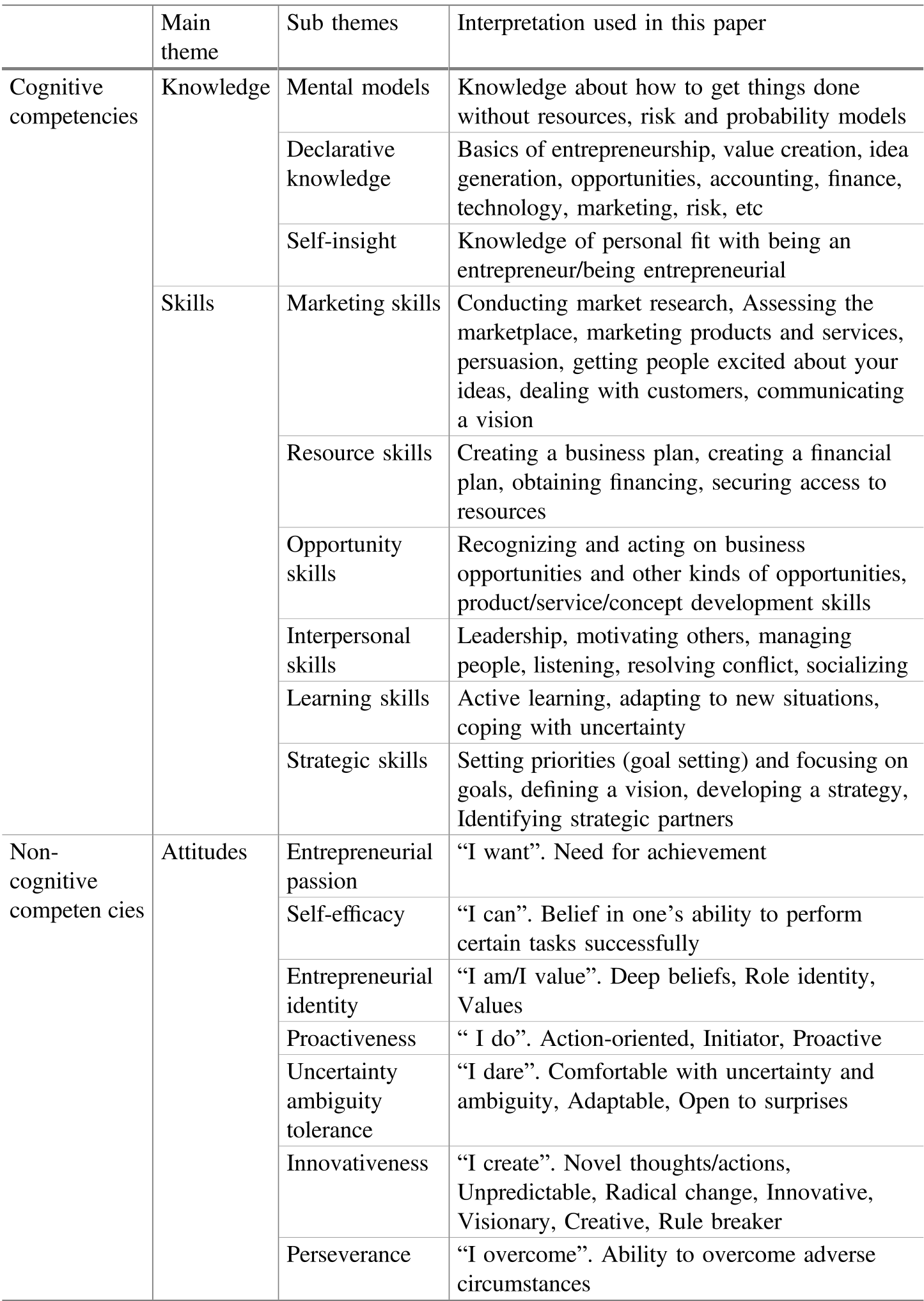
The authors identify a critical taxonomy of competencies divided into:
- Cognitive: Knowledge and skills (e.g., financial planning, marketing).
- Non-Cognitive: Attitudes (e.g., passion, self-efficacy, and perseverance).
Traditional didactic methods can teach a student to build a financial spreadsheet, but they cannot teach a student "uncertainty tolerance." This requires a simulation that doesn't just provide fixed variables but demands that students fetch their own variables from the real world.
Methodology: The Newis.Cool Architecture
The platform is designed as a private social network (resembling LinkedIn or Facebook) to match the digital habits of students aged 15-24.

The Five Levels of Evolution
Unlike static games, the simulation follows a startup's lifecycle:
- Ideation: Crafting a pitch.
- Seed: Seeking virtual investment/crowdfunding.
- Operation: Using parameterized simulators for logistics and commerce.
- Growth: Sustainable expansion.
- Maturation: Potential migration to the real world.
The Feedback Loop: Peer Review & Debriefing
A standout feature is the Peer Blind Review. Students review each other’s task movies (pitches, product tests) using rubrics. This doesn't just provide feedback; it trains the reviewer to spot value and flaws—a key entrepreneurial skill. High-quality reviewers earn "virtual coins," which can be used to "buy" mentoring sessions, mimicking real-world resource allocation.
Critical Evidence: Mapping Competencies
The paper provides a comprehensive framework for what an entrepreneur actually needs to learn. This isn't just "business 101"; it's a deep dive into the psychology of the founder.
Analysis: A New Pedagogy for Innovation
The genius of this work is its real-world parameterization. Instead of the game telling you the "price" of a product, you must go out, survey the market, and input that data into the simulator. If your data is wrong, your business fails. This creates tacit knowledge—the kind of "gut feeling" that successful entrepreneurs possess but textbooks cannot articulate.
Limitations & Future Work
The study is in its early stages, with 100 students currently using the platform. While the qualitative feedback is strong, long-term longitudinal data—tracking how many of these students actually launch successful businesses or become "intra-entrepreneurs" within three years—will be the ultimate test of the system's efficacy.
Conclusion
Entrepreneurship education is undergoing a paradigm shift. As technology makes it easier to simulate complex systems, the "Authentic Learning" model presented here offers a blueprint for universities globally. By treating the classroom as a "Startup Ecosystem" rather than a lecture hall, we can prepare students not just to find jobs, but to create them.