
Mapping the Invisible Colleges: Social Network Analysis of Digital Publishing
Author cooperation relationship in digital publishing based on social network analysis
This paper utilizes Social Network Analysis (SNA) and UCINET software to investigate author collaboration within China's digital publishing industry (2005–2014). It identifies 125 core authors and maps their interpersonal networks to assess the maturity and connectivity of academic exchange in this field.
TL;DR
Is the booming field of digital publishing a unified front or a collection of isolated islands? This study analyzes a decade of academic data (2005-2014) to reveal that while research volume has increased 17-fold, the "academic bridges" between researchers remain dangerously sparse. Most collaboration happens within the same office or city, leaving the broader network fragmented.
Problem & Motivation: The Silo Effect in Big Science
As scientific research transitions into the era of "Big Science," individual brilliance is being replaced by collective intelligence. However, in the field of digital publishing, we often see a "Silo Effect." Researchers focus on technical and legal aspects like copyright or profit models, but we rarely examine the human architecture behind the science.
The authors argue that without a connected social network, knowledge exchange is stifled. By identifying who talks to whom—and more importantly, who doesn't talk to whom—we can find the bottlenecks in innovation.
Methodology: Calculating Social Capital
The study utilizes Social Network Analysis (SNA), treating authors as "nodes" and joint papers as "edges."
1. Identifying the "Core"
Using Price's Law, the authors calculated that anyone with 4 or more publications in the designated period qualifies as a core author. Out of 5,388 individuals, only 173 made the cut, and of those, only 125 were involved in collaborative work.
2. Network Mapping
Using UCINET and NetDraw, the researchers visualized the structural relationships to measure:
- Density: How "thick" the connections are.
- Centrality: Who the "celebrities" (Degree Centrality) and the "bridges" (Middle/Betweenness Centrality) are.
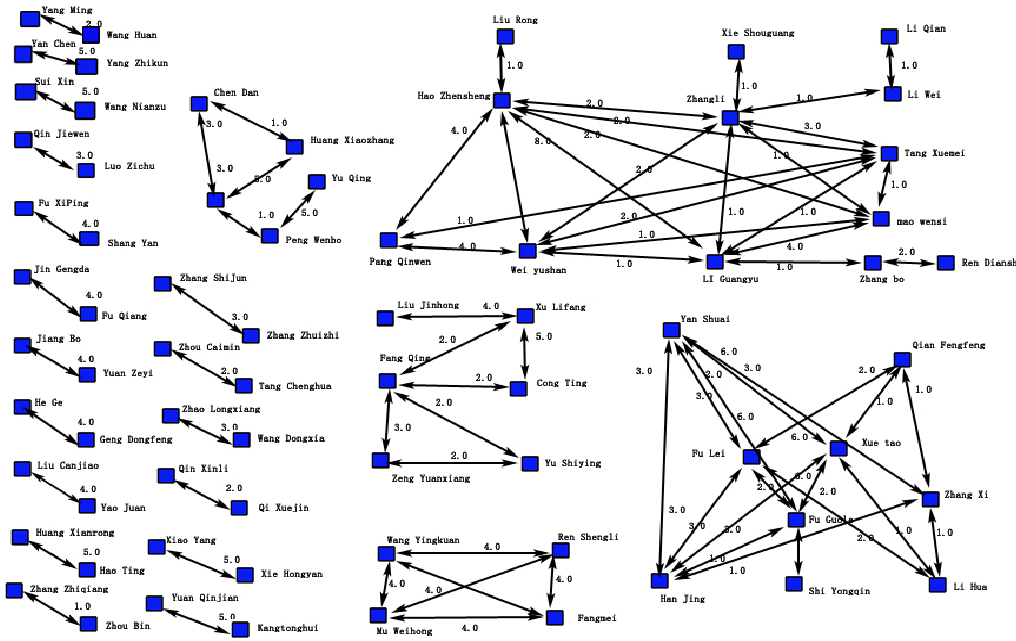 Figure 1: The fragmented landscape of digital publishing research. Note the prevalence of isolated clusters.
Key Insights from the Data
The analysis reveals a "loose" and "non-connected" graph. Here are the critical findings:
- Low Density & Connectivity: With a network density of only 0.0149, the academic community is far from being a "global village." Most authors are part of "double-node" networks—meaning they only collaborate with one other person.
- The Hubs: Authors like Su Lei and Xue Tao show high Degree Centrality, meaning they are active collaborators. However, Zhang Li holds the highest Middle Centrality (0.186), serving as the critical link between different research perspectives.
- Geographical Constraints: Collaboration is almost exclusively local. Clusters are typically formed within the same institution (e.g., Chinese Academy of Press and Publication) or the same city (Beijing or Wuhan clusters). Inter-regional cooperation is virtually non-existent.
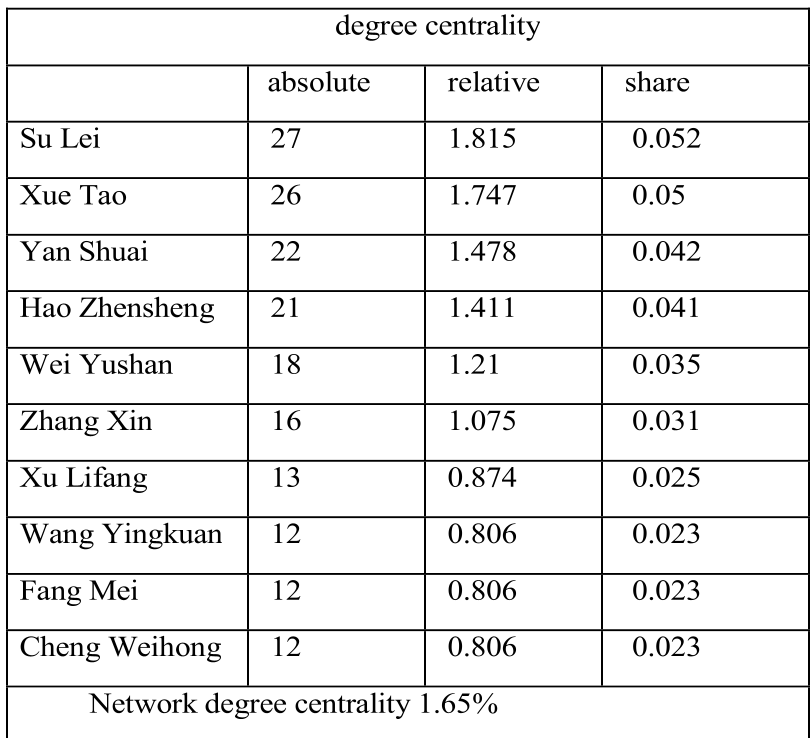 Table 1: Top 10 authors by Degree Centrality. Observe that high publication volume does not always equate to high network influence.
Small Group Dynamics (Cliques)
The researchers identified 5 major "cliques" or small groups:
- The Beijing Powerhouse: Led by Hao Zhensheng, focusing on industry scale and trends.
- The Journal System Group: Focusing on practical transformations and industry bases.
- The Academic Mentor Group: Centered around doctoral tutors at Wuhan University (Xu Lifang and Fang Qing), highlighting the teacher-student collaboration model.
Critical Analysis & Conclusion
Takeaway
The digital publishing field in China is growing rapidly in quantity but remains immature in its social structure. The "narrow scope" of collaboration suggests that the industry is still driven by internal institutional mandates rather than spontaneous thematic partnerships across different domains.
Limitations
The data stops in 2014. Given the explosive growth of AI and mobile platforms since then, the network density has likely increased. Furthermore, this study only covers CNKI (domestic) data, ignoring the international collaborations of Chinese scholars.
Future Work
The next step for this research should be Co-word Analysis and Citation Analysis. While this paper tells us who is working together, we still need to map what specific concepts (e.g., Blockchain in publishing, AI-generated content) are currently bridging these isolated islands.