
PAC: Decoding Autism through the Lens of Neural Phase Synchronization
Classification of Autism in Young Children by Phase Angle Clustering in Magnetoencephalogram Signals
This study presents a machine learning framework for detecting Autism Spectrum Disorder (ASD) in young children using resting-state Magnetoencephalography (MEG) signals. The researchers propose a novel feature called Phase Angle Clustering (PAC) and utilize an Artificial Neural Network (ANN) to achieve a SOTA classification accuracy of 88.20%.
TL;DR
Researchers have developed a novel feature extraction technique called Phase Angle Clustering (PAC) for MEG signals that identifies Autism Spectrum Disorder (ASD) in children with 88.20% accuracy. By shifting the focus from "how much" the brain is firing (power) to "how precisely" it is firing (phase), this study reveals that theta-band synchronization is a critical, whole-brain biomarker for ASD.
Background: The Need for Objective Diagnostics
Autism Spectrum Disorder (ASD) is traditionally diagnosed through behavioral observation (like ADOS), which requires specialized expertise and can be subjective. Recent neuroscience suggests that ASD is linked to an Excitation/Inhibition (E/I) imbalance. While previous work focused on Power Spectral Density (PSD)—measuring the strength of neural oscillations—this study explores the Phase Angle, a metric independent of power that captures the synchronization and timing within large-scale neural populations.
Methodology: The Power of the Circle
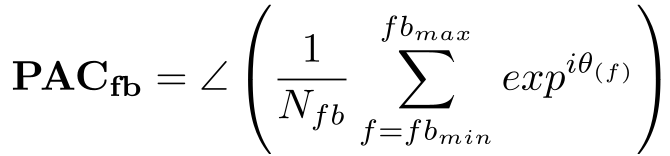
The core innovation is the Phase Angle Clustering (PAC) feature. Unlike standard Fourier transforms that often discard phase as "noise," PAC calculates how frequency components within a band (e.g., Alpha, Theta) cluster in polar space.
1. Feature Engineering
The authors use a custom child-sized MEG system to ensure high-fidelity signals. The PAC is calculated as the angle of the resultant vector of all phase components within a frequency band:
2. The Model Architecture
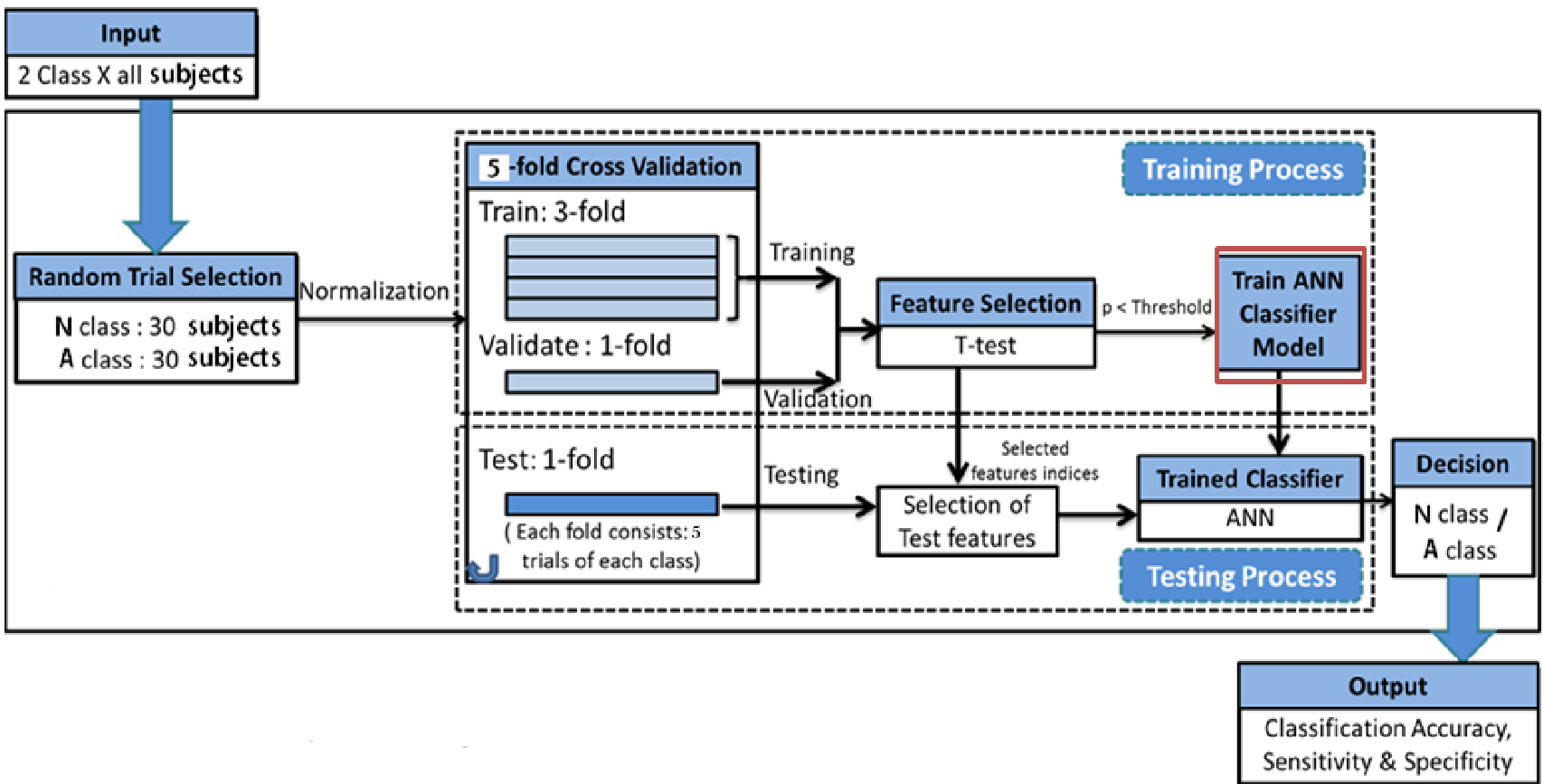
The researchers employed an Artificial Neural Network (ANN) with a 5-fold nested cross-validation strategy. This ensures that the model generalizes well to new data and isn't just "memorizing" the training set.
Experiments & Key Findings
Performance Superiority
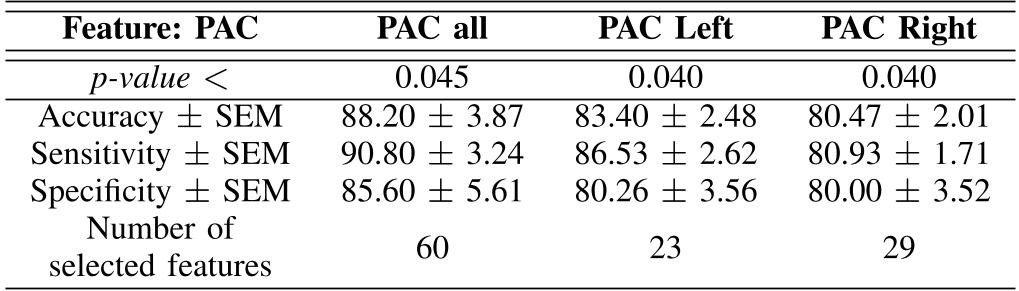
PAC outperformed the industry-standard PSD across all metrics. This proves that the stability of neural timing is a more sensitive indicator of autism than the magnitude of neural activity.
| Feature Type | Accuracy | Sensitivity |
|---|---|---|
| PAC (Phase) | 88.20% | 90.80% |
| PSD (Power) | 82.13% | 82.13% |
Frequency Band Insights
- PSD Analysis: Most discriminating features were in the High Gamma band (50-100 Hz) and showed rightward lateralization. This aligns with older theories of ASD asymmetry.
- PAC Analysis: The most vital features were in the Theta band (4-8 Hz). Unlike PSD, PAC features were distributed across the whole brain (Central, Parietal, and Frontal regions), suggesting ASD affects global phase-coordination networks.
Critical Insight: Why Theta?
The discovery that PAC features are dominant in the Theta band is significant. Theta oscillations are famously associated with memory formation and spatial navigation. The finding that impaired theta phase clustering correlates with ASD suggests that the "social navigation" deficits seen in autistic children might be rooted in a more fundamental failure of neural temporal organization at the theta frequency.
Conclusion & Future Outlook
This work demonstrates that phase-based analysis is no longer just a theoretical tool for neuroscientists; it is a viable, high-performance feature for machine learning diagnostics.
Limitations: The study used a relatively small sample of 60 children. Future Work: Expanding this to larger datasets and exploring phase-related connectivity (how different brain regions synchronize with each other) could lead to a digital "signature" for autism that enables objective screening during routine checkups.