
Bridging IR and Semantics: Enhanced Auto-Tagging via LSI and Ontology
Auto-Tagging Articles Using Latent Semantic Indexing and Ontology
The paper proposes an auto-tagging methodology for articles by integrating Latent Semantic Indexing (LSI) for domain classification and Ontology-based weighting for tag selection. The system achieves a high average recall of 0.981 and a classification accuracy of 90% across four specific domains: food, tourism, sport, and car.
TL;DR
This research presents a hybrid auto-tagging framework that moves beyond simple keyword counting. By leveraging Latent Semantic Indexing (LSI) for initial classification and a specialized Ontology Weighting mechanism, the system can understand that a "Jasmine Rice" tag carries more specific semantic value than just "Rice." The results show an impressive 90% classification accuracy and a recall of 0.981, facilitating much more effective content discovery in digital repositories.
Problem & Motivation
In the era of Web 2.0, tags are the connective tissue of the internet. However, manual tagging is a bottleneck. The authors identify a core limitation in existing auto-tagging tools: they often rely on dictionary matching or simple term frequency (TF).
The failure of these methods lies in their "semantic blindness." For instance, in an article about Thai cuisine, a frequency-based model might suggest the tag "Rice" because it appears most often. However, the more valuable tag is "Jasmine Rice"—a specific subtype. Current systems lack the hierarchical intelligence to prioritize these nuanced, "narrower" terms which are more useful for targeted search and retrieval.
Methodology: The Hybrid Architecture
The proposed methodology is split into two distinct phases: Pre-processing (offline) and the Tagging Process (runtime).
1. Domain Classification (The IR Layer)
The system first uses LSI to build vectors for different domains (Food, Sport, Tourism, Car). During runtime, it extracts terms from an article and uses Cosine Similarity to map it to the most relevant domain. This allows the system to load the correct domain-specific ontology.
2. Semantic Weighting (The Ontological Layer)
The "secret sauce" of this paper is the Ontology Weight (OntoWeight) formula. Instead of treating all tags as equal, it ranks them based on their position in a hierarchy:
- Specificity matters: Tags further from the root (leaf nodes) are given higher weights because they represent more specific concepts.
- Frequency-Augmented Weighting: The formula integrates Term Frequency to ensure that the suggested tags are both semantically specific and statistically relevant to the text.
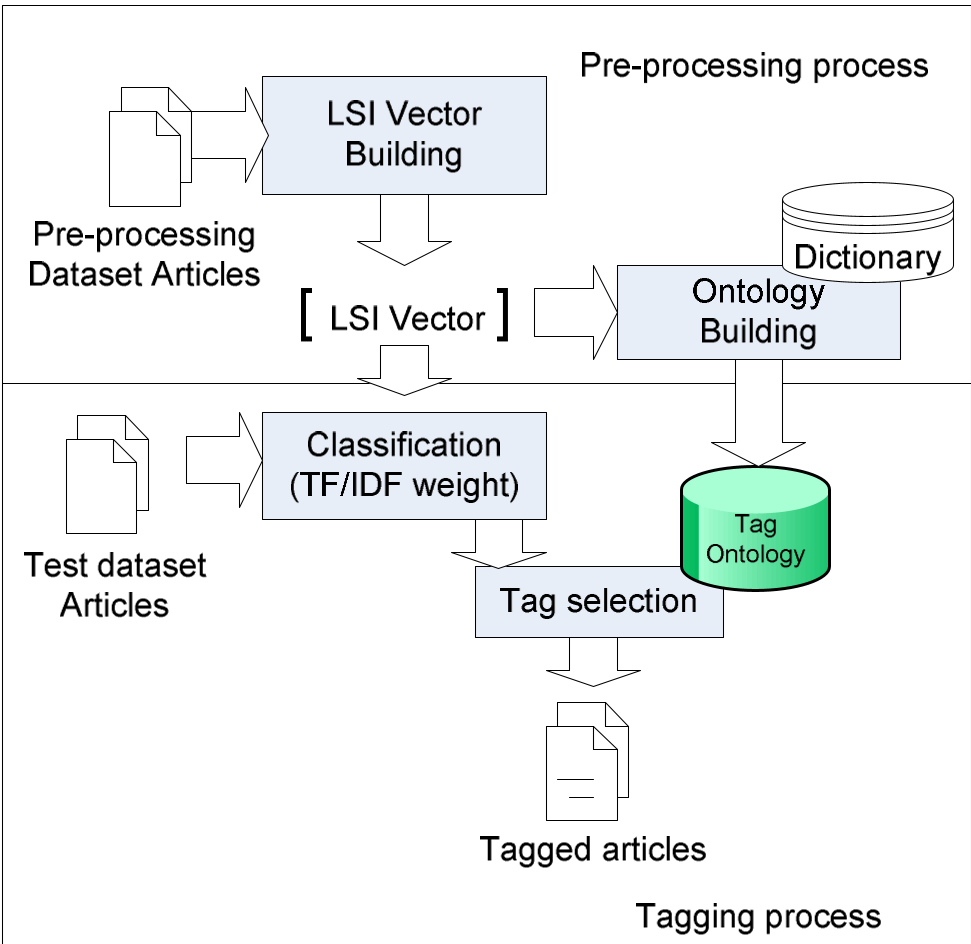 Figure 1: The dual-track workflow of Pre-processing and Runtime Tagging.
Experiments & Results
The authors tested their methodology on 140 Thai articles. The comparison between "Basic Ontology" and "Ontology x TF" revealed a clear winner.
- Accuracy Leap: When suggesting 5 tags beyond the manual baseline (N+5), the Ontology x TF method reached 94.3% accuracy, compared to only 85.7% for the frequency-less approach.
- Recall vs. Precision: The system achieved a near-perfect recall (0.981), meaning it rarely misses relevant tags. While precision was slightly lower (0.853), it still significantly outperformed manual tagging baselines in most categories.
 Table 1: Accuracy comparison showing the superiority of the combined Ontology x TF approach.
Critical Analysis & Conclusion
Takeaway
The primary contribution of this work is the validation of hierarchical weighting. By mathematically rewarding "narrower" terms in an ontology, the system simulates human expertise—knowing that "Mitsubishi" or "Mirage" are more descriptive tags for a car article than just "Car."
Limitations & Future Work
One notable limitation is the manual effort required to build and update the domain ontologies. As domains evolve, these static hierarchies may become obsolete. Furthermore, the LSI approach, while robust for small datasets, might struggle with the computational overhead of massive datasets compared to modern transformer-based embeddings.
For future iterations, integrating automated ontology learning or using LLM-generated taxonomies could remove the manual bottleneck, making this semantic tagging framework truly scalable across the entire web.
Key Terminologies:
- LSI (Latent Semantic Indexing): A mathematical technique to identify patterns in the relationships between terms and concepts in unstructured text.
- Ontology: A formal way of representing properties and relations between concepts within a domain.
- Recall: The ability of a model to find all the relevant cases (tags) within a dataset.