
Automated Semantic Indexing: Bridging the Gap in Italian Legal Literature
Searching and retrieving legal literature through automated semantic indexing
The paper presents a specialized Portal for Italian legal literature that integrates disparate structured repositories and Web documents using automated semantic indexing. It combines the Open Archive Initiative (OAI) protocol for metadata harvesting with Machine Learning techniques (Naïve Bayes and MSVM) to achieve standardized Dublin Core metadata across heterogeneous sources.
Executive Summary
TL;DR: This research tackles the "chaos of legal information" by building a unified Portal for Italian legal doctrine. By fusing traditional library harvesting protocols (OAI-PMH) with then-state-of-the-art Machine Learning (MSVM), the authors created a system that automatically categorizes messy Web documents into a structured, searchable index based on the Dublin Core standard.
Context: Published at ICAIL 2007, this work sits at the intersection of Digital Libraries and AI. It represents a transition from manual cataloging to the "Semantic Web" era, providing a hybrid architecture for professional legal research.
Problem & Motivation: The Legal Information Silo
Access to legal literature is a democratic necessity, yet the Italian landscape in 2007 was a fragmented mess of commercial databases, library OPACs, and unstable Web resources. The authors identified four critical pain points:
- Heterogeneity: Different interfaces and terminologies disorient users.
- Metadata Scarcity: Web documents lack consistent bibliographic descriptions.
- Domain Delimitation: Distinguishing "law-pertinent" material from sociology or economics is cognitively expensive.
- Semantic Gap: Natural language queries often fail to capture the technical nuances of legal concepts.
Methodology: The Federation Architecture
The core innovation is a "Federation System" that treats different data sources with tailored strategies but outputs a unified Dublin Core (DC) view.
1. Structured Data Harvesting
For established databases like DoGi (Italian Legal Doctrine), the system uses the OAI-PMH (Open Archive Initiative Protocol for Metadata Harvesting). This allows the Portal to act as a "Service Provider," pulling structured XML records from various "Data Providers" (libraries).
2. The Focused Crawler & Automatic Metadata Generator
The "wild" Web requires a smarter approach. The authors developed:
- Focused Crawler: An intelligent agent that prioritizes links based on the probability (reward) that they lead to legal literature.
- ML-Based Categorization: Since Web pages don't come with metadata, the system uses Text Categorization to assign subjects (e.g., "Criminal Law").
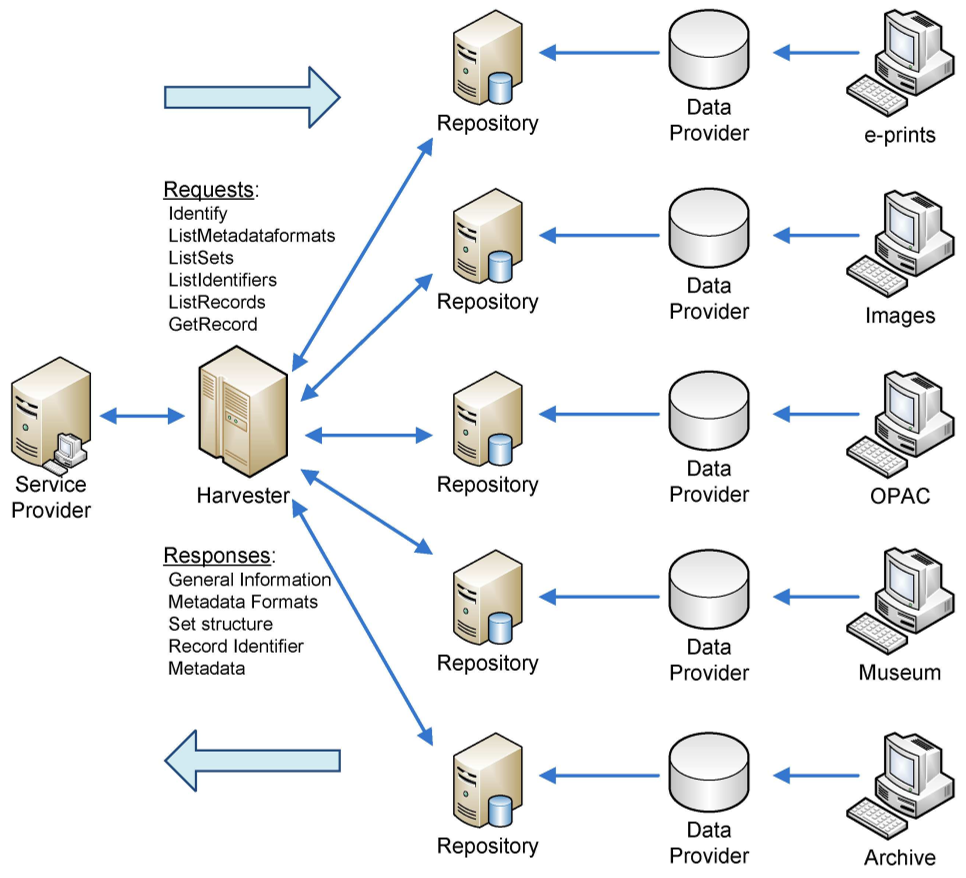 Figure 1: The OAI-based Federation Architecture for Legal Literature retrieval.
The "Physics" of the Classifier
The authors didn't just use a "black box." They compared Naïve Bayes (probabilistic) with Multi-class Support Vector Machines (MSVM). They treated documents as a "bag of words," utilizing TF-IDF weighting to capture the specificity of legal terms. The MSVM was specifically chosen for its ability to handle high-dimensional text data efficiently.
Experiments & Results: Precision in the Law
The system was tested on a dataset of 2,478 documents across 11 categories (Administrative, Private, Taxation Law, etc.).
- Winning Model: MSVM reached 85.1% training accuracy.
- Stability: Using a Leave-One-Out (LOO) strategy, the system maintained 74.7% accuracy, which is remarkably high given the linguistic crossover between different legal branches (e.g., the overlap between Constitutional and Administrative law).
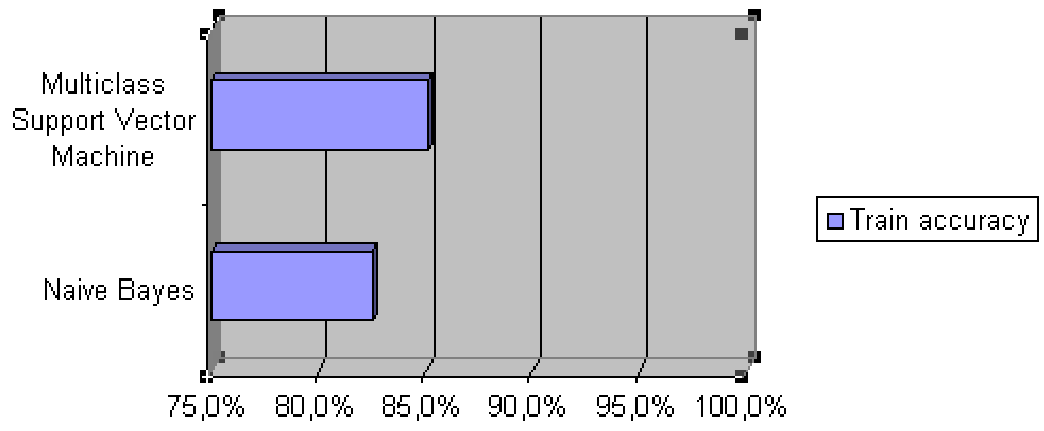 Figure 2: Performance comparison between Naïve Bayes and MSVM on the legal dataset.
Deep Insight & Conclusion
Why it worked
The effectiveness of this system stems from its Inductive Bias: the authors recognized that legal literature is hierarchical. By grounding the ML labels in the DoGi controlled vocabulary (6,600 descriptors), they ensured that the "automated" indexing remained linguistically relevant to human legal scholars.
Limitations
The system was at a "preliminary stage" regarding query expansion. While it could suggest broader/narrower terms if a search failed, the semantic mapping between natural language and technical legal codes remained a challenge that later "Embeddings" and "LLM" technologies would eventually address.
Future Perspective
This 2007 paper laid the groundwork for today's AI-powered legal research platforms. It shifted the paradigm from "finding documents" to "harvesting knowledge," proving that even the most unstructured Web data can be tamed through a combination of rigorous metadata standards and machine learning.