
Speaking Networks: Decoding Social Hierarchy from Privacy-Sensitive Audio
Towards the automated social analysis of situated speech data
This paper presents an automated framework for longitudinal social network analysis using privacy-sensitive wearable sensors. By monitoring 24 individuals over six months, the authors successfully correlate speech patterns (pitch, rate, turn dynamics) with social tie strength and network centrality.
TL;DR
Researchers from the University of Washington and Dartmouth developed a wearable sensing system that analyzes social networks without recording a single intelligible word. By tracking 24 participants over 6 months, they proved that how we speak (rate, pitch, timing) reveals our social status and the strength of our relationships more accurately than what we say.
Context & Positioning
In the landscape of Social Network Analysis (SNA), this work acts as a bridge between traditional sociology and ubiquitous computing. While most SNA studies rely on digital traces (who emailed whom), this paper focuses on situated speech data—the raw, face-to-face interactions that form the bedrock of human connection. It positions itself as a "transparent and objective" alternative to prone-to-error self-reports.
The "Privacy First" Methodology
The major hurdle in recording social data is privacy. To circumvent this, the team used a Source-Filter model approach:
- The Source: Pitches and volume (kept for analysis).
- The Filter: Formants (vocal tract shapes that create words) were discarded.
This ensures that the "prosodic" signature remains, but the semantic content is destroyed. The hardware consisted of a Multi-Sensor Board (MSB) clipped to a shoulder strap, effectively turning a person into a walking social data point.
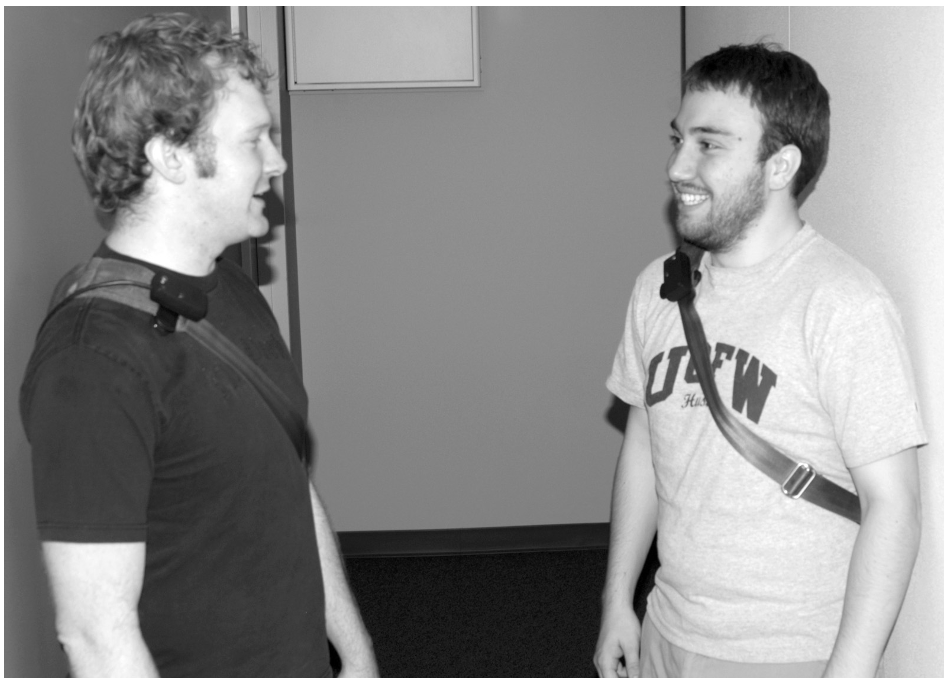 Figure 1: The data collection kit including MSB and PDA used by subjects.
Key Behavioral Insights
1. Familiarity Breeds Consistency (Tie Strength)
The authors hypothesized that we change our "normal" speaking style less when talking to close friends. The data confirmed this: there is a strong negative correlation between interaction frequency and behavioral deviation. Put simply: the more you talk to someone, the more you "be yourself."
 Table 1: Negative correlation between change in speech features and tie strength.
2. The Gravity of Centrality
One of the most profound findings is the relationship between Centrality and Accommodation.
- Finding: People who are "central" to the network (high closeness centrality) cause others to change their speaking style significantly when talking to them.
- Intuition: Interaction with a "central" figure (perhaps a popular peer or leader) triggers a subconscious behavioral adjustment in the interlocutor, likely as a form of social mirroring or increased effort.
Experimental Validation
The system isn't just theoretical. It was validated against traditional surveys (asking students who they worked with). The sensor-derived network agreed with the survey results at a rate far exceeding a random model (p = 6.0e-6), proving that automated sensors can effectively replicate—and then exceed—the precision of human memory in social reporting.
Critical Analysis & Future Outlook
Strengths: This work pioneered "privacy-by-design" in social sensing, proving that we don't need to listen to secrets to understand social structures.
Limitations:
- The "Device Gap": The system only detects conversations between two people both wearing the device. Conversations with outsiders are invisible.
- Demographics: The 24-person graduate student sample is small and socially homogeneous.
Future Impact: Imagine a smartphone that knows you’re having a high-stakes conversation with a "central" person in your network and automatically silences notifications, or a workplace tool that identifies "socially isolated" employees to prevent burnout. This paper laid the groundwork for the Socially Aware Ubiquitous Computing we see emerging in the AI era.
Takeaway
Social status isn't just about who you follow; it's encoded in the specific, microscopic deviations of your pitch and speech rate. By stripping away words, we actually see the social structure more clearly.