
Automating Social Privacy: Shielding OSN Users from Colluding Attacks via Historical Data Analysis
A Supporting Automatically Mechanism for Data Owner Preventing Personal Privacy from Colluding Attack on Online Social Networks
The paper proposes an automatic mechanism to assist social network users in managing shared data access and preventing colluding attacks. It utilizes a similarity-based approach focusing on historical interaction data between the owner, existing stakeholders, and a new candidate stakeholder to automate friend requests and data access approvals.
TL;DR
With over 1.65 billion users, Facebook and similar OSNs have become goldmines for private data. However, manual privacy settings are failing. This paper introduces an automatic mechanism that uses Euclidean distance and historical interaction patterns to decide whether a new user should be allowed to access shared data, specifically targeting the threat of Colluding Attacks.
Background & Motivation: The Human Weakness in Privacy
Modern Online Social Networks (OSNs) are essentially massive graph structures consisting of users, resources, and relationships. While these platforms provide basic "Allow/Deny" toggles, two major issues persist:
- User Negligence: Most users lack the security skills or the time to manage complex access policies for every piece of content.
- Multi-Party Ownership: A single photo can have multiple stakeholders (the uploader, the people tagged, and those who comment). This creates a "Colluding Attack" surface where attackers collaborate to piece together private info.
The authors’ insight is simple yet powerful: Trust can be quantified by social history. If a new "friend" (candidate stakeholder) has almost no common historical data with you or your existing circle, their request to access sensitive shared data is statistically suspicious.
Methodology: Quantifying Social Distance
The heart of the proposed mechanism is a 4-step processing pipeline that converts social relationships into mathematical vectors.
1. The Weighted Relationship Matrix
The system selects historical data items and builds a matrix. A weight of 0 is assigned if a relationship exists, and 0.9 if it does not. This creates a "coordinate" for every user in the social space.
2. Similarity Calculation
Using the Distance Formula, the system calculates the "Similarity Value" between a new candidate () and existing stakeholders ().
3. Case Analysis
The paper defines five critical scenarios to calibrate the model:
- The Most Similar Case: Candidate shares the same relationships as everyone else (Distance 0).
- The Colluding Case: Candidate has relationships with other stakeholders but notably not the data owner (Distance ).
- The Stranger Case: Candidate has almost no relationship history with the group.
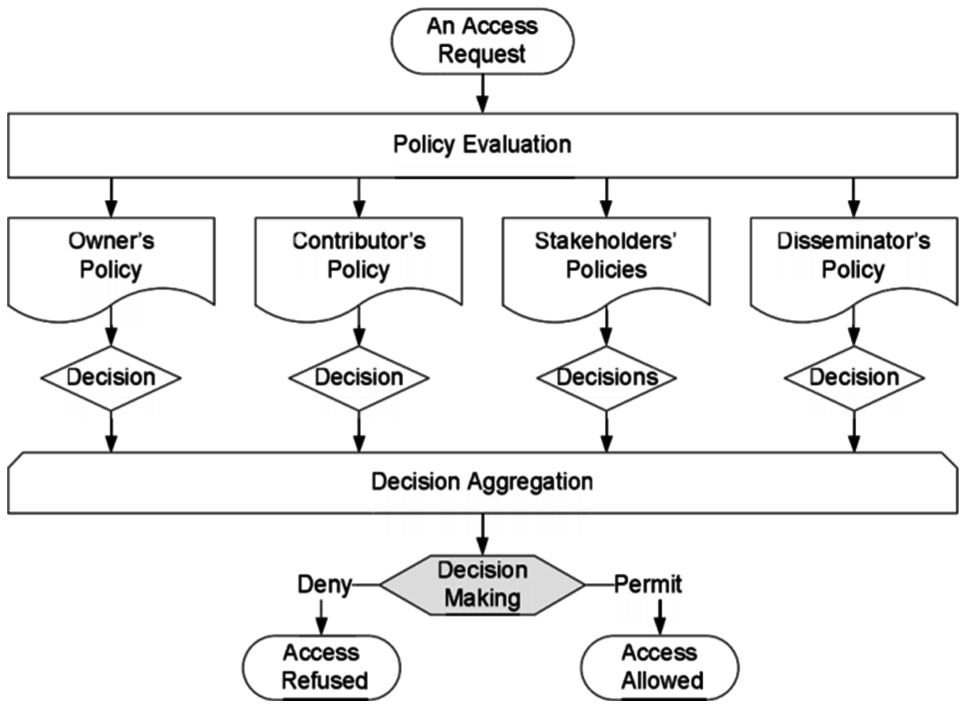 Figure 1: The general flow of multiparty evaluation and decision aggregation.
Experiments & Security Thresholds
The researchers tested their mechanism against 90 historical data items and varying counts of stakeholders (1 to 12).
The goal was to find a "Decision Threshold." If the real_AVG_similarity is below a certain calculated point, the system automatically allows the connection. If it exceeds the threshold—meaning the user’s behavior doesn't match the historical social pattern—it triggers a "Ask Data Owner" prompt.
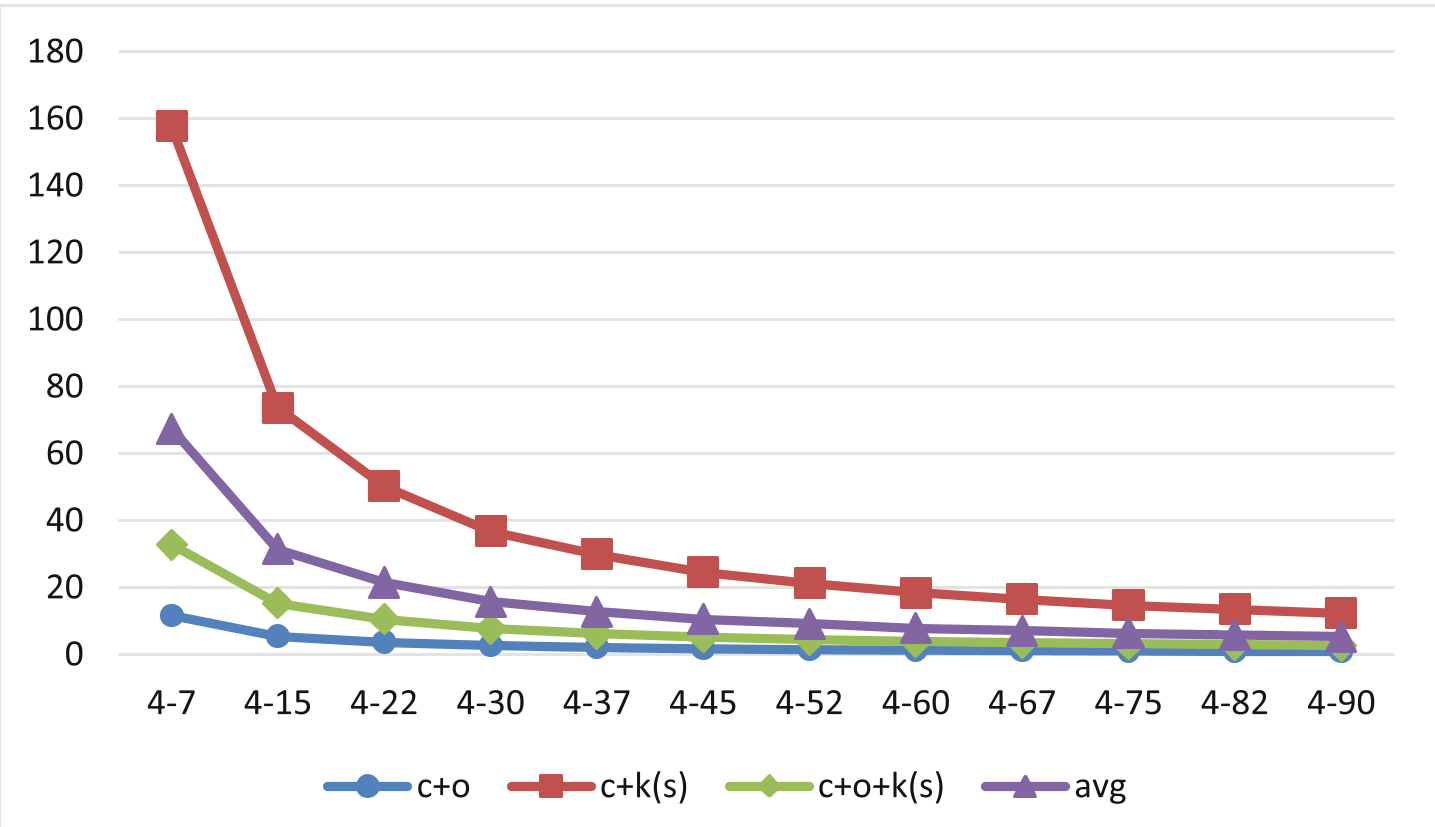 Figure 2: Comparison of different connection cases. The "Average Value" serves as the automated firewall for the data owner.
Key Findings:
- Collision Detection: The formulas successfully separated legitimate stakeholders from potential colluders by identifying gaps in the relationship matrix.
- Automation: By calculating these values in the background, the "Data Owner" is only interrupted when a request is truly anomalous.
Critical Insight & Conclusion
This work shifts the paradigm of OSN privacy from Static Policies (rules you write once) to Dynamic Reputation (decisions based on evolving history).
Limitations: The current model uses a static weight (0.9) for non-relationships and a simple Euclidean distance. In more complex social graphs, a non-linear approach (like Cosine Similarity or Deep Graph Embeddings) might be required to handle "noise" in social interactions.
Takeaway: In the future, your social media "Firewall" won't be a list of blocked names, but an algorithm that knows your social circle better than you do, automatically blocking those who don't "fit" into your historical pattern of trust.