
Scaling Emotional Intelligence: How Machine Learning Annotates 30 Million Spotify Songs
An Automatic Emotion Recognition System for Annotating Spotify’s Songs
The paper presents an automatic Music Emotion Recognition (MER) system specialized for large-scale annotation of Spotify's vast library. By leveraging Spotify's Web APIs and a multi-model Machine Learning approach based on Russell’s circumplex model, it successfully annotated over 5 million songs without requiring raw audio processing or manual expert intervention.
TL;DR
Researchers from the University of Zaragoza have developed an automated system that side-steps the "audio bottleneck" of music emotion recognition. By scraping user-curated playlist data and applying specialized Machine Learning models, they have mapped the emotional landscape of millions of songs on Spotify, achieving upwards of 88% accuracy.
Academic Context: This work transitions MER from small-scale, expert-dependent experiments into the realm of "Big Data" by treating user behavior (playlist creation) as a source of truth.
The Bottleneck: Why Your AI Can't "Feel" the Beat
Most Music Emotion Recognition (MER) systems are trapped in two major pitfalls:
- The Audio Requirement: They need actual .mp3 or .wav files to extract low-level features, which is problematic due to copyright and bandwidth when dealing with 30M+ tracks.
- The Subjectivity Trap: Human emotion is fickle. Getting experts to label a million songs is financially and logistically impossible.
Previous SOTA (State of the Art) systems usually capped out at around 1,500 to 1,800 songs. This paper breaks that ceiling by treating Spotify's developer API as a goldmine for both features and labels.
Methodology: Divide and Conquer the Emotional Space
The authors based their logic on Russell’s Circumplex Model, which maps emotions onto a 2D plane: Valence (pleasantness) and Arousal (intensity).
Instead of building one "jack-of-all-trades" classifier, they built four specialized models, one for each quadrant:
- Quadrant 1 (Angry): High Arousal, Low Valence.
- Quadrant 2 (Happy): High Arousal, High Valence.
- Quadrant 3 (Sad): Low Arousal, Low Valence.
- Quadrant 4 (Relaxed): Low Arousal, High Valence.
Strategic Data Mining
To solve the "labeling" problem, they used the Spotify Playlist Miner. They assumed that if thousands of users put a song in a playlist titled "Morning Joy," that song is statistically likely to be "Happy."
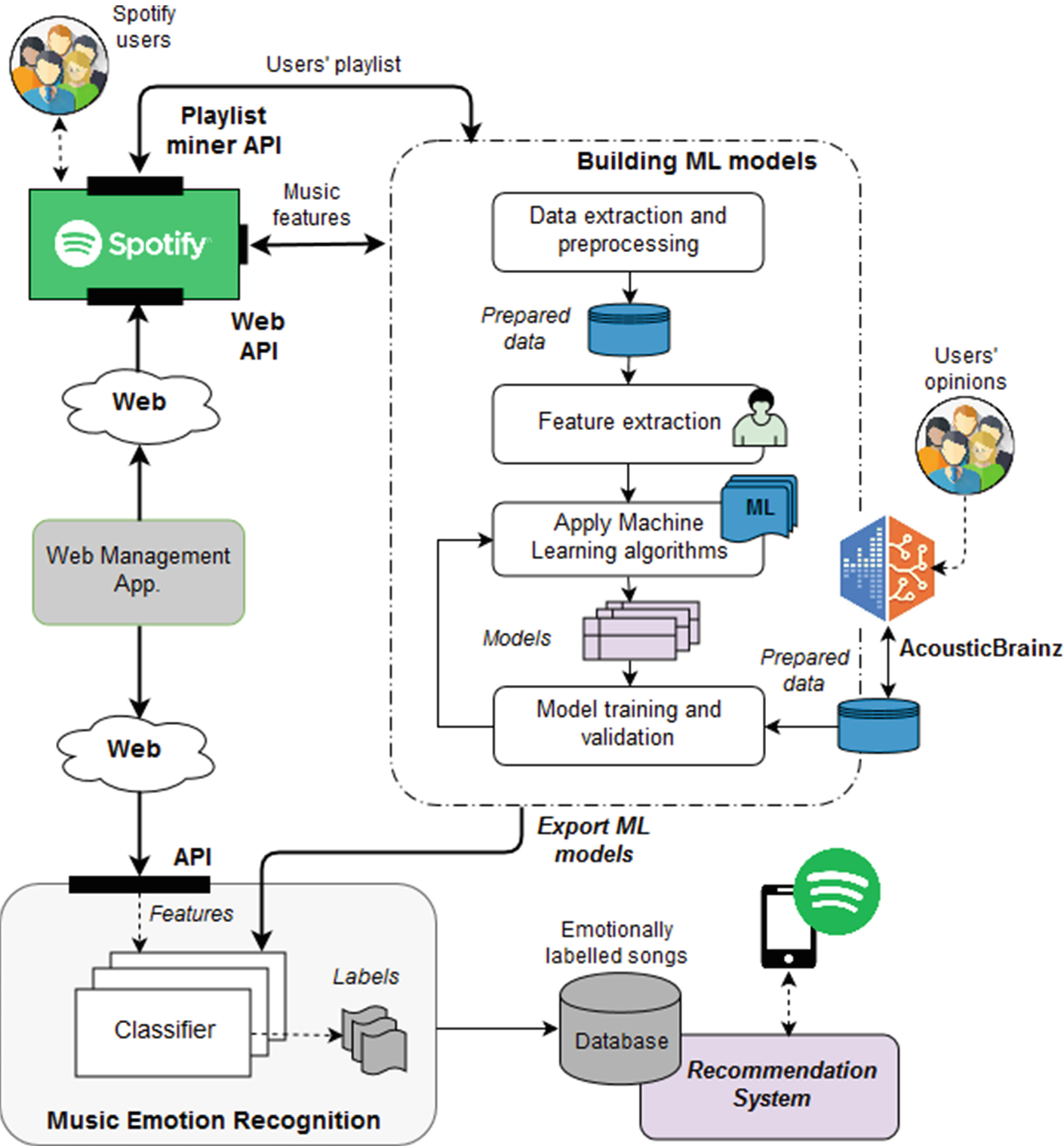 Figure 1: The dual-track workflow showing model building (right) and the live MER system (left).
Feature Selection: What Makes a Song "Sad"?
Through statistical tests (ANOVA F-value and Mutual Information), the authors discovered that not all audio features are created equal. While Energy and Valence are universally important, others are niche.
- Acousticness was a vital predictor for identifying "Sad" and "Relaxed" songs.
- Danceability was heavy-weight for "Happy" and "Angry" tracks.
Results and Validation
The authors didn't just trust their own training data. They validated their models against AcousticBrainz, a massive database with half a million songs.
| Algorithm | Sad | Happy | Angry | Relaxed |
|---|---|---|---|---|
| Random Forest (Accuracy) | 0.862 | 0.844 | 0.899 | 0.945 |
| Mean Accuracy | 88.75% |
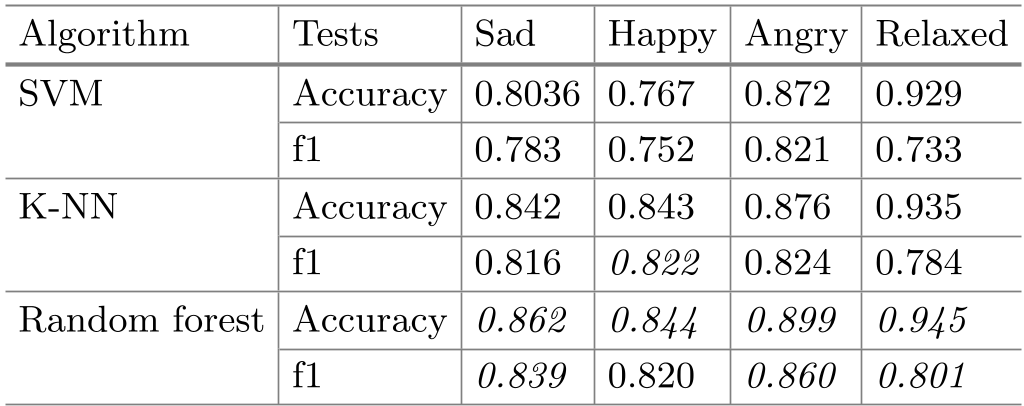 Figure 2: Performance comparison across different ML algorithms. Random Forest consistently outperformed SVM and KNN.
Deep Insight: Why Multi-Model Wins
The most striking finding was that the multi-model approach outperformed a single multi-class model (89% vs 78% accuracy). This is because emotional boundaries in music are often blurry (e.g., the line between "Relaxed" and "Sad"). By training binary classifiers for each quadrant, the models could focus on specific "Arousal" or "Valence" cues without being confused by the global noise of a 30-million-song dataset.
Real-World Application: The DJ-Running Project
This isn't just theoretical. This system powers DJ-Running, a project that recommends music to long-distance runners based on their real-time performance and desired emotional state (e.g., playing "Angry/High Energy" tracks to push through a "wall" during a marathon).
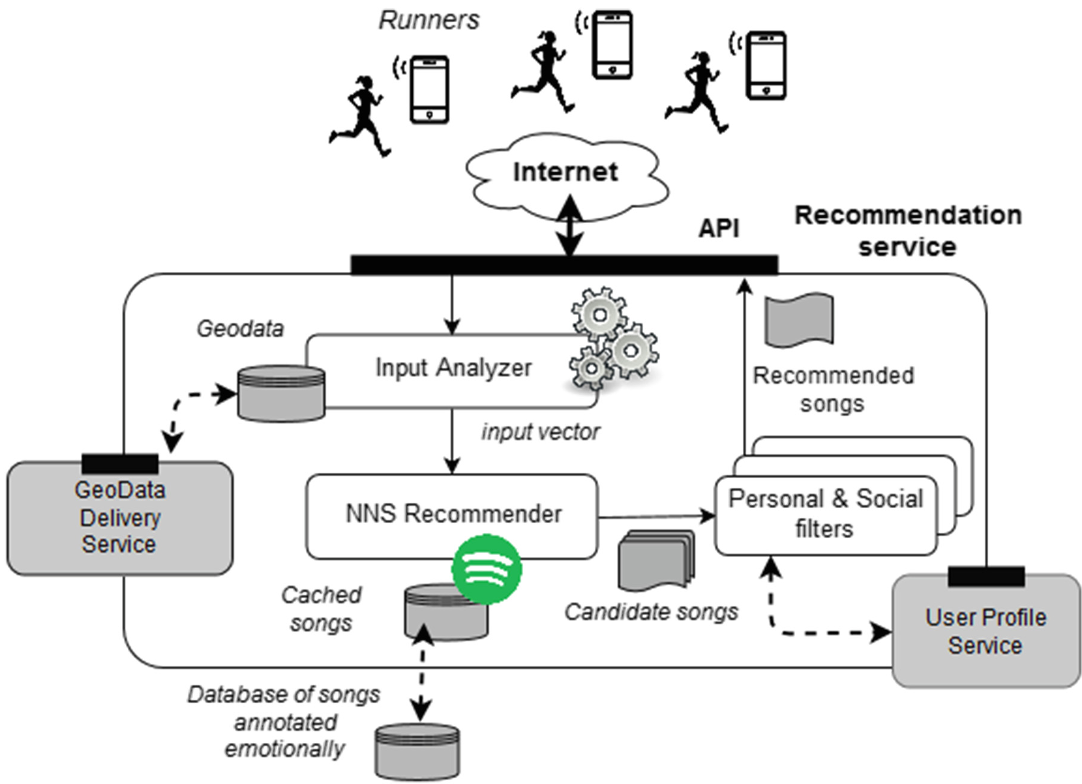 Figure 3: Integration of the MER system into the DJ-Running recommendation engine.
Conclusion and Future Outlook
While the system is highly effective, the authors noted that about 18% of songs remain "unclassified"—essentially the emotional "grey areas" of music. Future work plans to leverage Deep Learning and temporal segment analysis (looking at specific parts of a song) to further refine these results.
For the industry, this paper provides a blueprint for how to turn unstructured user behavior into structured, high-value metadata for recommendation engines.