
Beyond the Screen: Automating Social Presence for the Communication-Impaired
Automatically Generating Online Social Network Messages to Combat Social Isolation of People with Disabilities
The paper introduces an assistive software framework that automatically generates and posts Online Social Network (OSN) messages based on the daily computer activities of people with severe motion disabilities. Using the "Camera Mouse" interface, the system translates application usage and task achievements into social updates to reduce the physical and cognitive burden of manual text entry.
TL;DR
For individuals with severe physical disabilities, the "digital divide" isn't just about access—it's about the exhaustion of expression. This paper presents a prototype that tracks user activity (like playing a game or finishing a book) and automatically generates social media updates. By bypassing the physical strain of typing, the system combats isolation and allows users to share their daily lives with family and peers effortlessly.
The "Exhaustion of Expression"
In the world of Assistive Technology (AT), we often focus on functional tasks: can the user move a cursor? Can they select a word? However, the paper highlights a deeper, more human problem: social isolation.
Existing Online Social Networks (OSNs) are designed for the "able-bodied" norm—fast-paced, button-heavy, and text-intensive. For a user utilizing a head-tracking interface like the Camera Mouse, typing a simple status update like "I finished my art project today" can be a grueling, multi-minute task. Consequently, these users often remain silent observers, leading to a profound sense of loneliness.
Methodology: From Logs to Social Capital
The core insight of the authors is to shift the paradigm from Message Construction (building a sentence letter by letter) to Message Generation (leveraging existing metadata).
1. The Architecture of Awareness
The system operates on a three-tier integration model:
- Custom Software (HAIL): Built-in logging of specific events and user opinions (e.g., Thumbs Up/Down).
- Existing Software (BlockEscape): Parsing game logs to extract scores, wins, and losses.
- Proprietary Software: Monitoring window titles or taking periodic screenshots to infer activity.
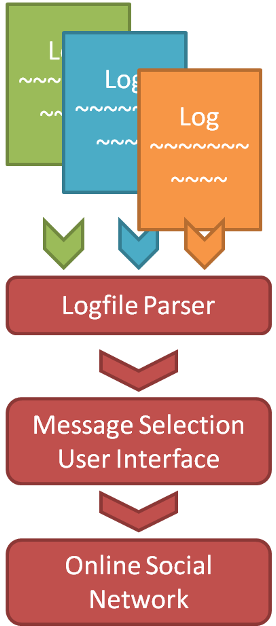 Figure 1: The flow from raw activity logs to an API-driven social media post.
2. Physical-to-Digital Bridge
By using the Camera Mouse—which converts head movements into mouse coordinates—the user only needs to provide a "final check." The system presents a drafted message (e.g., "I played EagleAliens for 20 minutes and got a high score!"), and the user simply clicks "Send."
Field Insights: The "Ribbon Economy"
The researchers conducted case studies in a Boston middle school. One of the most striking findings was the impact on the school's "points economy." Students earn ribbons for tasks, but students with severe language impairments often couldn't share these successes.
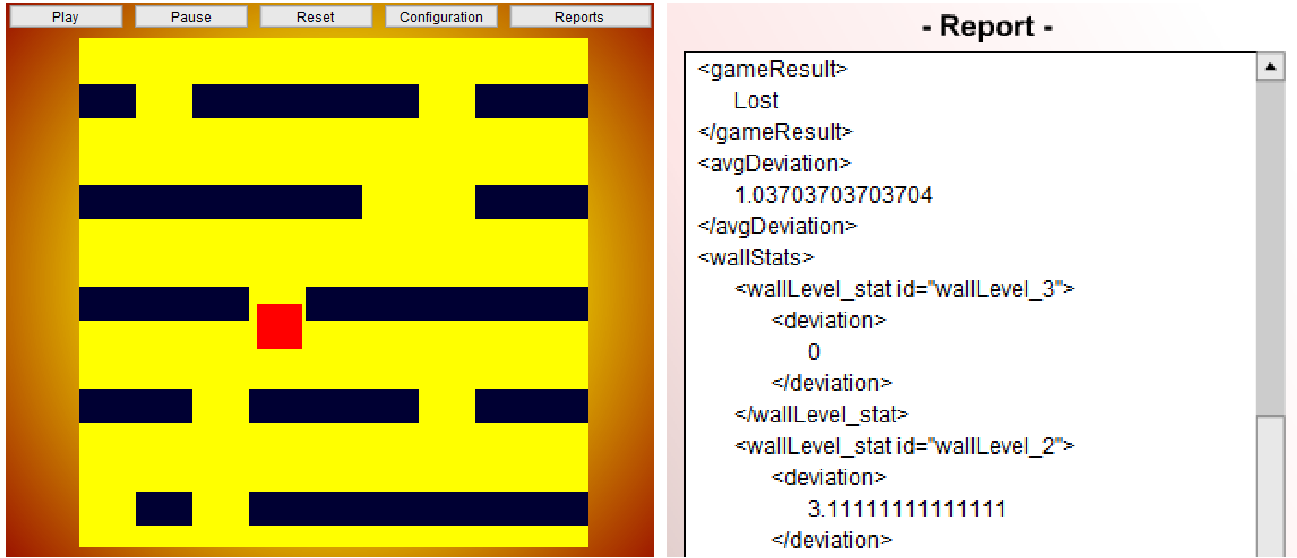 Figure 2: A prototype status update showing a user's progress in a reading task.
Key Results:
- Peer Inspiration: Students reported that seeing a classmate's automated post about a new game or book inspired them to try it themselves—creating a "positive social feedback cycle."
- Caregiver Connection: The messages served as "conversation starters" for parents at home. Instead of asking a non-verbal child "What did you do?", parents could say "I saw you had art class today, tell me about it!"
- High Engagement: Users rated the likelihood of using such a feature at 4.6 out of 5.
Critical Analysis: Privacy and the "Caregiver Burden"
While the technical results are promising, the paper honestly addresses two major hurdles:
- The Privacy Paradox: For automated systems to be effective, they must monitor behavior. Participant C (a 16-year-old) noted he wouldn't want all his computer activities broadcast, highlighting the need for granular "opt-in" controls.
- The Learning Curve: Assistive technology is often abandoned if the caregiver finds it too complex. The success of this system relies on it being "zero-effort" for the facilitator as well as the user.
Future Outlook: The Generative Era
Looking at this work from a modern perspective (with LLMs like GPT-4), the potential is even greater. We can now transform sterile logs into rich, emotive narratives. However, the foundational principle remains the same as established in this paper: Automation is not just about efficiency; for those with disabilities, it is the key to social visibility.
Conclusion
The "What did I do today?" question is a cornerstone of human connection. By automating the answer, we don't just help people use computers—we help them remain part of the human conversation.