
Artisanal Automation: Reclaiming the Soul of Labor in the Age of AI
Automation for the artisanal economy: enhancing the economic and environmental sustainability of crafting professions with human–machine collaboration
This paper proposes a socio-technical framework for an "Artisanal Economy" leveraging AI and robotics to counter the job displacement and alienation caused by mass production. It introduces the concept of "Generative Justice," where human-machine collaboration is used to circulate unalienated labor, ecological, and social value across micro, meso, and macro scales.
TL;DR
As AI threatens to automate millions of "alienated" jobs, this paper argues for a pivot toward an Artisanal Economy. By integrating AI and robotics with traditional craft, we can create a "generative" system where technology doesn't replace humans but enhances their creative agency. Through "Heritage Algorithms" and localized value chains, the authors demonstrate how automation can actually save the environment and restore dignity to work.
The Extraction Crisis: Why Mass Production is Failing Us
The paper begins with a stark critique of the current status quo. Mass production is built on Extraction:
- Labor Extraction: Turning meaningful work into monotonous tasks, leading to "job strain" and mental health crises.
- Ecological Extraction: Dumping toxins and depleting soil, treating nature’s self-healing capacity as a free resource.
- Social Extraction: Fragmenting communities and replacing social identity with a "hedonic treadmill" of over-consumption.
While "cobots" (collaborative robots) are marketed as the future, the authors argue they are often just a mask for "deskilling"—making tasks so simple that workers become interchangeable cogs.
Methodology: Scaling Generative Justice
The authors propose a three-tiered intervention to transform automation into a tool for justice.
1. The Microscale: Heritage Algorithms
Instead of using AI to replace the craftsman’s hand, the researchers use Ethnocomputing. They identify "Heritage Algorithms"—the mathematical patterns in Navajo weaving, African American cornrows, or Ghanaian batik.
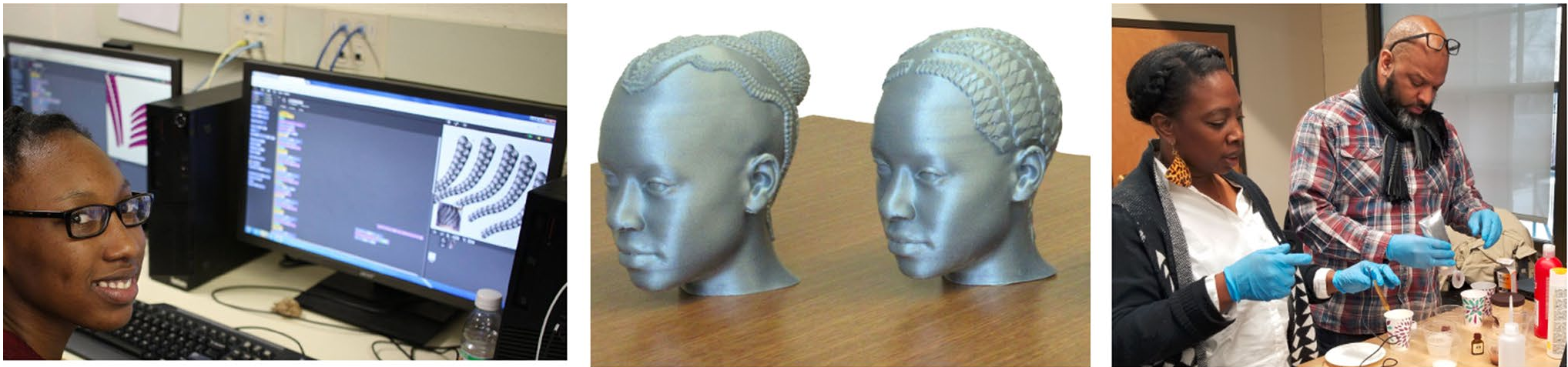 Fig 1: Students and artisans using Culturally Situated Design Tools (CSDTs) to translate heritage patterns into 3D-printable or hand-crafted artifacts.
The Strategic Diversity Insight: Unlike factory workers who prefer to "cede control" to robots, artisans want a choice. Ghana artisans used mushroom-based "mycofoam" for molds; Native American youth preferred hand-assembling digital templates. This variety is "Hybrid Diversity"—a rejection of universal, one-size-fits-all automation.
2. The Mesoscale: Smart Value Chains
The goal here is to connect "unalienated" producers. For instance, urban gardeners can grow organic ingredients for local cosmetologists, who use pH sensors (DIY automation) to create hair products.
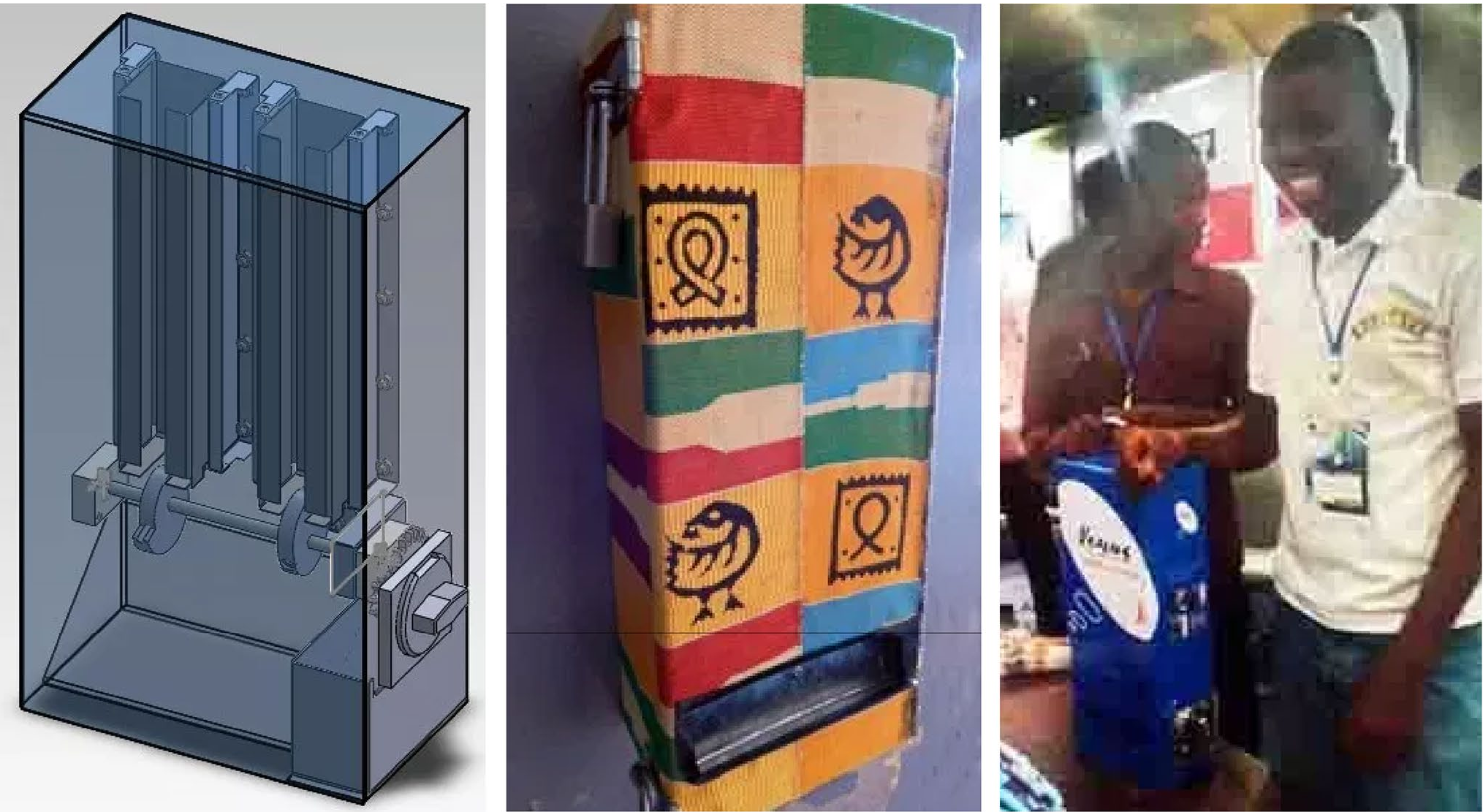 Fig 4: Integrating traditional Adinkra patterns with open-source condom vending machines—balancing community privacy with localized production.
3. The Macroscale: Open Source and Peer Production
Finally, the paper advocates for "Commons-Based Peer Production." If DNA sequences are a natural commons, AI should be too. By moving from Uber-style gig extraction to Platform Cooperativism (like worker-owned taxi apps), we can ensure the economic benefits of automation stay with the creators.
Experimental Evidence: The Power of Upskilling
Experimental workshops in Michigan and Ghana showed that when technology is presented as a "bridge" to their own culture, underrepresented groups significantly improved their STEM performance.
- Ghana: Artisans automated the boiling of tree bark for ink using solar heat and sensors, protecting forests from deforestation while increasing output.
- Michigan: Cosmetologists and growers used Arduino-based sensors to monitor pH levels, creating a horizontal network of knowledge and resources.
 Fig 3: The lifecycle from traditional stamps to 3D-simulated mycofoam molds.
Conclusion: A Bottom-Up Future
The "Artisanal Economy" is not about going back to the Stone Age; it’s about a Bottom-Up Co-evolution. The true value of AI isn't in its ability to mimic a truck driver, but in its potential to help a local weaver optimize their loom, authenticate their handmade patterns against mass-produced fakes, and connect with a global community of ethical consumers.
Takeaway: We must fight for an automation that prioritizes the "moral arc of the universe"—moving from extractive capitalism to a generative, sustainable future.