
Beyond the Robot Apocalypse: The Case for Human-Machine Co-Evolution
Automation, per se, is not job elimination: How artificial intelligence forwards cooperative human-machine coexistence
The paper argues for a cooperative human-machine coexistence in the face of AI-driven automation, challenging the narrative of mass job elimination. It introduces three theoretical pillars—economic mechanisms, phenomenological experience, and operational interdependence—to demonstrate how technology complements rather than replaces human labor.
TL;DR
Contrary to the popular "Job Elimination" narrative, this paper argues that AI and automation serve as a complementary force that enhances human productivity. By analyzing economic patterns, the philosophy of experience, and collaborative competition (like Advanced Chess), the authors demonstrate that machines lack the essential "first-person experience" required to replace humans entirely, leading instead to a future of cooperative coexistence.
The Misconception of the "Zero-Sum" Job Market
The fear that robots will "steal" all jobs rests on a flawed premise: that the amount of work in an economy is fixed. This paper highlights that while Routine Tasks are being automated at an unprecedented rate, Non-Routine Tasks (both manual and cognitive) have seen steady growth for decades.
The authors point to Robot Density—the number of robots per 10,000 employees—as a key metric. Data shows that countries and companies with high robot density often see wage increases and value-added growth rather than mass unemployment.
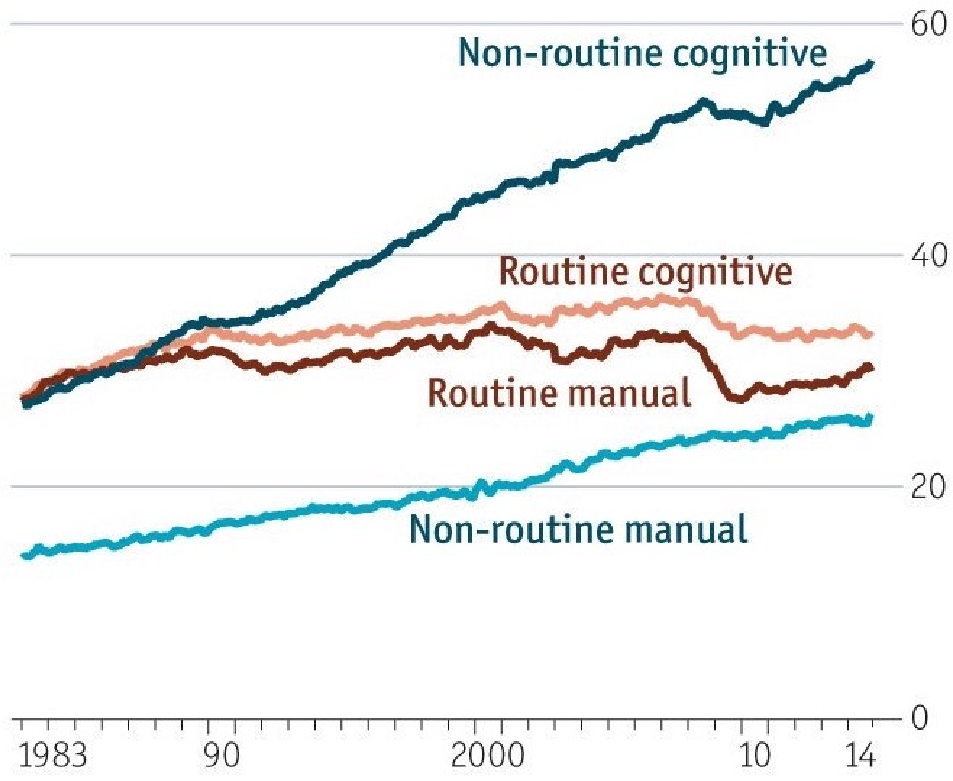 Figure 1: The divergence between routine and non-routine job growth suggests a shift in labor nature, not labor volume.
The Three Pillars of Coexistence
1. The Economic Feedback Loop
History shows that technology-driven price drops stimulate demand. The paper cites Amazon as a prime example: despite deploying an "army" of 45,000 robots, the company grew its human workforce by nearly 50% to meet the resulting surge in consumer demand. Automation creates a surplus that is either reinvested or passed to consumers, both of which fuel new job creation in the supply chain.
2. Phenomenology: Experience vs. Algorithm
One of the paper's more profound insights is the First-Person/Third-Person Divide.
- Human Intelligence is rooted in Phenomenology—the direct, lived experience of being-in-the-world.
- Artificial Intelligence relies on third-person data distillation.
The authors argue that machines cannot truly "experience" context. Because algorithms learn by distilling human performance, a decrease in human workers would eventually lead to a "data drought," degrading the quality of artificial learning itself. We are the source of the "experience" that machines attempt to model.
3. Tactical Symbiosis (The Kasparov Effect)
The paper revisits the 1997 defeat of Garry Kasparov by Deep Blue, but focuses on the aftermath: Advanced Chess. In tournaments where humans used computer assistance, "smart amateurs" with superior tactical integration were able to beat both grandmasters and supercomputers.
This synergy is currently playing out in:
- Radiology: AI identifies fractures, allowing doctors to focus on complex cancer screenings.
- Journalism: Algorithms handle routine earnings reports (growing output from 300 to 3,000 articles), freeing writers for investigative depth.
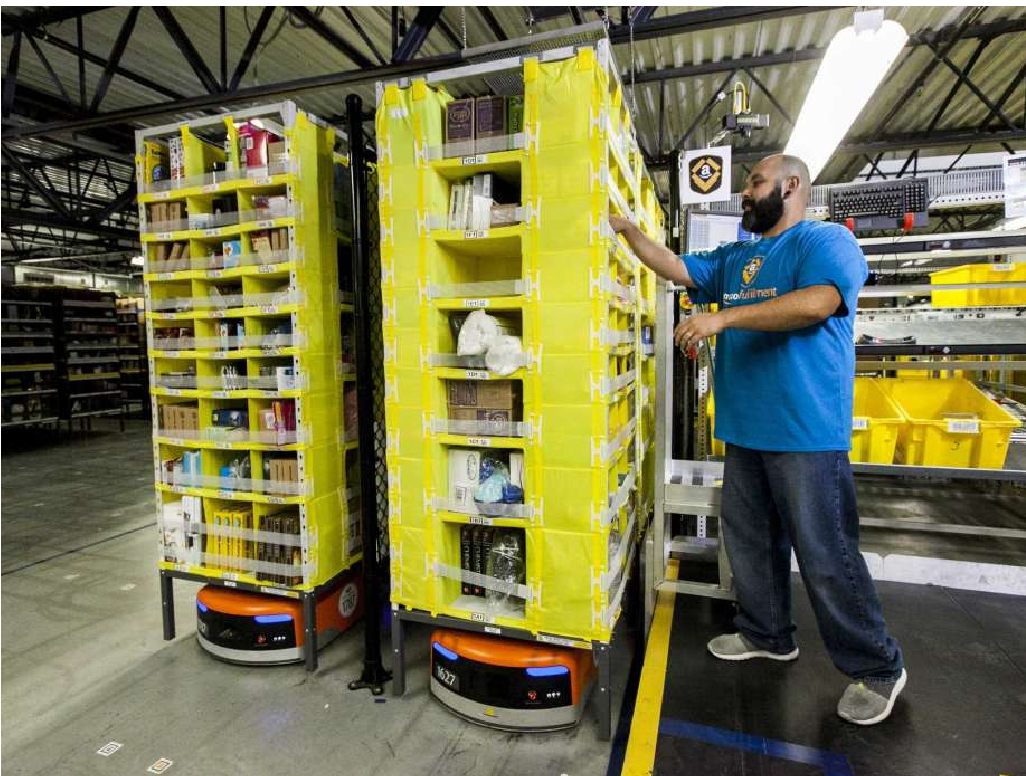 Figure 2: Human-robot collaboration in logistics centers exemplifies the operational interdependence discussed.
Critical Insight: Education is the Real Bottleneck
The authors conclude that the primary risk isn't the existence of robots, but the obsolescence of our current educational models. The transition from "employment" to "co-existence" requires:
- Lifelong Learning: Moving away from the "one-and-done" degree model.
- Focus on Tacit Skills: Prioritizing creativity, problem-solving, and emotional intelligence—areas where AI lacks the "experiential" depth of humans.
Conclusion
While the "Robot Apocalypse" makes for great headlines, the data suggests a more nuanced reality. Automation is "color-blind" to class, but it is highly sensitive to the routine. By embracing the roles where we have the "home-field advantage"—strategic guidance, empathy, and lived experience—we move from a narrative of competition to an era of Human-Machine Synergy.