
Autonomous Social Support: Bridging the Loneliness Gap for the Elderly
Autonomous systems to support social activity of elderly people a prospective approach to a system design
The paper proposes an autonomous software system designed for elderly people in community centers to support social activity and well-being. By utilizing robots and consumer appliances equipped with face recognition and emotion detection, the "Ambient Assisted Living" (AAL) system bridges the communication gap between institutionalized seniors and their social circles.
TL;DR
This research presents a proactive system design aimed at combating social isolation among institutionalized elderly people. By integrating Ambient Assisted Living (AAL) concepts with autonomous devices—like robots and smart appliances—the system monitors social media updates from family and suggests simplified interactions based on the user's current state of mind and context.
Academic Context: This work sits at the intersection of Human-Computer Interaction (HCI) and Gerontology, moving beyond simple assistive tools to create "autonomous mediators" for social health.
The "Isolation Sink": Why Current Tech Fails the Elderly
The transition to elderly care centers often marks a sharp decline in social status and interaction frequency. While younger generations stay connected via a constant stream of social media, elderly individuals often face a dual barrier:
- Physical/Cognitive Limitations: Health issues make using standard smartphones or PCs difficult.
- The Usability Gap: Most social platforms are designed for high-frequency, high-complexity interaction that alienates older users.
The authors argue that social bond strength is the primary predictor of well-being, yet our current tech ecosystem effectively "locks out" the population that needs these bonds most.
Methodology: The Autonomous Mediator
The core innovation lies in shifting the burden of "initiation" from the human to the machine. Instead of the user having to figure out how to "check Facebook," the system recognizes the user and proposes an activity.
1. System Architecture & Workflow
The system follows a specific decision-making loop:
- Identification & Emotion Sensing: Using image processing (face recognition and emotion detection) to see who the user is and if they look sad, lonely, or happy.
- Context Acquisition: Utilizing APIs to see what is happening in the family's world (e.g., "It's your grandson's birthday").
- Adaptive UI: Using natural language to offer a simple choice: "Your grandson has a birthday today. Would you like to send him a greeting?"
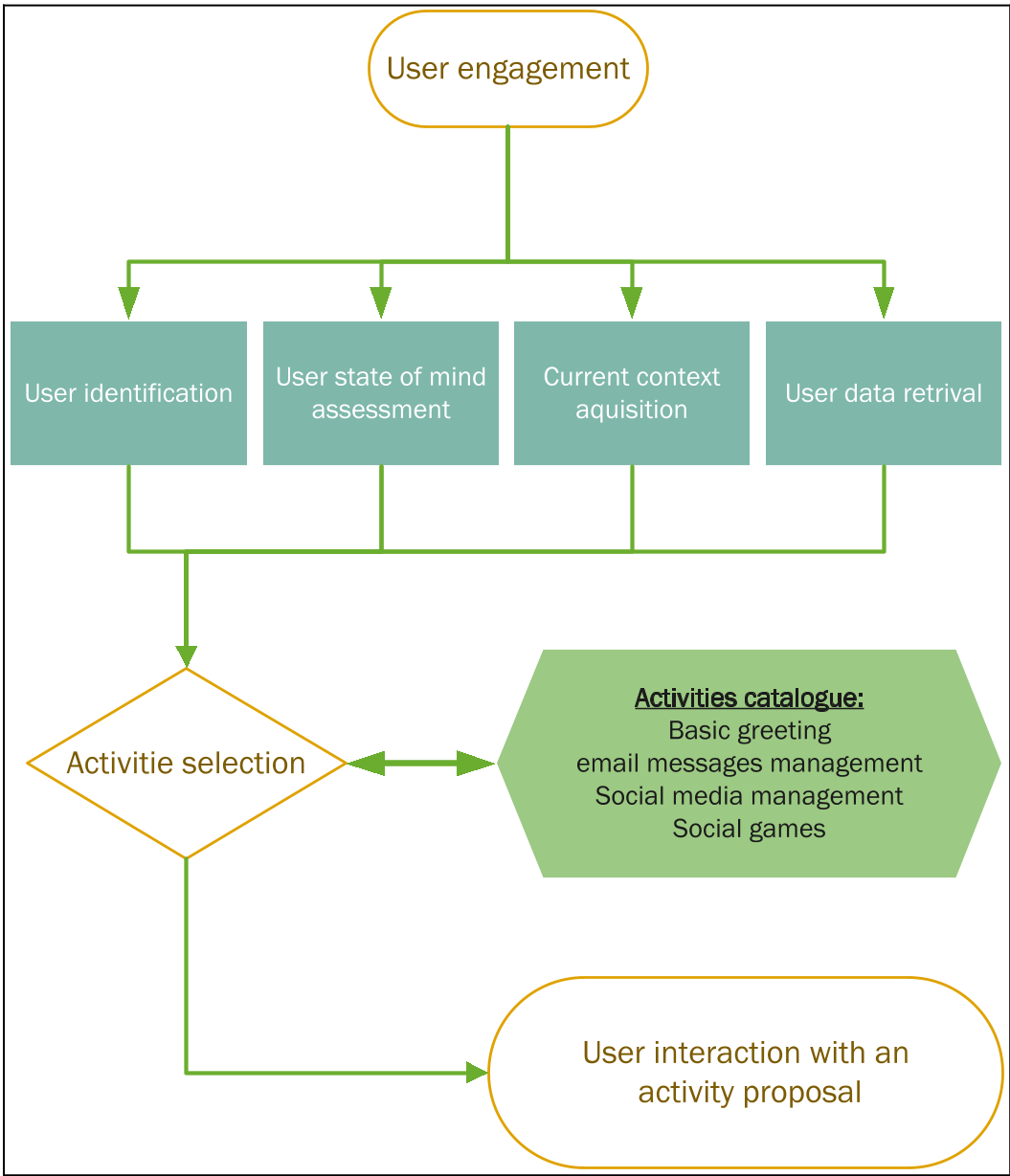 Fig 1: The decision-making loop of the autonomous interaction system.
2. Multi-Disciplinary Development
The paper emphasizes a "User-Centric" approach, involving two distinct teams:
- Software Engineers: Handling the heavy lifting of Image Analysis, Social Media APIs, and Database management.
- Healthcare Professionals: Acting as "proxy users" and validators to ensure the interactions are therapeutically beneficial and usable.
Key Features: From Greetings to Social Games
The research breaks down interactions into manageable modules as shown in the table below:
| Feature | Research Area |
|---|---|
| State of Mind Assessment | Emotion detection via Image Processing |
| Social Media Management | Social Media APIs (Facebook, Twitter) |
| Natural Language Interface | Adaptive UI and Natural Language Processing |
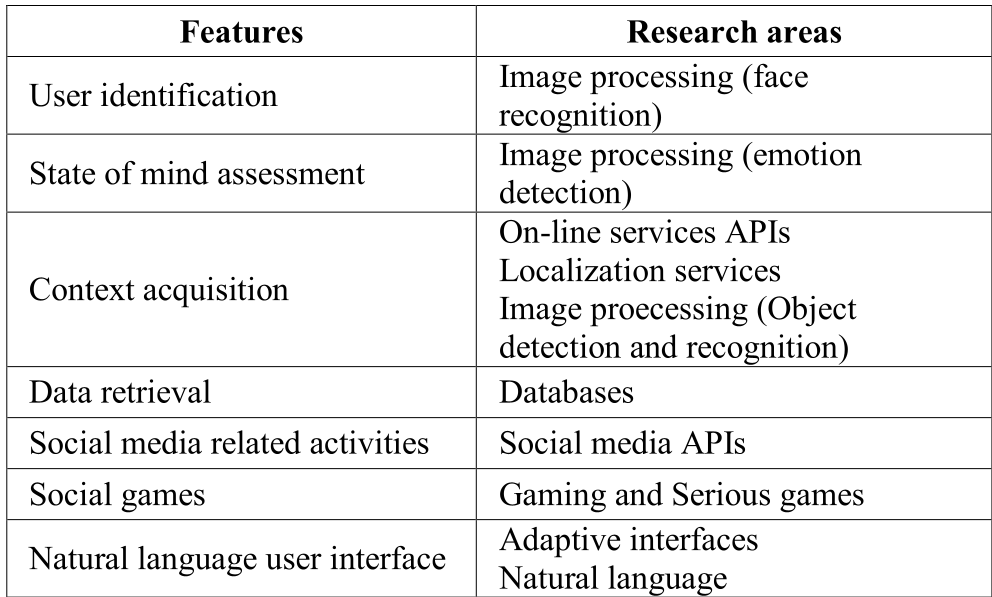 Table 1: Mapping system features to academic research domains.
Critical Analysis & Conclusion
Takeaway
The proposal successfully identifies that loneliness is a design failure, not just a biological byproduct of aging. By using autonomous systems to "pull" users into social interactions, we can mitigate the psychological decline associated with institutionalization.
Limitations
- Privacy Concerns: Continuous image acquisition for emotion sensing raises significant ethical and privacy questions in a care-home setting.
- Connectivity Dependency: The "Mediator" model relies heavily on the digital literacy of the other party (family/friends) and stable API access to social platforms.
Future Outlook
With the advent of modern Generative AI and Large Language Models, the "Natural Language" component described in this 2016 paper could now be significantly more fluid and empathetic, potentially transforming these autonomous agents from simple tools into genuine social companions.