
Unobtrusive Gait Monitoring: A Digital Sentinel for Early Cognitive Decline
Autonomous Unobtrusive Detection of Mild Cognitive Impairment in Older Adults
This paper presents an autonomous, unobtrusive system for detecting Mild Cognitive Impairment (MCI) in older adults using longitudinal home-based sensor data. By applying Support Vector Machines (SVM) and Random Forests (RF) to gait and activity patterns, the system achieves an AUC-ROC of 0.97 and an AUCPR of 0.93.
TL;DR
Researchers have developed a machine learning framework that detects Mild Cognitive Impairment (MCI) in older adults with 97% accuracy using nothing but passive motion sensors installed in the home. By analyzing 24-week trajectories of walking speed, the system bypasses the limitations of infrequent clinical "snapshots" and provides a continuous, real-world assessment of cognitive health.
The Problem: The "Snapshot" Limitation
The current gold standard for diagnosing dementia relies on clinical assessments like the Mini-Mental State Examination (MMSE). However, these are "snapshot" observations—capturing a patient's performance at a single point in time in a high-stress, artificial environment.
Early cognitive decline is subtle and evolves slowly. Patients often forget transient but meaningful changes in their own behavior, and family members often only notice impairment when it has already progressed significantly. The challenge is: How can we monitor cognitive health daily without invading a person's privacy or requiring active participation?
Methodology: From Motion to Insight
The study utilized data from ORCATECH, spanning 97 homes over three years. Instead of cameras or wearables, the system uses "unobtrusive" sensors:
- PIR Motion Sensors: Placed in hallways to calculate gait velocity (walking speed).
- Contact Switches: Placed on exit doors to track outings.
The Core Innovation: Trajectory Features
While previous studies attempted to use the average walking speed, this paper demonstrates that averages lose the most discriminative information. The authors introduced Trajectory-based features, which treat the sequence of behavioral measures over a 24-week window as a high-dimensional vector.
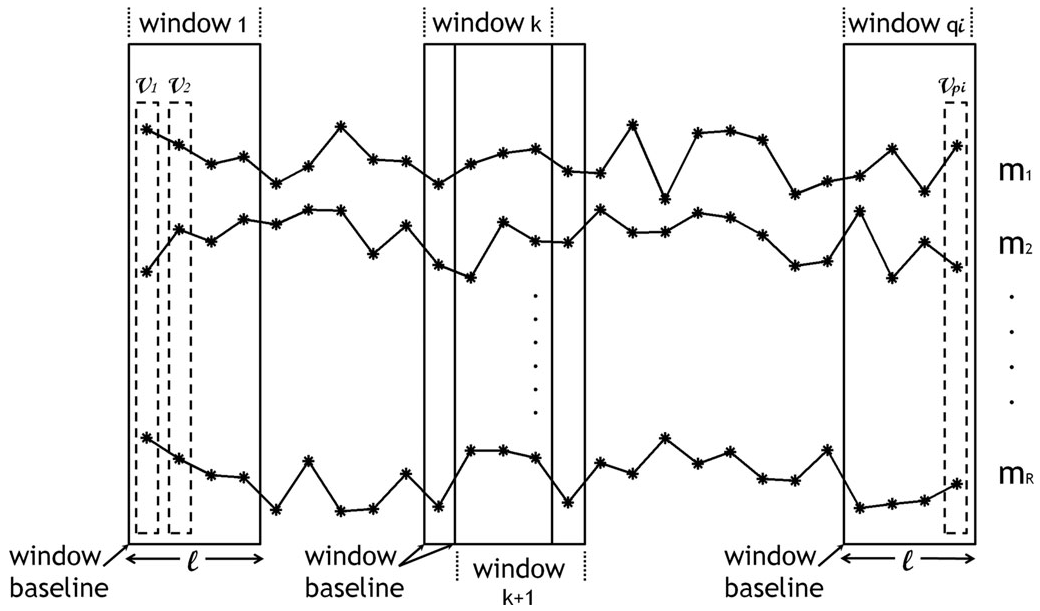 Fig 1: The signal processing workflow, from raw sensor firings to MCI classification via SVM.
Why 24 Weeks?
The authors experimented with various window sizes. They found that shorter windows (1-4 weeks) suffered from high "noise" and variance. As the window expanded to 24 weeks, the SVM model was able to "see" the long-term trend of motor decline, which is a physiological precursor to cognitive symptoms.
Experimental Results: SOTA Performance
Using only Age and Gender as a baseline yielded poor results (AUC-ROC ~0.57). However, adding gait trajectories transformed the performance.
- Clinical Baseline: AUC-ROC 0.57 | AUCPR 0.16
- Proposed Trajectory SVM: AUC-ROC 0.97 | AUCPR 0.93
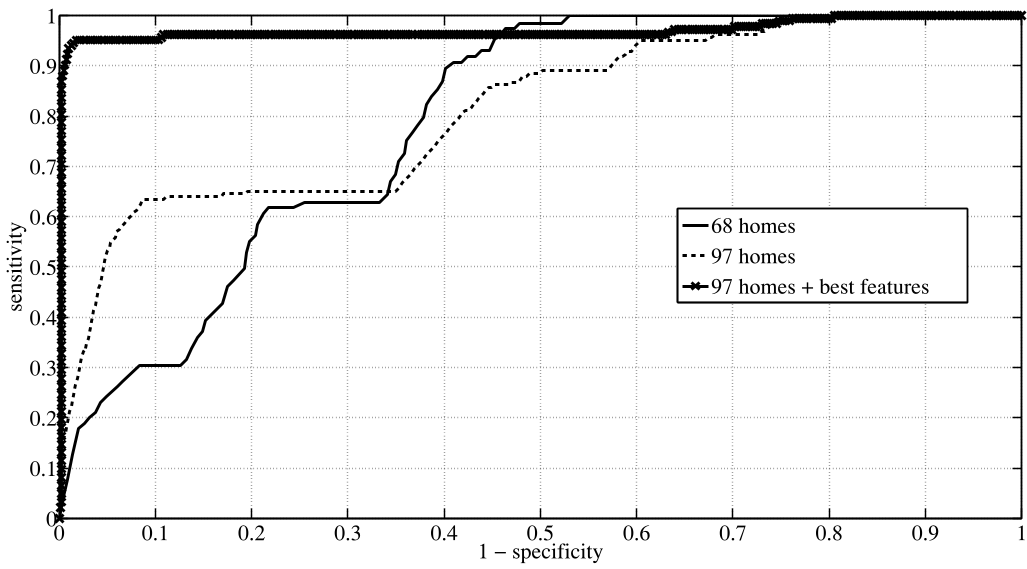 Fig 2: ROC Curves showing the dramatic improvement when moving from small datasets (68 homes) to the full dataset (97 homes) combined with feature optimization.
The "Smoking Gun": Morning Walking Speed
One of the most profound insights from the feature ranking was the importance of Morning Walking Speed. The variability in morning gait was significantly more predictive than evening activity. This suggests that morning performance is a purer "stress test" of the neurological system before the fatigue of the day sets in.
Critical Analysis & Conclusion
Strategic Takeaway
This work shifts the paradigm of geriatric care from reactive (waiting for a crisis) to proactive (detecting shifts in the data). The high Area Under the Precision-Recall Curve (AUCPR 0.93) is particularly impressive because it indicates a very low False Positive rate—essential for a system that might otherwise cause unnecessary alarm for families.
Limitations
The primary hurdle is "data sparsity." If a subject has visitors or travels, the system currently discards that data to avoid noise. Future work must focus on source separation—autonomously distinguishing the resident from guests without using privacy-invasive cameras.
Future Outlook
This technology paves the way for "Ambient Assisted Living." In the near future, your home itself may be the most sensitive diagnostic tool in your physician's arsenal, identifying neurological disorders years before a human can.