
Bridging the Expectation Gap: Why Anticipated UX (AUX) is the Hidden Key to Social Network Participation
AUX and UX Evaluation of User Tools in Social Networks
This paper introduces an evaluation method for user tools in social networks that integrates Anticipated User Experience (AUX) and actual User Experience (UX). Using the AttrakDiff tool and paper prototyping, the study measures how users' idealizations compared to actual interactions on platforms like Facebook, Reddit, and YouTube to improve design for participation.
TL;DR
To survive, social networks must convert passive observers into active participants. This paper argues that participation fails when a platform's tools don't match the user's "mental prototype." By evaluating Anticipated User Experience (AUX) alongside actual User Experience (UX) using the AttrakDiff methodology, designers can pinpoint exactly where their interface violates user intuition.
Academic Positioning: This work transitions the focus from "Community Experience" back to the specific "User Tools" that facilitate it, using a Design Science Research Methodology (DSRM) to provide a practical evaluation framework.
The Problem: The Invisible "Fixed Ideas" of Users
Why do some feature-rich social networks fail while simpler ones thrive? The authors argue the culprit is the Expectation Gap. Before a user even clicks a "Post" button, they have a preconceived notion of how that button should work based on years of digital muscle memory.
If a tool’s pragmatic quality—its utility and ease of use—clashes with these "fixed ideas," the user experiences frustration that outweighs any "cool" or "novel" (hedonic) features the platform offers.
Methodology: From Paper to Platform
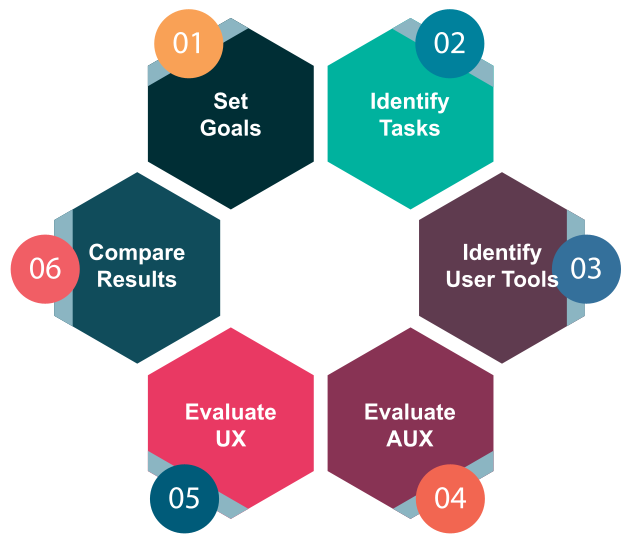
The authors propose a circular evaluation method (shown below) that forces developers to look at the "Before" (AUX) and "After" (UX).
The Two-Phase Study
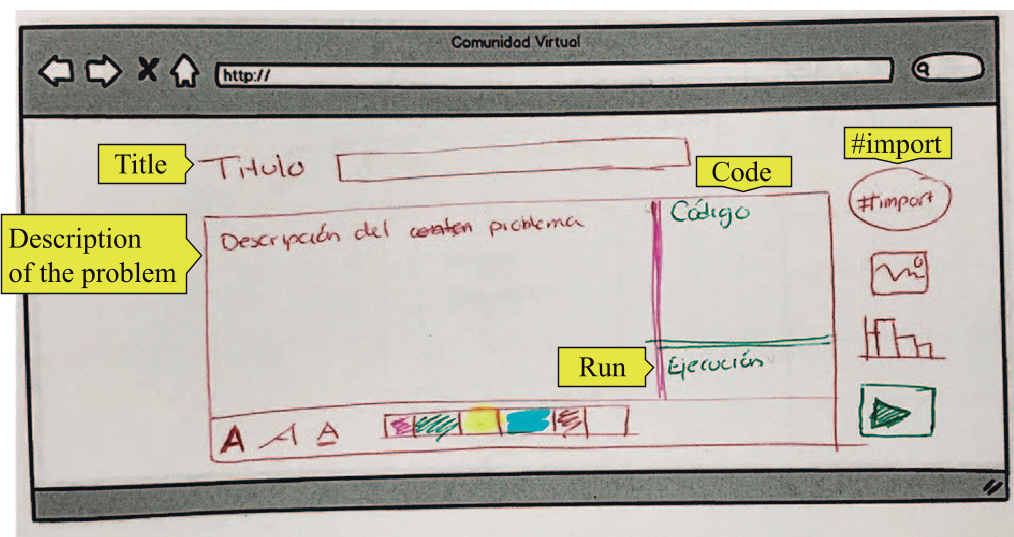
- Phase 1 (The Ideal): Participants acted as "Web Designers." Using printed wireframe canvases, they drew how they imagined a perfect messaging or search tool should work. This captured their AUX.
- Phase 2 (The Reality): The same participants performed those tasks on Facebook, YouTube, and Reddit. This captured the UX.
The researchers used AttrakDiff, a tool that separates perception into Pragmatic Quality (PQ) (Is it useful?) and Hedonic Quality (HQ) (Is it stylish/innovative?).
Experimental Insights: The "Reddit" Paradox
The results revealed a fascinating disconnect. In the case of Reddit, participants actually rated their own paper prototypes higher than the actual platform.
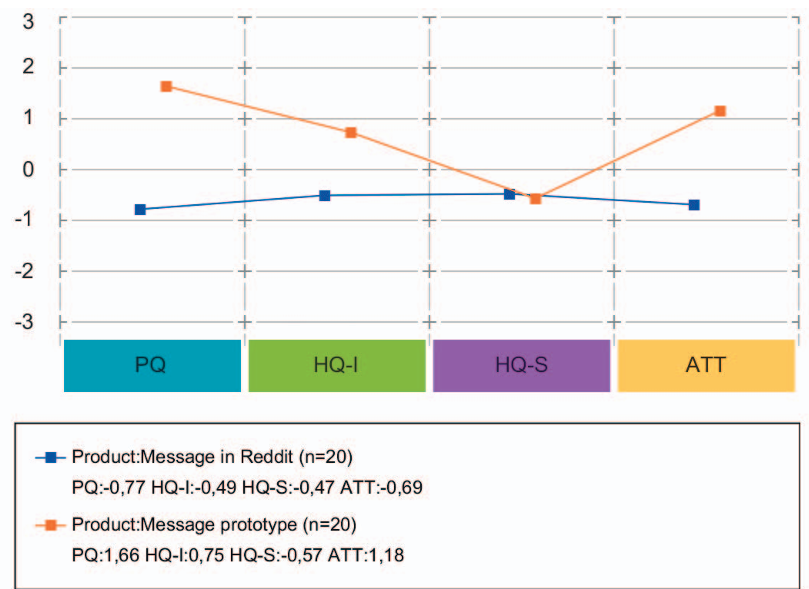
- The Pragmatic Failure: Because many participants hadn't used Reddit, they couldn't transfer their experience. They found the real platform "cumbersome" and "unpredictable" compared to the mental models they drew on paper.
- The Sophistication Bias: Generally, participants were harsh critics of their own designs. They rated Facebook and YouTube as more "premium" and "presentable," even if their own prototypes were theoretically easier to navigate.
Critical Analysis: Why This Matters for Future Social Tech
The core takeaway is that Experience Knowledge is a double-edged sword. Users come to your platform with "baggage" from every other app they've used.
- Value of AUX: It serves as a "knowledge base" for developers. If users' prototypes for "sending a message" all look like WhatsApp, building a radically different interface for your social network might actually suppress participation.
- Limitations: The study is limited by a small sample size (n=20) and focuses on "Big Tech" platforms. It doesn't yet account for how AUX evolves as a user becomes an "expert" on a niche platform.
Conclusion
This research highlights that the "idealizations, hopes, and desires" of users are measurable data points. To increase participation, don't just build for usability; build to satisfy the anticipation. Future social network design should focus on the "transposition of experience"—making sure that when a user enters a new digital space, their existing skills aren't just useful, but rewarded.