
Expertise and Trust–Aware Recommendation: A Leap Beyond Collaborative Filtering
Expertise and Trust –Aware Social Web Service Recommendation
The paper proposes a novel Web service social recommendation framework that integrates a Social Trust Detection Mechanism (STDM) and an Expertise-aware Social Recommendation Mechanism (SRM). By leveraging egocentric social networks and past invocation histories, it achieves a significant improvement in recommendation accuracy, outperforming traditional collaborative filtering and trust-based baselines like TrustWalker and TidalTrust.
TL;DR
The explosion of Web services has rendered traditional search engines and Collaborative Filtering (CF) inadequate due to data sparsity and low accuracy. This paper introduces a sophisticated Recommendation System (RS) that identifies "Trustworthy Experts" within a user's egocentric social network. By accounting for the temporal decay of interactions and domain-specific expertise, the proposed SC-WSD system achieves a superior RMSE of 1.09 compared to established baselines.
Background: Why Social Trust Isn't Enough
In the real world, if you need a medical service, you don't just ask any friend; you ask a friend you trust and who has experience with doctors. Most current Social Recommendation (SR) systems treat all friends' ratings equally or rely on a static "trust" score derived from network topology. These systems fail to capture two nuances:
- Trust Decays: A close friend from five years ago might not be relevant today.
- Expertise is Domain-Specific: A friend who is an expert in "Travel services" might be clueless about "Medical services."
Methodology: The "Expert-Trust" Dual Engine
1. Social Trust Detection Mechanism (STDM)
The system first filters the user's Egocentric Social Network (ESN) using two factors:
- Time-Aware Interaction Degree (DoI): Unlike prior work, this counts interactions (likes, messages, shares) within specific time windows (), ensuring recent interactions carry more weight.
- Interest Similarity (DoS): Measured via Jaccard coefficient on user profile keywords.
A key innovation here is the Dynamic Trust Threshold (). Instead of a fixed global value, the system calculates a personalized threshold for each user based on their specific distribution of friend relationships.
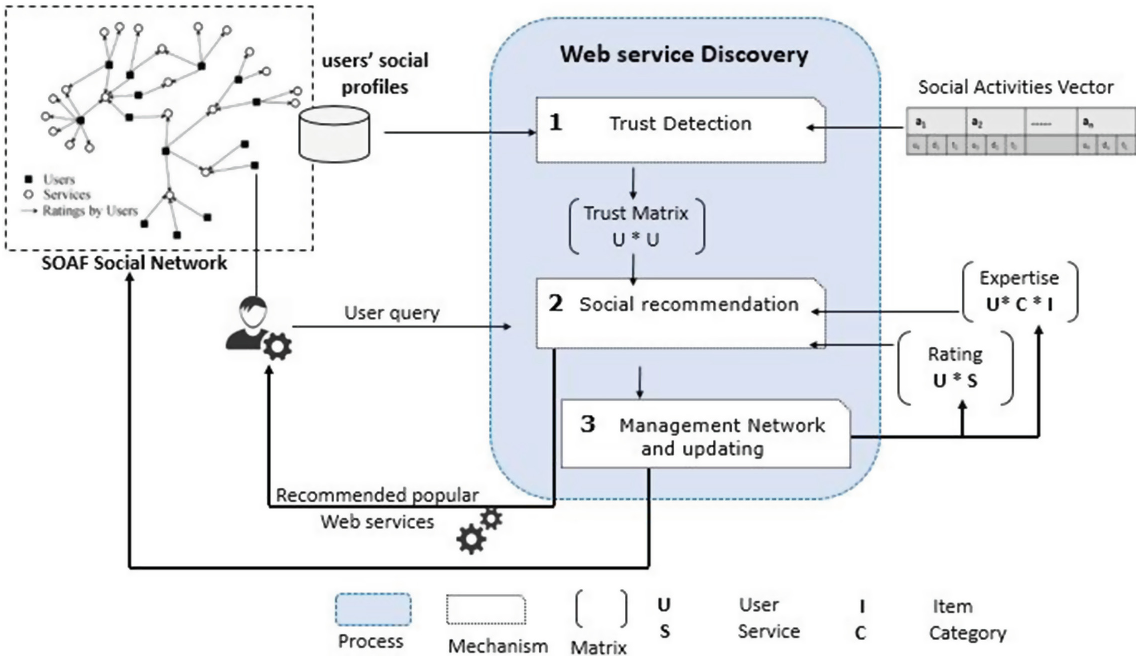 Figure 1: The decentralized Web service discovery process involving STDM and SRM.
2. Expertise-Based Social Recommendation (SRM)
Once "Trustworthy Friends" are identified, the system calculates their Level of Expertise (LoE). This is defined as the ratio of their past invocations in a specific domain (e.g., Medical) to their total invocations across all domains. The final service rating is predicted using a weighted average:
Experimental Insights
The Power of Temporal Awareness
The authors validated the STDM on Facebook data. They found that setting the temporal parameter to 0.8 (high weight on interactions) yielded the best F-measure. Compared to "Closest Friend" metrics (which ignore time), this method increased precision from ~25% to nearly 77%.
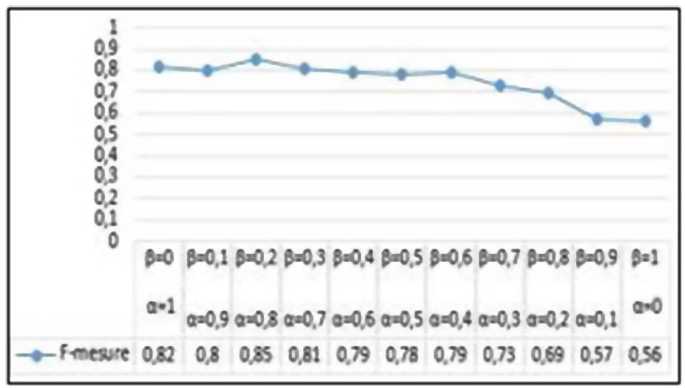 Figure 2: Impact of dynamic thresholds and temporal factors on trust detection.
Benchmark Performance
Using the Epinions dataset, the Expertise-aware SC-WSD system was pitted against industry-recognized models. By integrating expertise, the system reduced prediction error (RMSE) significantly:
| System | RMSE (Lower is better) |
|---|---|
| TidalTrust | 1.216 |
| TrustWalker | 1.192 |
| SC-WSD (Proposed) | 1.09 |
Critical Analysis & Future Directions
The core strength of this work lies in its Human-Centric Intuition. It mathematically models the way humans actually seek advice. However, a notable limitation is the reliance on "invocation history" as the sole proxy for expertise, which might struggle with "expert cold-start" (a knowledgeable user who hasn't used many services in this specific system yet).
Future Outlook: The authors hint at addressing the cold-start problem more aggressively. Integrating this "Expert-Trust" model with the Social Internet of Things (SIoT) could allow devices to autonomously recommend services (e.g., a smart hospital recommending a pharmacy) based on cross-device trust levels.
Conclusion
This research proves that the "Social Web" is a goldmine for service discovery, provided we use the right filters. By combining Dynamic Trust and Domain Expertise, we can transform sparse, noisy social data into a high-precision recommendation engine.