
Bridging Perception and Reality: Balance Theory on Three Socions
Balance theory on Three Socions
This paper proposes a formal integration of Heider's Balance Theory with Socion Theory to model human relationships in multi-agent systems. By classifying relationships into six distinct structural patterns, the authors enable the calculation of cognitive balance across subjective (P-net) and objective (C-net) social networks.
TL;DR
Human relationships are rarely as simple as "A likes B." There is often a gap between what we feel and what we think others feel. This paper introduces a method to apply the classical Balance Theory (is the relationship stable?) to the Socion Theory (the distinction between subjective and objective views), categorizing six essential structural patterns that define social harmony in multi-agent environments.
Background: The Clash of Two Theories
In the world of social simulation, we often rely on two pillars:
- Balance Theory (POX Model): If you like your friend, and your friend likes a specific movie, you are likely to like that movie too. If the signs multiply to a positive, the "triangle" is balanced.
- Socion Theory: This theory admits that a person has three "selves": how they see themselves, how others see them, and how they present themselves. It splits reality into the C-net (actual relations) and the P-net (subjective, often misunderstood relations).
The problem? Balance Theory assumes everyone sees the same triangle. In reality, I might "balance" my relationship based on a total misunderstanding of how you feel about a third person.
The Core Insight: Integrating Subjectivity
The researchers argue that a simple triangle isn't enough when you have "Socions" involved. On a Socion graph, a relationship is not a line; it is a vector originating from a specific "self" within a person.
The Methodology
To make these theories work together, the authors classified the possible interactions between three individuals (or "Socions") into six distinct patterns. They looked at where "P" (the person judging the balance) resides in the network and whether they are looking at their own self-impression or their perception of others.
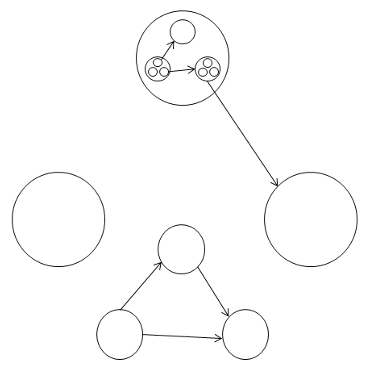
Fig. 7. The P-net structure showing how subjective recognition forms the basis for cognitive balance.
The 6 Patterns of Balance
The work breaks down how balance is calculated when subjective perceptions enter the mix:
- Patterns 1 & 2: Three-person balance where P holds a subjective view of the others.
- Pattern 3: Purely subjective P-net balance (matches traditional theory).
- Patterns 4 & 5: Two-person balance involving self-impression (how I feel about how you feel about me).
- Pattern 6: Two people, purely objective.
When the relationship involves self-impression (Patterns 4 and 5), the graph shifts from a triangle to a complex loop involving "the self which is considered by one’s inner self."
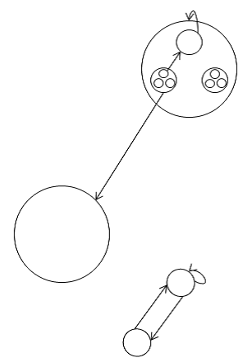 Fig. 11. Pattern 4: Two people balance at P subjective, showing how self-perception alters the POX loop.
Critical Analysis: Why This Matters
The most striking takeaway is that human logic is asymmetrical. The authors highlight that while Balance Theory suggests we seek harmony, Socion Theory reminds us that we often do so based on incomplete data.
Limitations & Future Outlook: The paper honestly acknowledges two massive hurdles:
- Binary Constraints: Balance theory uses +1 and -1. Real life has "levels" of friendship or hatred.
- The Jealousy Paradox: Balance theory says if I like a person, I should like what they like. But in reality, if they like another person, I might feel jealousy—a negative reaction to a positive link.
Conclusion
By mapping Balance Theory onto the Three Socions, this research provides a mathematical framework for agents to "misunderstand" each other in ways that mimic human social behavior. It moves us away from idealized social graphs toward a messy, subjective, and ultimately more realistic model of human interaction.