
BeeKeeper: Transforming Untrusted IoT Nodes into a Secure, Homomorphic "Virtual Beehive"
BeeKeeper: A Blockchain-Based IoT System With Secure Storage and Homomorphic Computation
BeeKeeper is a decentralized, blockchain-based IoT service system that utilizes a novel Threshold Secure Multi-Party Computing (TSMPC) protocol. It enables external servers to perform homomorphic computations on encrypted IoT data without decrypting it, achieving state-of-the-art privacy and resource efficiency on the Ethereum platform.
TL;DR
BeeKeeper is a decentralized IoT framework that solves the "trust vs. efficiency" paradox. By combining Blockchain with a Threshold Secure Multi-Party Computing (TSMPC) protocol, it allows IoT devices to store encrypted data on a public ledger where external, untrusted servers can process it homomorphically. The result? Total data privacy, high fault tolerance, and a massive reduction in local computational burden.
Problem & Motivation: The Centralization Trap
The modern Internet of Things (IoT) is a paradox. While the devices are distributed, the "brains" are centralized in cloud silos. This architecture suffers from three fatal flaws:
- Privacy Exposure: Centralized servers usually see your data in plaintext (the "Snowden" risk).
- Scalability Bottlenecks: Centralized clouds cannot keep up with the billion-device surge.
- Trust Issues: Users must blindly trust that servers won't delete, modify, or leak their life's metadata.
The authors’ intuition was to treat external computing nodes like bees in a hive. A beekeeper (the user) doesn't need to know how individual bees turn nectar into honey; they just need a secure "beehive" (the blockchain) to collect the results.
Methodology: The TSMPC Secret Sauce
BeeKeeper’s core innovation is the Threshold Secure Multi-Party Computing (TSMPC) protocol. It operates on a logic: as long as out of servers are honest, your data remains a secret, yet the system stays functional even if servers go offline.
1. The Workflow
- Initialization: The Leader generates a core secret and verification keys (VK) using Shamir’s Secret Sharing and BN-curves.
- Encryption: IoT devices encrypt raw data against the "core secret" rather than a standard PKI.
- Processing: Servers fetch encrypted shares from the blockchain, perform homomorphic additions/multiplications, and post a "commitment" to the result.
2. Offloading the Heavy Lifting
A brilliant design choice in BeeKeeper is the use of Record Nodes (miners). Instead of the user verifying every server response, the Ethereum record nodes perform "Payload Verification" as part of the consensus. This effectively outsources the math to the network.
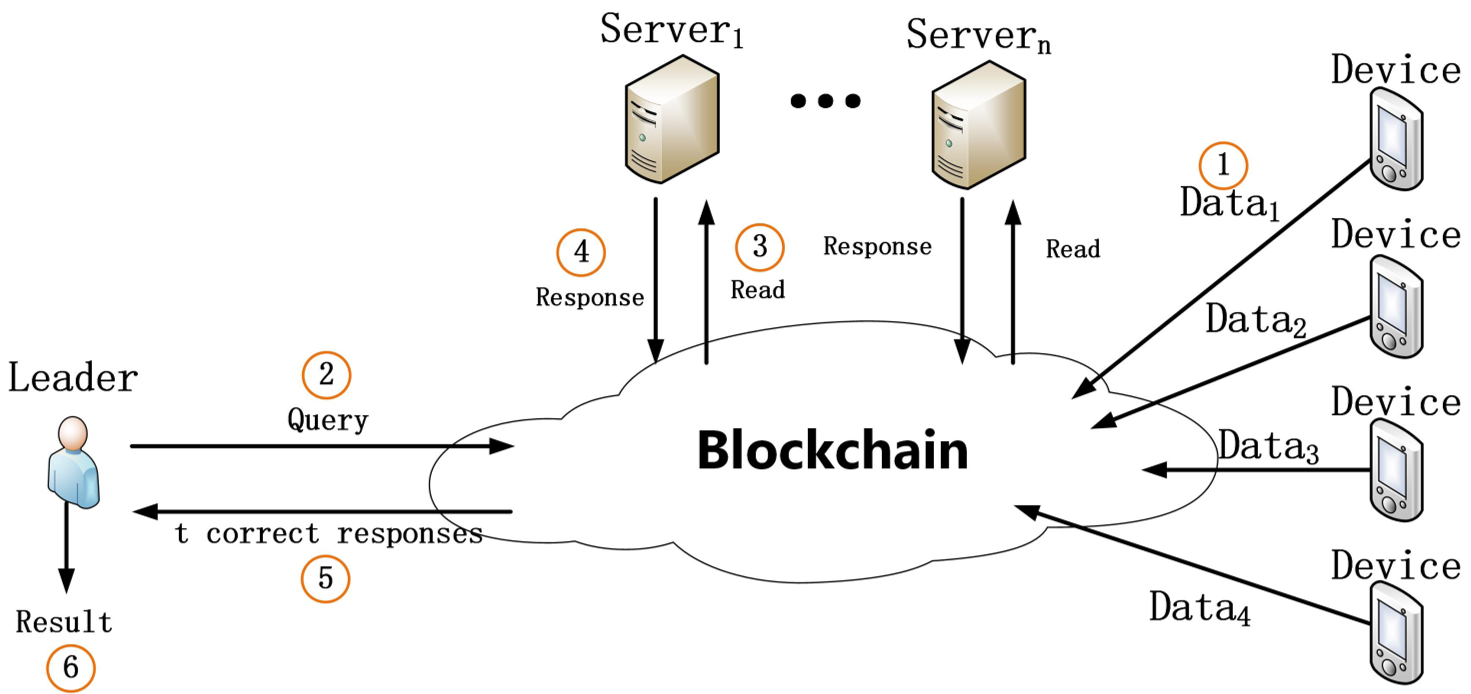 Figure 1: The BeeKeeper cycle—from device recording to leader recovery.
Experiments & Results: Real-World Feasibility
The authors prototyped BeeKeeper on Ethereum. While Ethereum’s 15-second block time is a known bottleneck for latency, the internal cryptographic performance is impressive.
- Cryptographic Efficiency: Using BN-curves for pairings takes only 1.687 ms, ensuring that the "math" isn't the hurdle.
- Verification Speed: In a "Pure BeeKeeper" (non-blockchain) setup, a Leader would spend over 111 ms verifying a response. In the "Blockchain-based BeeKeeper," this drops to 4.96 ms because the miners have already done the heavy lifting.
 Table 1: Time cost comparison highlighting the efficiency gains of using a blockchain-mediated verification.
Critical Insight: Why This Matters
The true value of BeeKeeper isn't just "IoT on Blockchain." It is the incentivized decentralization of computation. By allowing any node to become a server and earn rewards (in ETH), BeeKeeper creates a marketplace for computing power where the buyer (the Leader) never has to show the seller (the Server) their actual data.
Limitations:
- The Ethereum "Tax": High gas fees and 15s latency make this specific implementation unsuitable for real-time industrial robotics, though it is perfect for healthcare or smart-home data audits.
- Storage Costs: Storing encrypted shares on-chain is expensive. Future iterations might look at IPFS or specialized "Blob" storage (EIP-4844 style).
Conclusion
BeeKeeper offers a robust blueprint for the future of private IoT. By moving from a "Trust me, I'm the Cloud" model to a "Don't trust, verify via math" model, it paves the way for a more resilient and private digital world.