
Better Edges, Not Bigger Graphs: Solving the Ghost-Friend Phenomenon in Social Networks
Better Edges not Bigger Graphs: An Interaction-Driven Friendship Recommender Algorithm for Social Networks
This paper introduces the Interaction-Driven Friending (IDF) algorithm, a novel friendship recommender designed to prioritize "interactive" connections over mere acceptance. By leveraging common friends' interaction patterns, IDF achieves 57% accuracy in predicting meaningful social edges, significantly outperforming the standard Friends-of-Friends (FoF) approach.
TL;DR
Data shows that while we are "friending" more people than ever, we are actually interacting with a smaller percentage of them. This paper introduces the Interaction-Driven Friending (IDF) algorithm, which moves away from the traditional goal of "high acceptance" to "high interaction." By filtering candidates through shared interaction histories with mutual friends, the researchers doubled the accuracy of meaningful friendship recommendations compared to Facebook's standard algorithm.
The Problem: The High-Acceptance, Low-Interaction Trap
Most social network recommendation engines operate on the Friends-of-Friends (FoF) principle: if you have 10 mutual friends with John, you probably know John. While this leads to a high acceptance rate, it creates a "Social Hourglass" effect—a massive social graph built on a tiny foundation of actual communication.
The authors' analysis of Facebook data reveals a sobering reality:
- Only 2.45% of users interact with friends via comments.
- Only 13.23% interact through likes.
- Nearly 86% of digital friendships are "weak connections"—edges in the graph that represent no real-world social value.
The researchers argue that these weak edges aren't just useless; they are harmful. They create noise that buries meaningful content, contributing to social isolation and reducing the business value of the network.
Methodology: Mining Interactive Intuition
The core insight of the IDF Algorithm is shifting the trust from "Who you know" to "How you engage." Instead of recommending anyone in your extended network, the algorithm applies a strict interaction filter.
The Logic of Shared Interaction
If User A and User B both frequently comment on and like posts by their mutual friend C, it indicates a shared context or interest far stronger than just having a mutual contact.
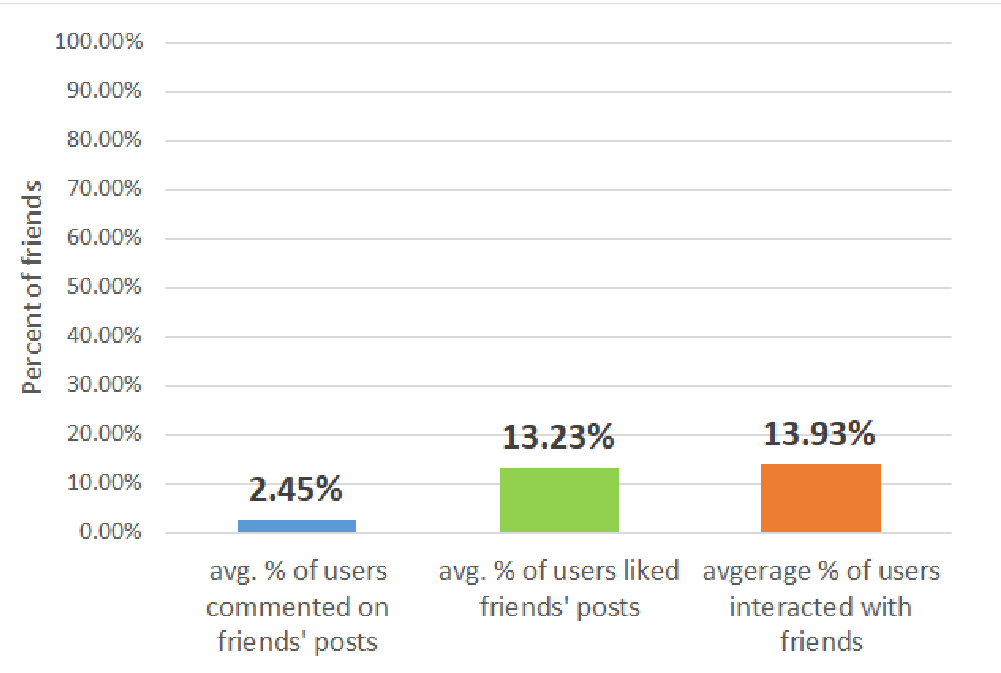 Figure 1: The intuition—recommending a Friend-of-Friend (FoF) only when shared interaction patterns with mutual friends are detected.
The Threshold ()
The algorithm uses a sensitivity parameter .
- A candidate is only recommended if they share at least interactive mutual friends with the target.
- Higher values lead to "cleaner" recommendations (higher precision) but fewer total suggestions (lower recall).
Experimental Results: Quality Over Quantity
The researchers crawled 16,624 Facebook profiles to create a real-world testing ground. The results showed a dramatic divergence between traditional FoF and the proposed IDF.
- Accuracy (): Facebook's FoF logic had an interaction accuracy of only 26%. The IDF algorithm reached 57%.
- Noise Reduction: IDF successfully ignored 6,672 weak relationships that the standard Facebook algorithm would have pushed to users.
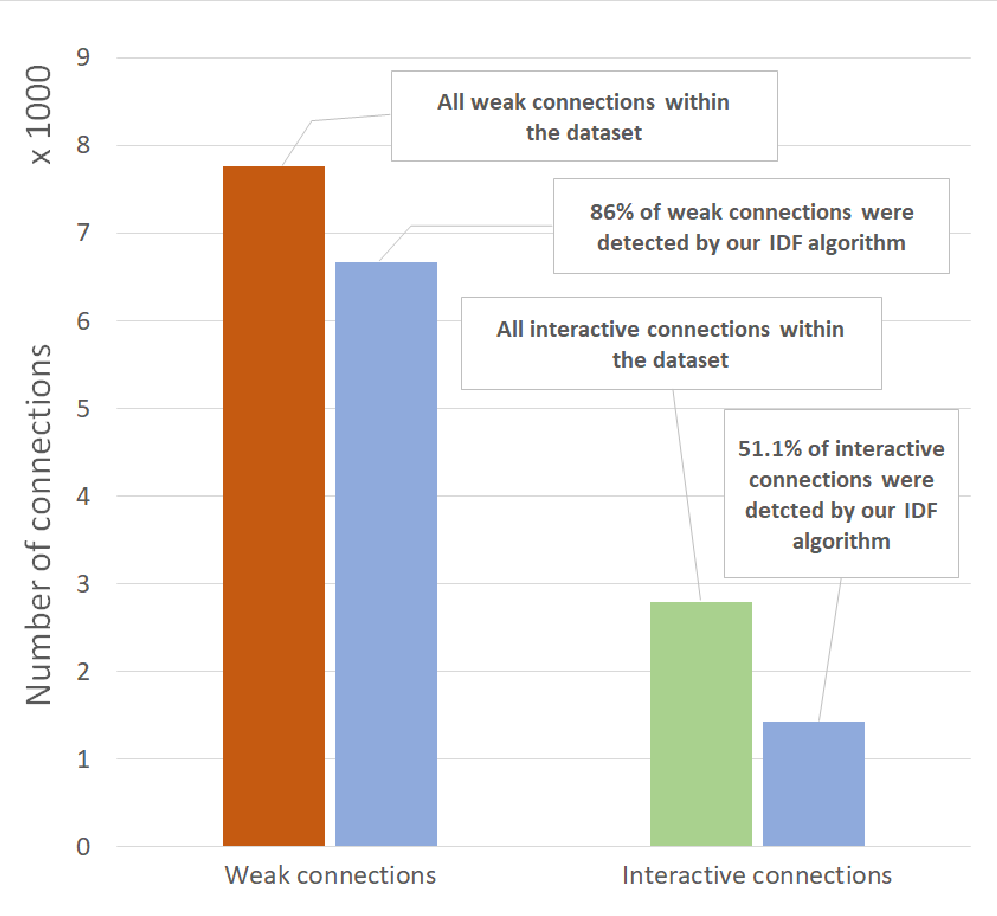 Figure 2: Statistical breakdown showing IDF's ability to filter out non-interactive "weak" edges.
Deep Insight: Why This Matters for the Future of AI
The importance of this work lies in its critique of "Optimization Targets." For a decade, social platforms optimized for Graph Growth. This paper suggests we must now optimize for Graph Vitality.
Limitations & Future Work
While the results are impressive, the algorithm relies heavily on publicly available data. As privacy settings become stricter, "common friends" data becomes harder to fetch, which can lower the algorithm's recall. The authors suggest that internal platform access (where all data is visible to the algorithm) would likely make the IDF even more potent.
Conclusion
The IDF algorithm proves that in the era of social media fatigue, "Less is More." By focusing on Better Edges rather than Bigger Graphs, social networks can move from being passive directories of acquaintances to active hubs of meaningful human interaction.