
Bicultural: Rethinking Emotional Support Systems for Latina Adolescents
Bicultural: Examining Teenage Latinas' Perspectives on Technologies for Emotional Support
2017-06-26
Summary
Problem
Method
Results
Takeaways
Abstract
This paper investigates the intersection of bicultural identity and mental health technology through participatory design with teenage Latinas. It introduces a socio-ecological approach to design systems like "MomChill" and "tinktink" that address emotional distress and social support within specific cultural contexts.
## TL;DR
While the tech industry often pursues "universal" design, this paper argues that for emotional health, universality is a myth. By working with 13 Latina adolescents, researcher Ralph Vacca demonstrates how **biculturalism**—the active negotiation between multiple cultural meaning systems—defines how technology should provide emotional support. From "MomChill" to "tinktink," the prototypes created by these teens suggest that technology must act as a bridge across generational and cultural divides, not just a digital diary.
## The Motivation: Why One-Size-Fits-All Fails
Latina adolescents in the U.S. face a unique and systemic mental health crisis, reporting significantly higher rates of depressive symptoms and suicide attempts than their peers. The core of the problem isn't just "stress"; it's **bicultural conflict**.
Traditional apps treat mental health as an individual's struggle. However, for a Latina teen, distress is often ecological. It stems from **Familism** (prioritizing family needs) clashing with the desire for autonomy, or the burden of being a "language broker" for parents while navigating a society rife with ethnic stereotypes. Prior work largely ignored this socio-ecological complexity.
## Methodology: The Multiracial Feminist Framework
The study moved beyond standard UI/UX brainstorming by adopting the **Multiracial Feminist Framework (MFF)**. This lens treats race, gender, and class as intertwined power dynamics.
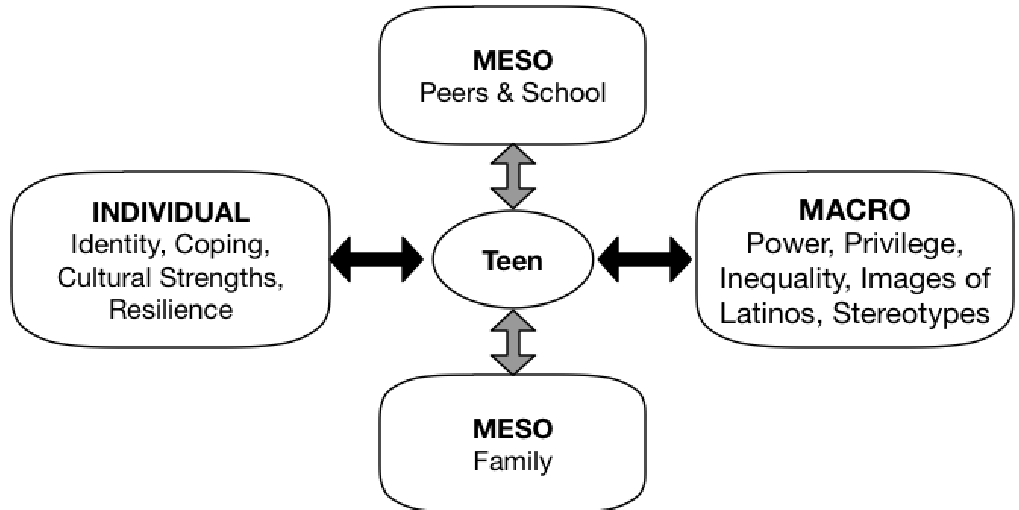
*Figure 1: The MFF model used to guide participants through individual, meso (family/peers), and macro (societal) layers of influence.*
The 8-week process followed a rigorous participatory design flow:
- **Exploring Ecologies**: Dissecting how school, family, and culture impact emotional vulnerability.
- **Scenario Building**: Crafting "comic strips" of real-world conflicts (e.g., a mother refusing to let a daughter date).
- **Prototyping**: Building low-fidelity and clickable models of digital interventions.
## The New Roles of Technology
The participants didn't just design "calm apps." They reimagined technology as a social mediator. Three distinct roles emerged:
### 1. Technology as Ambassador (MomChill & College Packs)
Because of the **intergenerational acculturation gap**, teens often find it impossible to discuss topics like dating or financial aid with parents who hold different cultural norms.
- **MomChill** acts as a "buffer," providing mothers with curated info to normalize teen behaviors.
- **College Packs** serves as a repository to help teens "broker" complex college info to parents, reducing the emotional labor of explanation.
### 2. Technology as Coping Support (tinktink)
Cultural norms often encourage Latinas to "keep it in the circle," leading to dangerous **internalizing behaviors**.
- **tinktink** provides sentence starters and scaffolds to help friends offer support to one another on social media, breaking the cycle of silence.
### 3. Technology as Advocate (gPower)
To combat the "Crazy Latina" or "Slutty" stereotypes, **gPower** allows youth to reclaim and "own" memes, turning disempowering macros into sources of group solidarity.
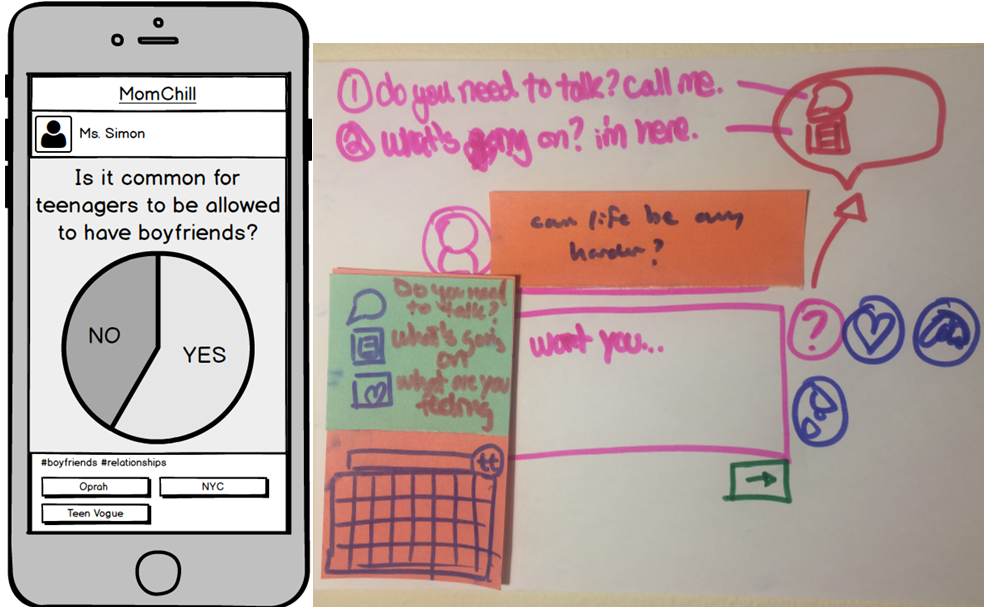
*Figure 2: Wireframes for MomChill and tinktink, showing how the designs integrate into existing social media ecosystems.*
## Critical Insight: Designing for "Remix"
A fascinating takeaway is that these teens didn't want *new* platforms. They wanted to **remix** existing ones. Whether it’s an Instagram plugin or a Giphy mod, the "bicultural" approach to design mirrored the participants' lives: they already switch between cultural worlds, so their tech should be an extension (not a replacement) of their current digital habitats.
## Conclusion & Future Outlook
Ralph Vacca’s work is a call to action for HCI researchers to move beyond "cultural-neutral" design. By acknowledging biculturalism, we shift the focus from "fixing" the teen to "facilitating" the ecological system they inhabit.
**Limitations**: The study is small (13 participants) and "Latina" is a massive, heterogeneous label. Future research must specify sub-cultures (e.g., Caribbean vs. South American) to avoid the very stereotypes these platforms seek to dismantle. However, the methodology provides a powerful blueprint for designing for any group where identity is a daily negotiation.