
Landmark Timeline Construction: Mining the "When" and "What" of Historic Sites
What Happened Near Big Ben: Event-Driven Landmark Mining from Flickr
The paper introduces Landmark Timeline Construction (LTC), a framework designed to mine historical events associated with landmarks using social media data. It features a novel Time Interval Selection Algorithm (OTIS) to detect bursty event tags from Flickr's temporal metadata, achieving state-of-the-art results in event-driven landmark summarization.
TL;DR
Researchers have developed Landmark Timeline Construction (LTC), a system that transforms static photo collections into chronological histories. By moving beyond just "what a landmark looks like" to "what happened there," LTC uses a new dynamic time-interval algorithm to filter through millions of Flickr tags, identifying significant historical moments like the 2008 Marathon near Big Ben or protests at the Golden Gate Bridge.
Background Positioning
While classical Computer Vision has mastered identifying where a photo was taken, it often treats time as a nuisance variable. This paper elevates temporal metadata to a first-class citizen, positioning itself as a pioneer in Historical Landmark Mining.
Problem & Motivation: The "Fixed-Interval" Trap
Traditional event detection methods typically slice time into fixed buckets (e.g., every 7 days). However, events are not uniform. A "Protest" might last 2 days, while a "Winter Festival" lasts 20.
- Small Intervals: Split a single event into multiple weak signals.
- Large Intervals: Drown a specific event in background noise.
The authors' intuition was simple yet profound: Every event tag has its own "natural" frequency. To find the event, you must first find its optimal pulse.
Methodology: The Core Engine
The LTC framework operates in three distinct phases:
1. Optimal Time Interval Selection (OTIS)
Instead of forcing tags into a fixed window, the OTIS Algorithm (Algorithm 1) iteratively searches for the interval where the tag's occurrence peaks most sharply. It uses Aging Theory to measure the "energy" of a tag, ensuring that only those with a significant burst (event-driven) are prioritized.
2. Triple-Similarity Clustering
How do you know that "Marathon," "Running," and "Race" refer to the same event? LTC calculates a combined similarity score:
- (Statistical): Do the tags appear together?
- (Semantic): Does WordNet say they are related?
- (Temporal): Do their bursty periods overlap?
3. Retrieval and Diversity
To avoid showing ten identical photos of the same clock face, the system employs Manifold Ranking for relevance and Diverse Relevance Ranking (DRR). This ensures the final timeline is a highlight reel, not a repetitive loop.
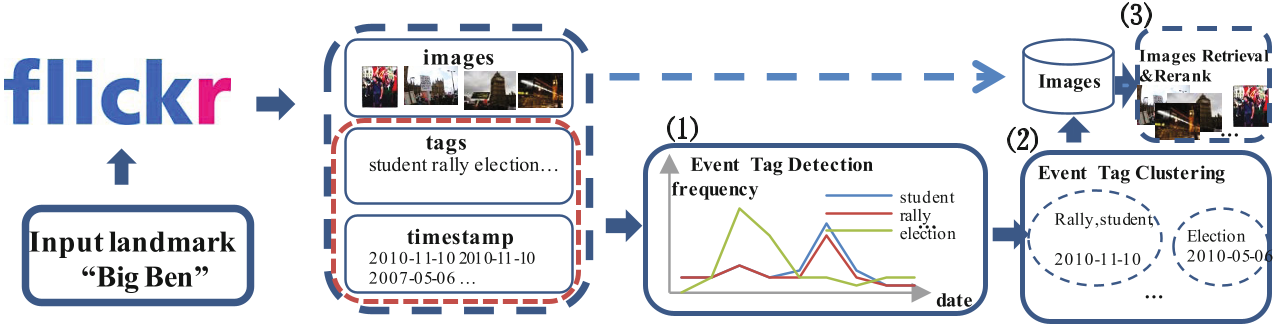 Figure 1: The three-stage pipeline of Landmark Timeline Construction.
Experiments & Results
The researchers tested LTC on over 350,000 images from five iconic landmarks.
- Detection Accuracy: As shown in Table 2, LTC successfully identified specific events like the "student riot" and "election" near Big Ben in 2010. Baselines (IT-F-5) failed, often returning generic location tags like "Paris" or "London."
- User Satisfaction: In a study with 20 participants, LTC achieved the highest satisfaction scores for relevance and diversity compared to fixed-scale methods.
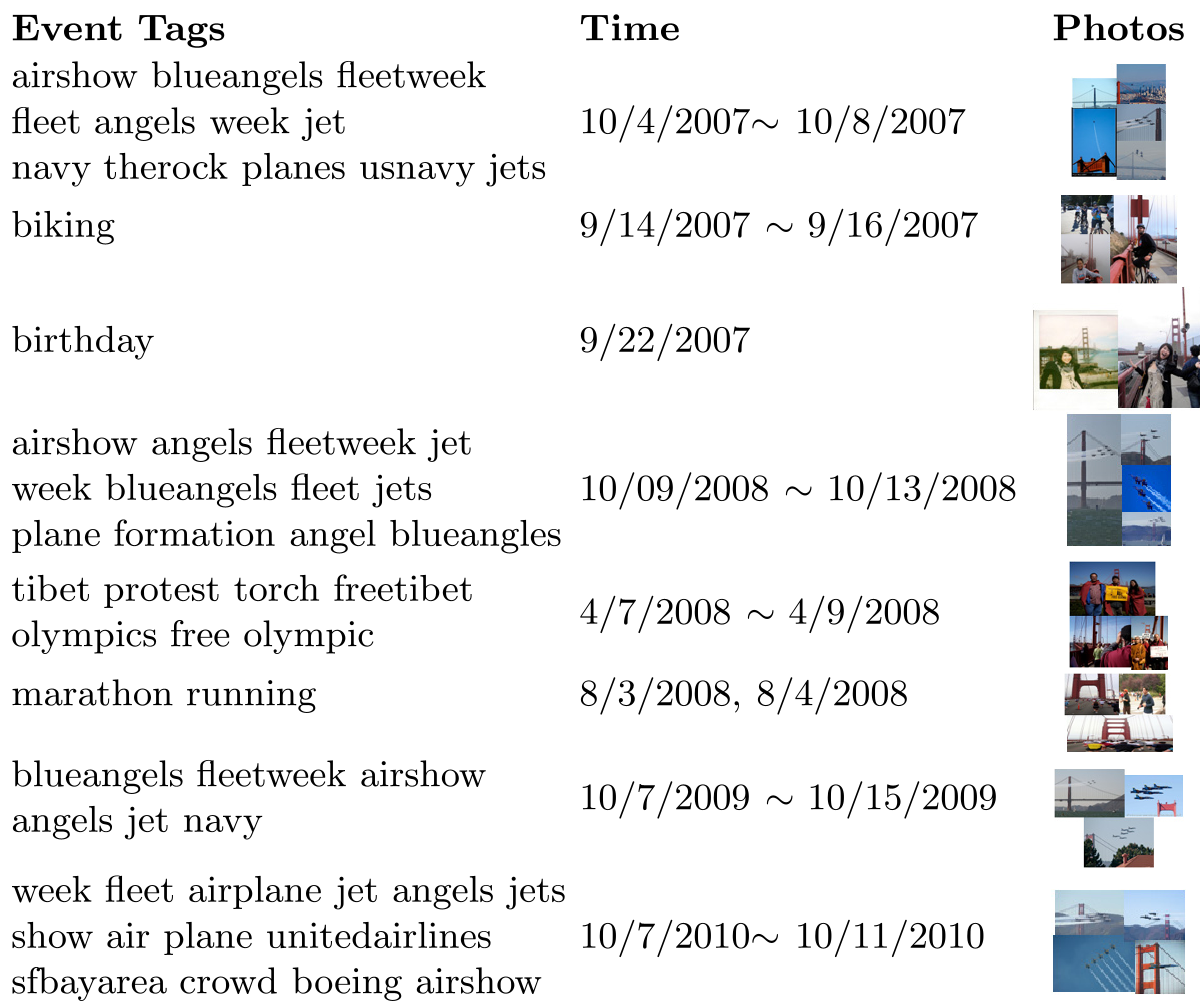 Table: Historical Mining results for Golden Gate Bridge, showing events like "Fleet Week" and "Biking Birthday."
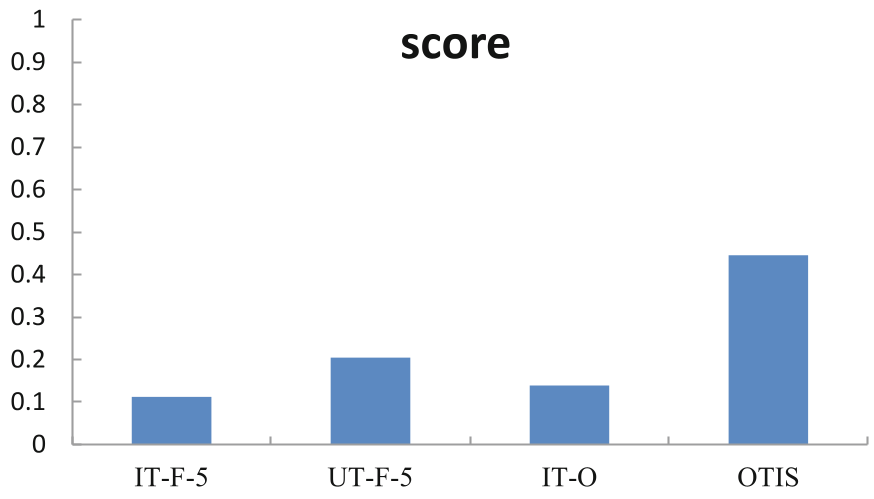 Figure 2: Performance comparison showing LTC consistently outperforming baselines.
Critical Analysis & Conclusion
Takeaway: LTC successfully shifts the focus of landmark analysis from "appearance" to "experience." By dynamically adjusting the temporal scale for every tag, it uncovers the hidden narrative of our world's most famous sites.
Limitations: The paper honestly notes an "Extreme Occasion" error: if a single user uploads hundreds of photos of a non-event (like a personal wedding) in a short window, the system might mistakenly classify it as a historical event. Future work might require stricter "User Diversity" filters to separate personal moments from public history.
Future Outlook: This technology is a goldmine for travel apps. Imagine pointing your phone at a monument and seeing a "Time Slider" that reveals exactly what was happening on that spot ten years ago today.