
Predictive Career Guidance: Leveraging Campus Big Data to Forecast Overseas Student Employment
Employment Environment for Overseas Students Based on Big Data
This paper introduces an employment prediction model for international students by leveraging campus big data and machine learning. By combining traditional statistical features with time-series behavioral data analyzed via LSTM and Random Forest, the research achieves a superior prediction accuracy of 71.2% in categorizing students into "unemployed," "self-employed/employed," or "further studies."
TL;DR
As the global job market becomes increasingly saturated, predicting employment outcomes for overseas students has become a critical challenge for higher education. This paper presents a novel predictive framework that moves beyond static academic stats. By analyzing the dynamic behavior of students—such as library habits and consumption patterns—using a hybrid Random Forest and LSTM model, researchers achieved a 71.2% prediction accuracy, offering a robust tool for early academic intervention and career guidance.
Background & Motivation: Moving Beyond Static Statistics
For years, university career centers have operated on a "reactive" basis, looking at employment data only after graduation. However, the true story of a student's trajectory is hidden in their daily habits. Existing methods often fail because they treat students as static entities. The motivation behind this research is to transform "dormant" campus data—dining records, library logs, and academic performance—into a "proactive" early warning system. By identifying the interaction mechanism between on-campus behavior and future employment, universities can provide targeted support before a student enters the job market.
Methodology: The Fusion of Time and Behavior
The core of this study lies in its hybrid approach to feature engineering and model selection. The author identifies that employment isn't just about what you know (GPA) but how you act (Time-series behavior).
1. Data Collection & Preprocessing
The system collects data non-invasively from two main sources:
- Educational Administration System: Basic info and academic grades.
- Network Center & Smart Cards: Dining frequency, medical visits, shopping, and library access logs.
2. Algorithmic Architecture
The paper utilizes two primary machine learning pillars:
- Random Forest (RF): Used for its ability to handle thousands of input variables and measure feature importance without overfitting.
- Long Short-Term Memory (LSTM): A specialized RNN that excels at "remembering" past behaviors, crucial for analyzing how a student's habits change over a four-year period.
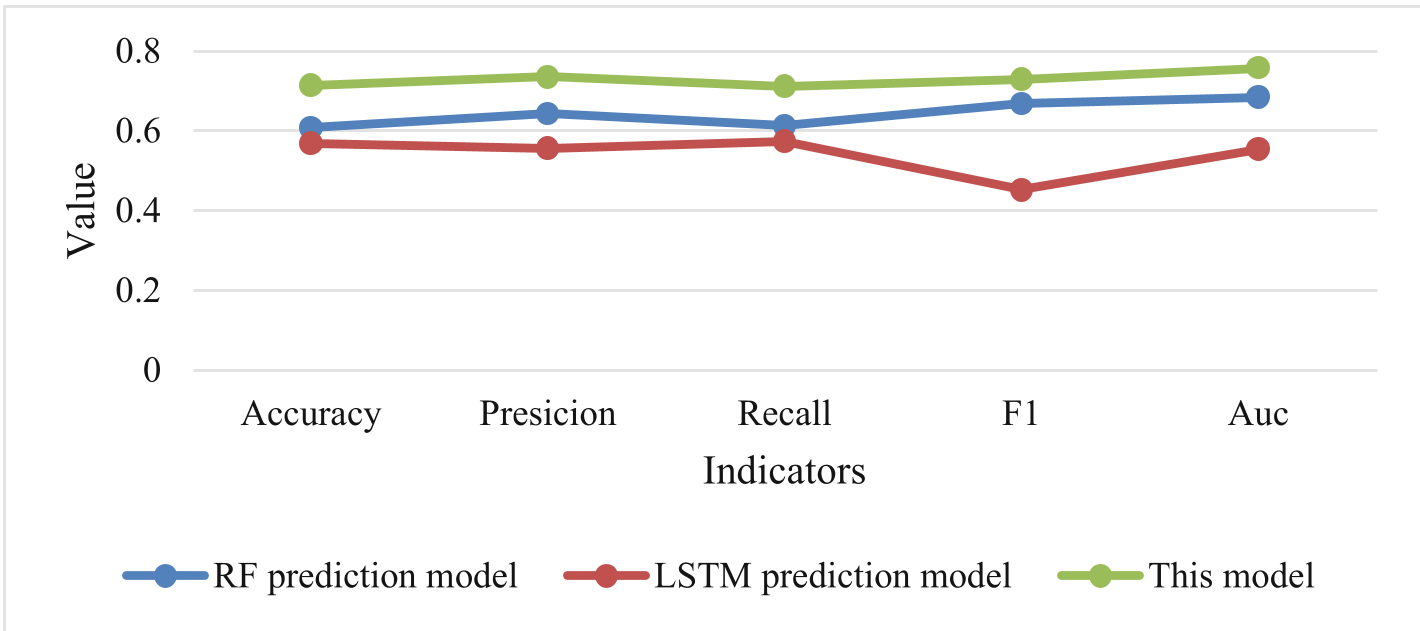 Fig 1. Comparison of the proposed hybrid model against standard baselines.
Key Insights: Does the Library Hold the Key to Your Future?
The study’s most compelling finding is the quantification of how specific behaviors correlate with graduation paths.
- Library Visits: Students aiming for higher education (Masters/PhD) visited the library an average of 5.28 times per week, peaking at 6.1 times. Conversely, those heading straight into employment visited only 1.75 times per week, likely due to time spent on internships and off-campus interviews.
- Behavioral Slopes: The researchers found that the rate of change in behavior (e.g., a sudden drop in breakfast frequency or a spike in library hours) was more predictive than the raw numbers themselves.
Performance Benchmarks
The hybrid model significantly outperformed traditional supervised learning:
| Model | Accuracy | Precision | Recall | F1-Score |
|---|---|---|---|---|
| Traditional RF | 0.607 | 0.643 | 0.612 | 0.668 |
| Standalone LSTM | 0.569 | 0.557 | 0.574 | 0.452 |
| Proposed Model | 0.714 | 0.735 | 0.712 | 0.729 |
Critical Analysis & Future Outlook
The strength of this work lies in its non-invasive nature; it uses existing data to generate new value. However, there are inherent limitations:
- Contextual Nuance: The model might misinterpret "low library usage" for a high-performing student who prefers studying in cafes or digitally at home.
- Privacy Ethics: While the data is collected non-invasively, the ethical implications of "tracking" breakfast habits to predict career failure warrant further discussion.
Conclusion: This research proves that big data is more than just a buzzword in education. By synthesizing deep learning with daily behavioral metrics, universities can move from simple record-keeping to becoming intelligent "career navigators." The future of student management lies in these predictive insights, allowing institutions to identify and assist students at risk of unemployment long before the graduation gown is donned.
Takeaway for the Industry
For EdTech developers and university administrators, the message is clear: Behavioral data is a leading indicator; academic data is a lagging one. Integrating these through temporal models like LSTM is the next frontier for "Smart Campus" infrastructure.