
Biomimetic AI: Beyond Algorithms to Autonomous Healthcare Companions
Biomimicry and Machine Learning in the Context of Healthcare Digitization
This paper introduces a biomimetic Knowledge-Based Expert System (KBES) for healthcare diagnostics, specifically targeting Chronic Kidney Disease (CKD) and Breast Cancer. By leveraging a "Bias-based Reasoning" (BBR) framework, the method achieves 93%+ predictive accuracy, positioning it as a cornerstone for future autonomous patient-care companions.
TL;DR
The Sirius Project proposes a shift from static diagnostic tools to Biomimetic AI—systems that mimic biological processes to provide healthcare support. Using a Bias-based Knowledge-Based Expert System (KBES), the researchers achieved over 93% accuracy in detecting Chronic Kidney Disease and Breast Cancer, advocating for a future where "Baymax-like" entities provide both clinical precision and emotional support.
Problem & Motivation: The Gap in Digital Healthcare
Current healthcare infrastructure is struggling to keep pace with the needs of an aging population. We face a "care gap"—elderly and disabled patients often lack immediate aid during home emergencies (like falls).
The authors argue that existing AI is "under-exploited." Most systems are static; they don't learn the way a biological entity does. To solve this, we need systems that exhibit Biomimicry: replicating the "Adaptation + Propagation" cycle found in nature to handle the uncertainty and non-monotonicity of human health.
Methodology: The "Adaptation + Propagation" Loop
At the heart of this work is Bias-based Reasoning (BBR). Unlike black-box neural networks, BBR uses a structured rule-based approach where weights (biases) are adjusted via reinforcement learning.
1. Data Preparation
The team utilized two major datasets from Kaggle:
- CKD Dataset: 400 instances, 24 features (Chronic Kidney Disease).
- Breast Cancer Dataset: 569 instances, 30 features.
Data was z-scored and histogram-equalized to ensure feature commensurability before being visualized in high-dimensional space to assess classification complexity.
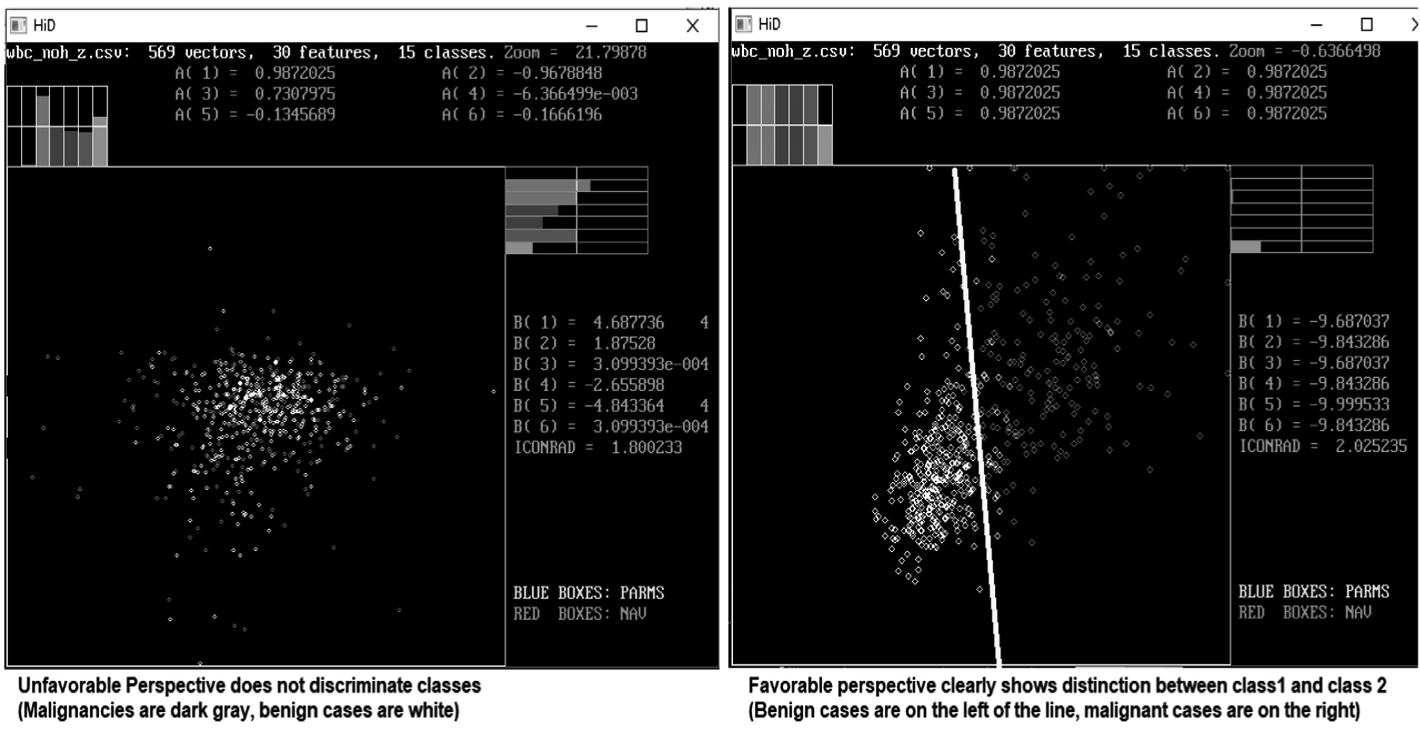 Figure: Visualizing the native high-dimensional space of health data.
2. The Inference Engine
The core "biomimetic" aspect is the Adaptation + Propagation loop. If a trial (processing the data) results in a better outcome, the weights are saved as the "New Best." This is essentially a Lamarckian approach to machine learning—organizing execution history into machine-resident structures to improve performance over time.
3. Rule Execution
The KBES applies logic like:
IF (Condition) THEN INCREASE BELIEF(X) AND INCREASE DISBELIEF(Y)
The power lies not in the IF-THEN structure, but in the numerical biases held within. This allows the engine to be repurposed for any domain just by swapping the data-driven biases.
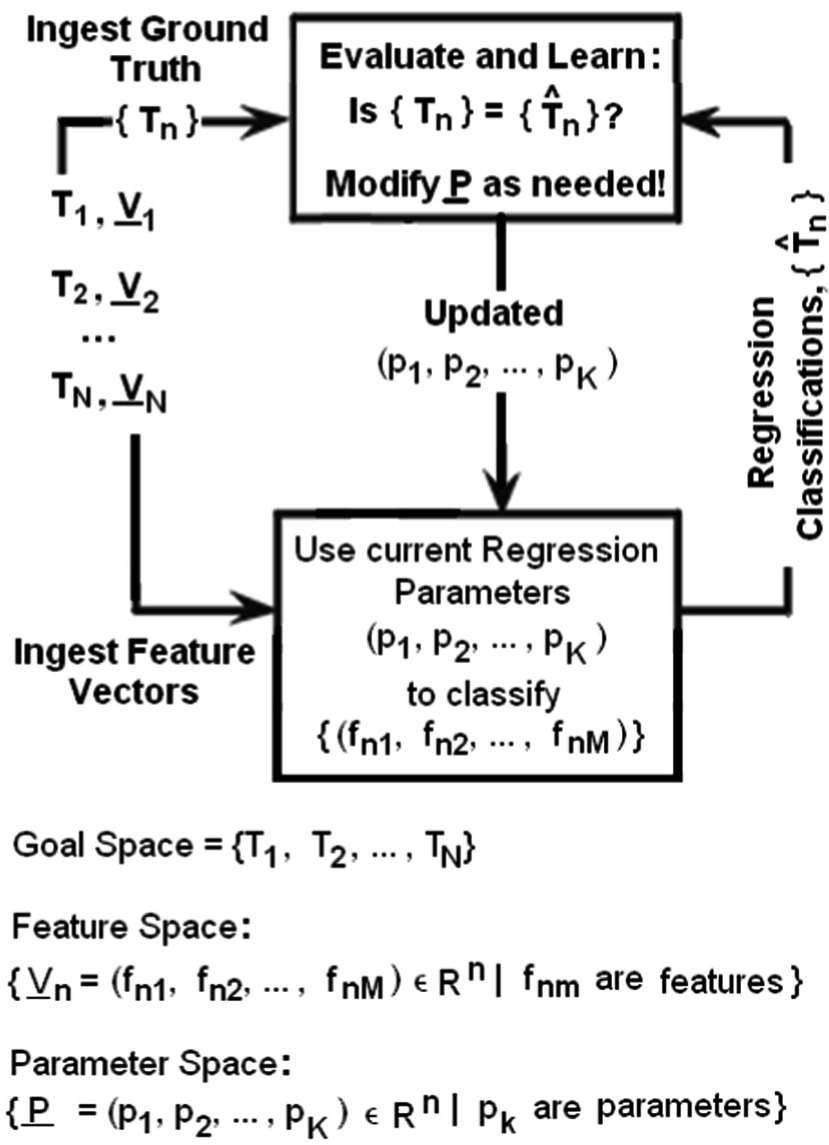 Figure: The Reinforcement Learning loop used to adjust unit logic weights.
Experiments & Results: 93% Accuracy
The system was tested on "blind" sets (data it hadn't seen during training). The results were consistently high, surpassing a 93% predictive capability.
- Success Metric: The system generated confusion matrices to balance Type I (False Positive) and Type II (False Negative) errors, which is critical in healthcare where a missed diagnosis (Type II) can be fatal.
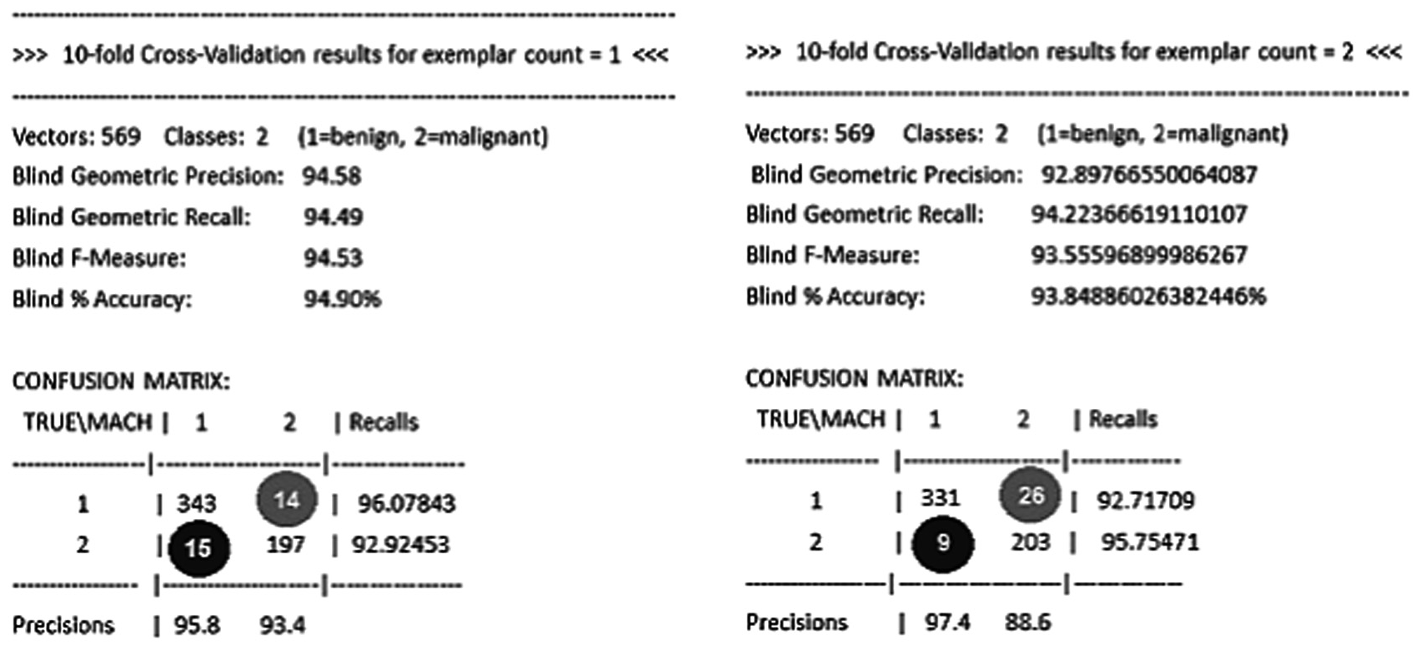 Figure: The final diagnostic output and error analysis.
Critical Analysis & Conclusion: The "Holacratic" Future
The authors conclude that technical success is only half the battle. To truly realize biomimetic healthcare, we need a new type of organization: a Holacratic Global Solution Network (GSN).
Key Insights:
- Autonomy: A "Holacratric" organization (like the Sirius Project) allows for self-organization, avoiding the rigid hierarchies that slow down medical innovation.
- B-Corp Framework: By transitioning into a "Benefit Corporation," research groups can prioritize patient lives and long-term mission alignment over short-term IPO gains.
- Ethical AI: The paper stresses that health AI must be "HIPAA-compliant" and embedded with an ethical hierarchy that prioritizes patient survival above all else.
Takeaway: This paper isn't just about a classifier; it's a blueprint for a mission-driven, biologically-inspired ecosystem that could eventually produce the real-world "Baymax."
Limitations: While the diagnostic accuracy is high, the paper notes that transitioning from a CSV-based classifier to a "real-time stream-processing" interface requires further engineering and rigorous ethical guardrails.