
Black Mirror: A Scientific Audit of Our Digital Nightmares
The risks of new technologies in Black Mirror: A content analysis of the depiction of our current socio-technological reality in a TV series
This paper presents a quantitative content analysis of the first 22 episodes of the TV series Black Mirror, examining how the show depicts modern and futuristic technologies. The study identifies social media, mobile devices, and biohacking as dominant themes, mapping the series' role as a "digital dystopia" that mirrors contemporary socio-technological anxieties.
TL;DR
Is Black Mirror just entertainment, or a data-driven prophecy? This research conducts a rigorous content analysis of 22 episodes to quantify the "black mirror" effect. It reveals that the series disproportionately targets social media and biohacking, depicting them as catalysts for privacy loss and the erosion of reality, suggesting that the show functions more as a socio-technological warning than mere science fiction.
Problem & Motivation: Beyond the Screen
For years, academics have treated Black Mirror through the lens of philosophy or film theory. However, David Blanco-Herrero and Laura Rodríguez-Contreras argue that we need a quantitative baseline. Why does this matter? Because fiction influences public perception and political agendas. If we don't know exactly what risks the series is amplifying, we can't effectively use it as a tool for media literacy or ethical debate. The authors aim to bridge the gap between "scary stories" and "measurable socio-technological trends."
Methodology: Coding the Dystopia
The researchers analyzed the series using a structured codebook, focusing on 78 main and secondary characters and 90 distinct representations of technology. They categorized each technology by its "feasibility"—separating the current (e.g., smartphones) from the futuristic (e.g., digital consciousness).
 Figure 1: The study frames Black Mirror within the broader context of technical ecosystems and multiculturality.
Key Metrics:
- Feasibility Scale: 1 (Totally Unrealistic) to 5 (Currently Exists).
- Social Impact: Measured on a 5-point Likert scale from Very Negative to Very Positive.
- Risk Categories: 17 defined risks including cyberbullying, addiction, and "mistreatment of machines with feelings."
Methodology Breakdown
The study found a striking correlation: the more central a technology is to a story, the more negative its depicted effect. While minor background technologies might be neutral, the "protagonist" technologies are almost always shown as destructive.
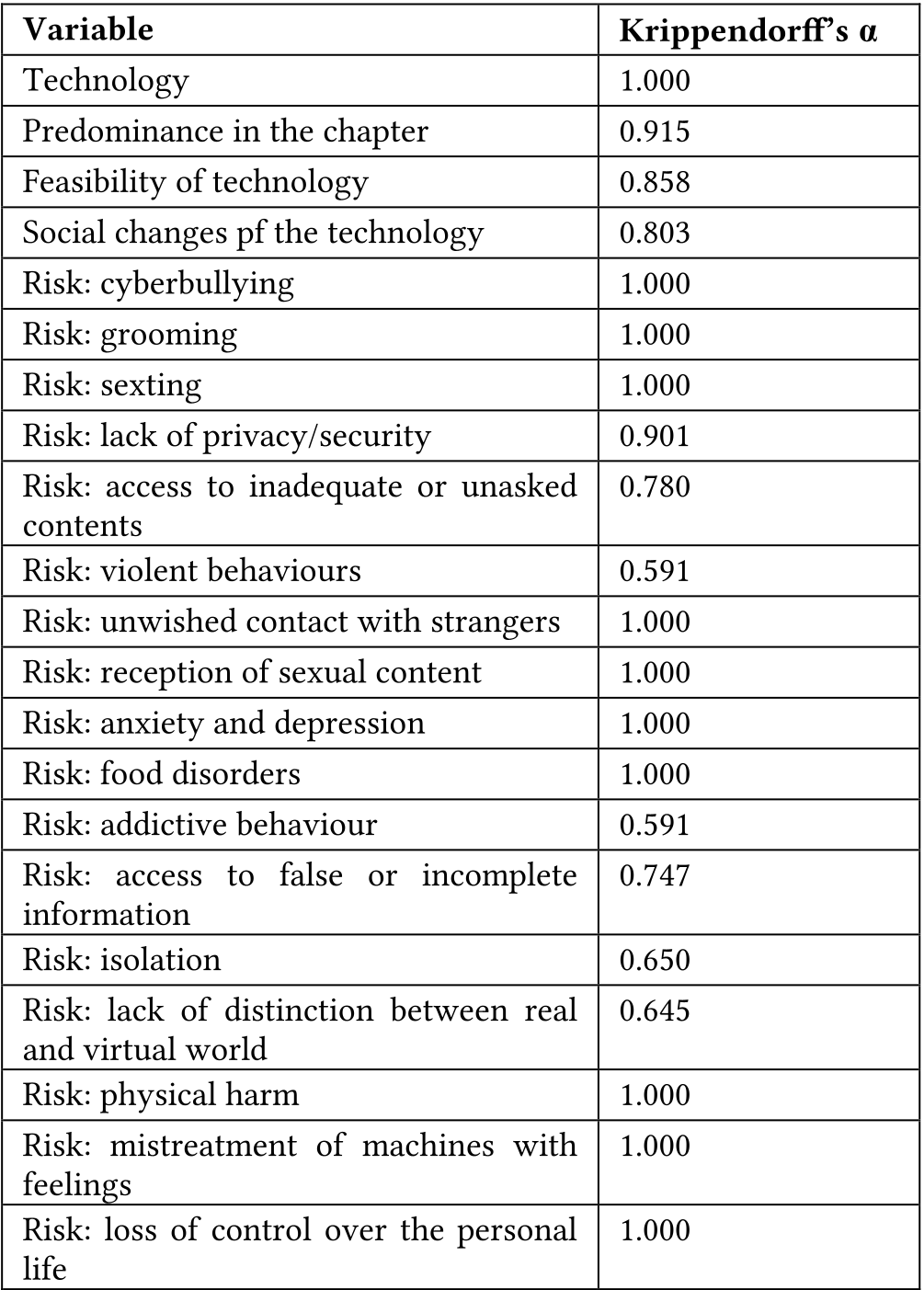 Table 1: Intercoder reliability (Krippendorff's α) for the variables studied, ensuring scientific rigor.
Experiments & Results: The Anatomy of Fear
The data reveals that Black Mirror isn't just about "the future"—it's about the augmented present.
- Dominant Tech: Smartphones/tablets were present in 50% of episodes. Biohacking and technological implants appeared in 40.1% but were the most "unrealistic" yet "predominant" when they appeared.
- Top Risks:
- Lack of Privacy/Security: Associated with 34.4% of all technologies.
- Blurred Reality: 24.4%—highlighting a deep-seated fear of losing the "real" to the "virtual."
- Addiction: 20%—reflecting the era of the "attention economy."
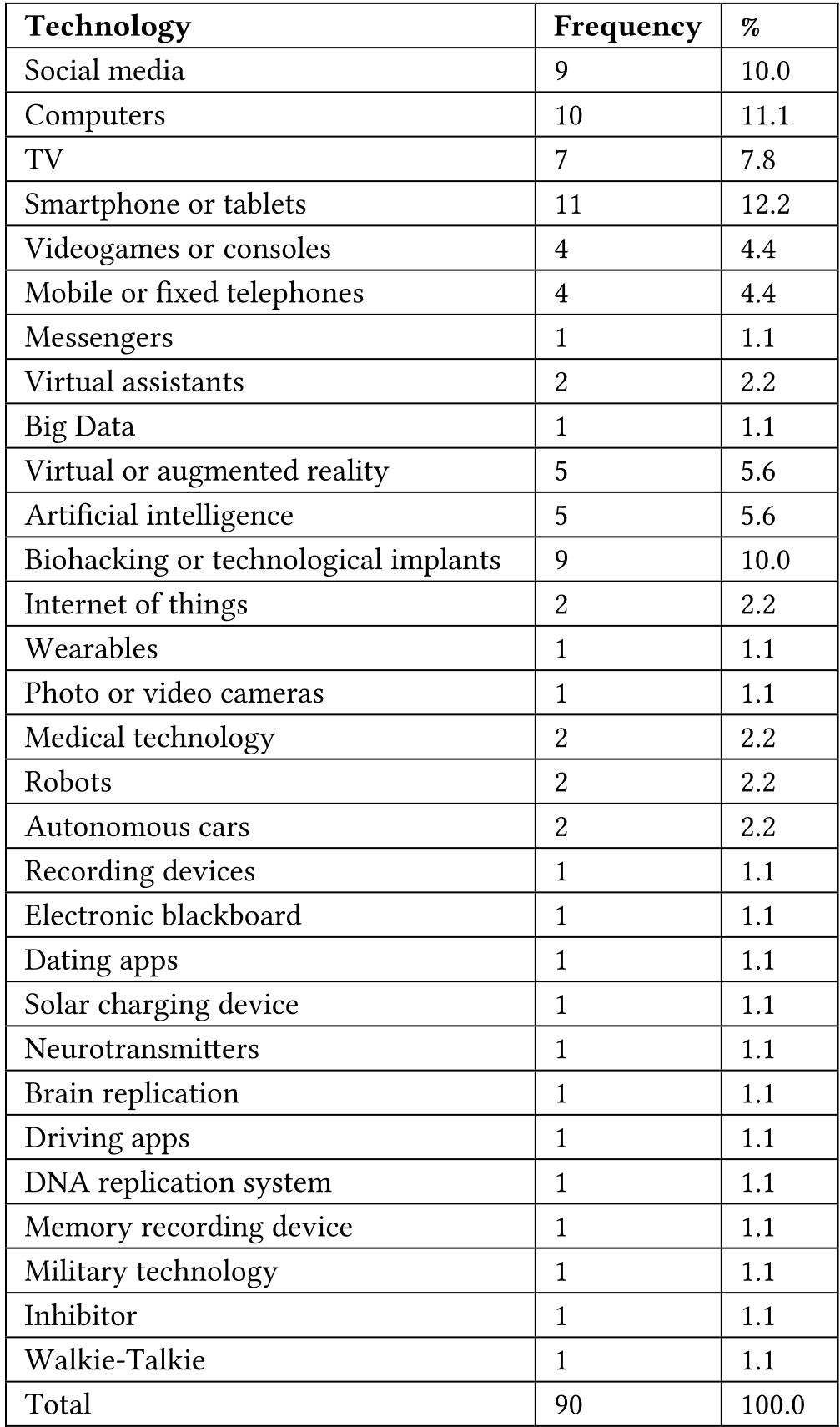 Table 2: Breakdown of technologies depicted. Note the high frequency of Social Media and Biohacking.
Critical Analysis & Conclusion
The study concludes that Black Mirror's power lies in its relatability. Most characters are middle-class young adults (the series' core demographic), making the "apocalyptic" shift they undergo feel personal to the viewer.
The Takeaway: The series acts as a "speculative lens," forcing us to confront the ethical "drift" of our current reality. However, the authors note a limitation: the show's inherent dystopic bias. While it’s excellent for raising awareness of risks, it intentionally ignores the benefits of technology, meaning it should be used as a conversation starter for ethics, not a balanced technical assessment.
Future Work: The authors suggest expanding this analysis to other series like Westworld to compare if different genres focus on different technological fears (e.g., AI autonomy vs. social surveillance).
Final Insight: In the world of Black Mirror, the technology isn't the villain—human behavior, amplified by technology, is.