
Toward a Blockchain-Enabled Crowdsourcing Platform: Solving Trust in the Power of the Crowd
Toward a Blockchain-Enabled Crowdsourcing Platform
This paper explores "Toward a Blockchain-Enabled Crowdsourcing Platform," proposing a transition from centralized to decentralized architectures. It leverages Blockchain and Smart Contracts to ensure data integrity and nonrepudiation, specifically within the EUNOMIA project framework.
TL;DR
Crowdsourcing has long been the engine of information collection and task distribution, but it is currently crippled by centralized vulnerabilities and trust issues. This paper proposes a Blockchain-enabled architecture that utilizes decentralized ledgers and smart contracts to eliminate single points of failure, prevent fraud, and establish an immutable reputation system for participants.
Background: The Infrastructure of Trust
Since its inception in 2006, crowdsourcing has shifted from simple outsourcing to complex ecosystems like Upwork, Amazon Mechanical Turk, and Waze. However, these are "walled gardens"—centralized silos where a single server attack can expose millions of users' personal data (as seen in the 2016 Uber breach) or take the entire service offline via DDoS.
The Core Problem: Beyond Server Crashes
The paper identifies two critical failure points in current systems:
- Architecture Fragility: Centralized systems have a Single Point of Failure (SPOF).
- Behavioral Dishonesty: "Free riding" (consuming results without contributing) and "False reporting" (lying about task completion to avoid payment) are rampant and difficult to police without expensive manual arbitration.
Methodology: Blockchain as the "Trust Layer"
The authors propose a multi-layered approach (Application, Blockchain, and Storage) to re-engineer crowdsourcing.
1. Smart Contracts for Governance
Instead of a platform manager deciding who gets paid, Smart Contracts act as self-executing digital agreements. They hold deposits and release payments only when verified conditions are met, removing the need for an intermediary.
2. Decentralized Reputation Mechanism
The most innovative aspect is the proposed reputation scoring system. In the context of the EUNOMIA project, every post or task interaction is a transaction on the ledger. A user’s "Wallet" isn't just for currency; it carries a reputation score that updates based on the veracity of their contributions.
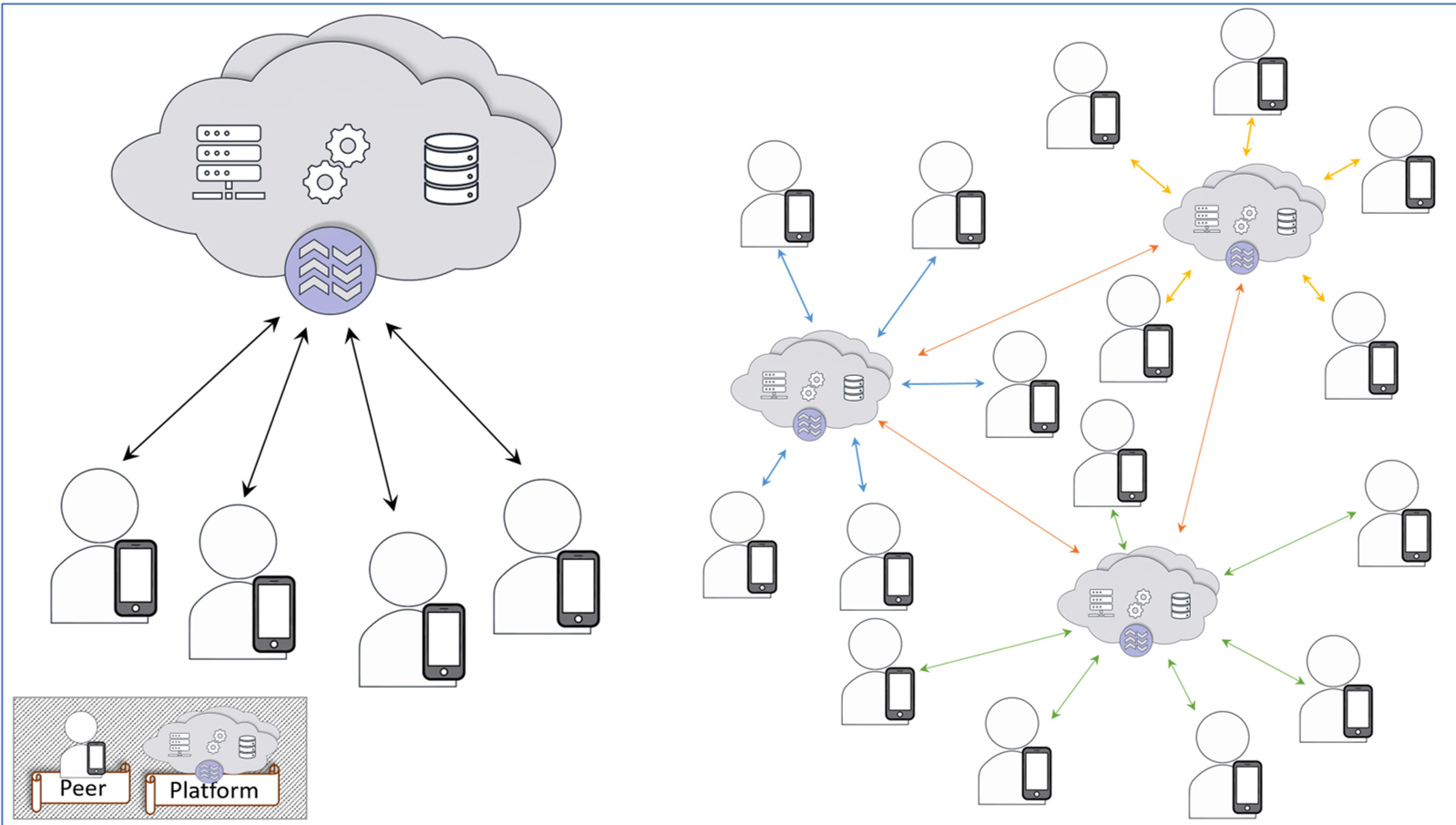 Figure 1: Comparison between the traditional SPOF-vulnerable centralized model and the resilient P2P decentralized model.
Real-World Use Cases
The paper grounds its theory in three practical scenarios:
- Fake News Detection: Journalists can use blockchain-stored metadata and user reputation scores to verify stories on decentralized social networks like Mastodon.
- Traditional Media Validation: Replacing time-consuming manual checks with a decentralized database of verified "truthfulness scores."
- Personal Health & Safety: Users can verify the safety of "smart drugs" or health advice by checking the reputation of the people reporting their experiences, preventing manipulation by malicious social network algorithms.
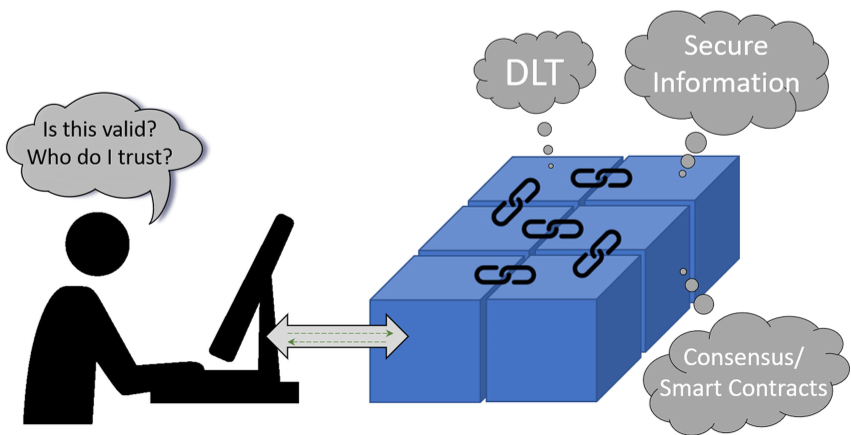 Figure 2: The interconnected ecosystem of P2P verification and data integrity leveraging the Blockchain ledger.
Critical Insight: The Energy & Latency Trade-off
A common critique of blockchain is its massive energy footprint. The authors address this by advocating for Private Blockchains (like Hyperledger Fabric) and Proof of Stake (PoS) consensus algorithms. These are significantly "lighter" than Bitcoin’s Proof of Work, aligning with the looser latency requirements of crowdsourcing compared to high-frequency financial trading.
Conclusion & Future Outlook
This work highlights that Blockchain is more than just a financial tool; it is a database of integrity. By decentralizing the crowdsourcing ledger, we can protect users from data breaches while creating a self-policing environment where honesty is computationally incentivized.
Takeaway for the Industry: As privacy regulations like GDPR tighten, the move toward "Digital Identities" (where personal data isn't stored centrally) will make blockchain-enabled platforms the standard for global collaborative work.