
Beyond the Grid: The Bluetooth Virtual Communities of the Tehran Subway
Bluetooth Virtual Community: Bluetooth and Social Networking in Tehran Subway
This paper explores the unique emergence of "Bluetooth Virtual Communities" in the Tehran Subway, where users leverage short-range radio technology to form anonymous, decentralized social networks. By utilizing Bluetooth for file sharing and broadcasting in high-congestion areas, Iranians have bypassed traditional telecommunication controls to create a distinct ad hoc communication infrastructure.
TL;DR
In an era of hyper-connected internet, the Tehran Subway became the site of a radical experiment in ad hoc social networking. Using "low-tech" Bluetooth, commuters created a decentralized, untraceable, and anonymous virtual space to exchange content and bypass social and political sensors. This paper analyzes how physical congestion transforms into a digital "scatternet."
The "Black Hole" of Mobile Culture
The research begins by identifying the mobile phone not just as a tool, but as a "personal whole-media industry." In Iran, the cultural and political atmosphere created a unique vacuum. Unlike Europe (focusing on individualism) or East Asia (focusing on ke-tai/social web), Iranian users turned to Bluetooth—a radio communication, not a telecommunication.
Because Bluetooth operates outside the SIM-card/ISP infrastructure, it cannot be monitored or disrupted by authorities. It effectively turns every passenger into a broadcaster within a 10-meter radius, creating what the authors call a "physical-virtual communication space."
Methodology: Ethnography in the Piconet
To understand this "underground" network, the researchers spent 15 days in the Tehran Metro, capturing data from two main lines (Rey-Tajrish and Sadeqie-Tehranpars). They analyzed three types of data:
- Bluetooth Usernames (IDs): Acting as the "avatar" in this physical space.
- Exchanged Files: Analyzing the content that drives the network.
- File Names: Used as a makeshift messaging system since Bluetooth lacked a chat protocol.
The Topology of Connection
The paper utilizes the technical definitions of piconets (one master, seven active slaves) and scatternets (interconnected piconets) to explain how info-viruses spread through a moving train.
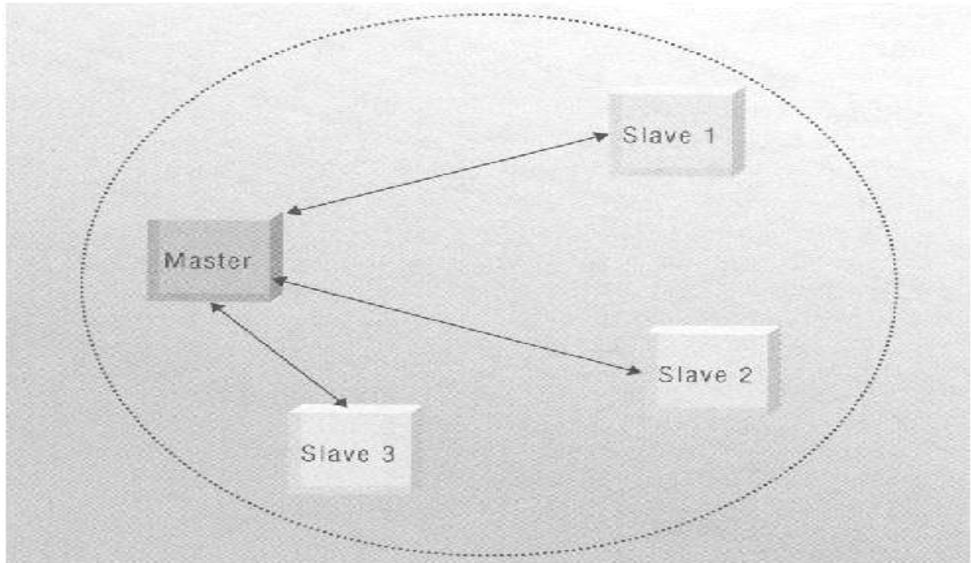 Figure 1: The Basic Piconet Structure - the building block of the subway's virtual community.
Key Insights: Social Architecture of the Subway
The findings reveal a complex social hierarchy within the train cars:
- Active Users: The "Pioneers" who broadcast files and change IDs frequently to stimulate activity.
- Waiting Users: Reactors who only engage once they see content they like.
- Passive Users: The "Army of Darkness" who only receive, never contributing to the spread.
Data Highlights
| Content Category | Frequency |
|---|---|
| Sexual Content | 60.31% |
| Fun / Amusing | 11.46% |
| Social-Political | 4.58% |
The high volume of sexual content suggests that the Bluetooth community serves as a "safety valve" for social pressures in a conservative society. Furthermore, the researchers observed a fascination with gender-bending; many male users adopted female usernames to increase the likelihood of their files being accepted by others.
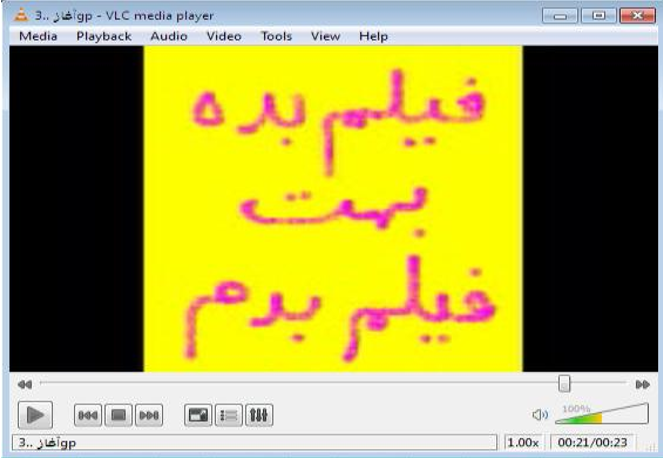 Picture: "Send clip, then I will send clip" - Creative graphics used to bypass the lack of text-messaging functions.
Conclusion: A Two-Space World
The Tehran Subway study proves that technology is not "one-size-fits-all." While Bluetooth was designed for peripherals like headsets, it was hijacked by a community to become a subversive social network.
The "Bluetooth Virtual Community" is a striking example of Hybrid Space—where your physical presence in a subway car is the "invite" to a digital rebellion. This research offers a window into how humanity adapts even the most limited tools to fulfill the universal need for connection and free expression.
Takeaway: In the future of smart cities, decentralized, local-range networks (like Bluetooth/Mesh) may become the last bastion of truly private, untraceable social interaction.